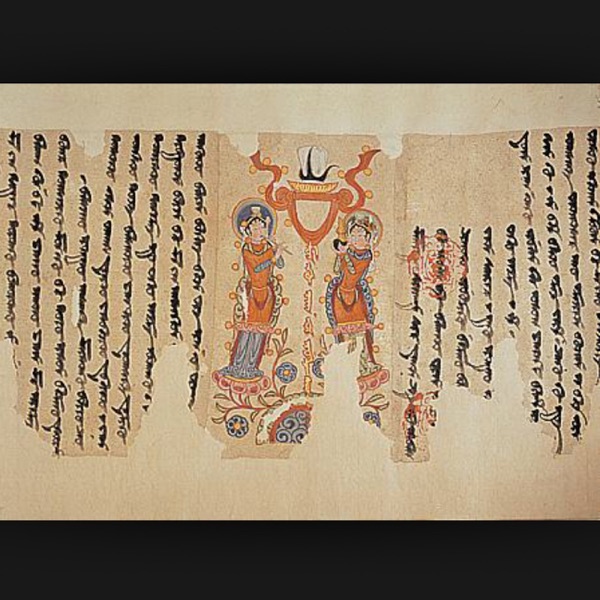
Tianshu 95: Sakhalin and the Northern Four Islands
This episode discusses Sakhalin and the Northern Four Islands, with Sha Qingqing participating in the conversation.

This episode discusses Sakhalin and the Northern Four Islands, with Sha Qingqing participating in the conversation.
From the Mukden Incident to the Pacific War, the Japanese intelligence machine demonstrated astonishing results at the tactical level, but repeatedly fell into misjudgments at the macro-strategic level. How did the information network built by the Manchurian Railway Investigation Department and the East Asia Institute of Technology support the Japanese army's infiltration of North China? Why did the inducement work of special agencies such as "Plum, Orchid, Bamboo, and Chrysanthemum" targeting various Chinese factions only "succeed" in winning over Wang Jingwei? Behind the crushing defeats at Zhanggufeng and Nomonhan, how was Japanese intelligence on the Soviet Union filled with the one-sided wishes of White Russian émigrés? How did the tactical surprise at Pearl Harbor and the intelligence collapse at Midway change the course of the Pacific War? Listen to the wonderful sharing by our guest, Sha Qingqing, in this episode!
Topics for this episode: Meiji vs. Guangxu in film and television Li Hongzhang: The name of Prime Minister without the power of Prime Minister The Beiyang Fleet only dared to act as a trump card for challenges, not to actually fight What's wrong with the Old Lady celebrating her birthday? Empress Dowager Cixi's psychological knot "Only knowing my Great Qing, not knowing what a nation is"

As early as 2013, teacher Sha visited the Hoover Institution at Stanford University to consult and transcribe Chiang Kai-shek's diaries. What exactly do Chiang Kai-shek's diaries look like? Why do they resemble both work memos and collections of inspirational quotes, as well as a moral ledger where a "reflection freak" grades himself every day? And why has the transfer of ownership of this diary been so dramatic? Obviously, whether or not Chiang Kai-shek's diaries were written by a "serious person," they may not necessarily unravel the various mysteries of modern history, but they do make the person of Chiang Kai-shek concrete. Through this episode, we hope to give listeners a glimpse of how a powerful figure writes about himself, and how he is subsequently deconstructed and reassembled by history, family, courts, archives, and "internet memes."
Beneath the romantic veneer of democratic ideals and a flourishing of diverse intellectual currents during the Taishō era, social contradictions were actually surging beneath the surface, eventually leading to the rise of the far right and political turmoil in the Shōwa era. The reach of Japanese intelligence agencies extended into domestic affairs accordingly. How did the Special Higher Police become a tool for suppressing dissent relying on the Peace Preservation Law? What secrets of secret police brutality lay behind the murder of Kobayashi Takiji? How did the Kwantung Army’s special service agencies collaborate with local forces to establish an intelligence network in Manchuria? From Shanghai to Tokyo, what work did Sorge’s international intelligence group undertake, and why was it not trusted by Stalin? During the war, how did Japanese intellectuals such as Tsurumi Shunsuke and Maruyama Masao seek survival within intelligence agencies and the military? Please listen to this episode’s guest for an insightful sharing!
In this episode, we drag Sha Qingqing back to the home turf of "Leftover Talk" to discuss his new book, "Jiawu: A War in the Balance." When it comes to the Jiawu War, many people's first reaction is the Battle of the Yalu River, the Beiyang Fleet, Deng Shichang, Ding Ruchang, or that final, hard-to-swallow Treaty of Shimonoseki. In his new book, Sha Qingqing focuses more on deeper issues: What were the decision-making circles of the Qing court and Japan actually thinking? How did they misjudge each other? And how did the crisis on the Korean Peninsula transform into a chain reaction that altered the national fortunes of Northeast Asia? From the Donghak Peasant Revolution to Japan's security imagination of "sovereignty lines" and "lines of interest," from Li Hongzhang's diplomatic calculations to the Qing court's virtually non-existent intelligence system regarding Japan, from Japanese intelligence networks like those of Arao Sei, to the Itō Hirobumi cabinet turning the Korean crisis into a political lifeline, and finally to the negotiations at Shimonoseki and the Triple Intervention to return Liaodong, this episode attempts to answer a somewhat cruel question: How exactly was the Jiawu War lost, step by step?
Topics for this episode: What? There's still a World Cup this year? The Japanese team in the WBC stops at the quarterfinals; Netflix's calculations fall through Netflix's strong monopoly on broadcasting rights sparks dissatisfaction among older Japanese viewers Why do Chinese video sites never seem to make money? Back to the World Cup: FIFA and CCTV "bargaining"
The hit release of Cold War 1994 has brought a special department from the Port of England era into the public eye. Administratively subordinate to the Hong Kong Police Force, it was operationally directly under the command of Britain's MI5; this was the "Political Department." Originating from a special division of Scotland Yard in the late 19th century to deal with the Irish independence movement, how did the "Political Department" draw on the experience of the Shanghai International Settlement to build an intelligence network in the Far East based on the colonial system? From dealing with dockworkers' movements and monitoring the maneuvering between the KMT and the CCP, to becoming an intelligence window into the mainland during the Cold War, what were the core functions of the Port of England's "Political Department"? As 1997 approached, how did the dissolution of the Political Department echo Britain's response to new changes in the global landscape? Welcome to listen to the wonderful sharing by our guests Sha Qingqing and Zheng Shiliang in this episode!
Topics for this episode: Old A, who talks about soccer, actually switched careers from biopharmaceuticals to media On his first day at Star TV, he watched Oscar and went to a dinner party, a true "Tiny Times" vibe Ringtone sales business and the "salary situation" in the media industry during the economic boom The golden age really wasn't long; Star TV entered its second historical phase "Uncle Li was very angry, and the consequences were very serious"
The "Triple Intervention" incident following the First Sino-Japanese War unexpectedly prompted the rapid expansion of Japan's intelligence system against Russia after the war. How did the progress of the construction of the Trans-Siberian Railway become the countdown to Japan's war against Russia? How did Japanese civilian right-wing organizations such as the "Black Dragon Society" cooperate with the military to conduct intelligence operations in the Far East? Did Akashi Motojiro really meet and fund Lenin? Why did Japan's intelligence work actually decline after its victory in the Russo-Japanese War? Please listen to this episode's guest, Sha Qingqing, for an insightful sharing! You are also welcome to revisit other episodes in the "Espionage Anecdotes" series: "Espionage Anecdotes | A History of Soviet Intelligence," "Espionage Anecdotes | A Brief History of the Blue Terror in the Republic of China," and "Espionage Anecdotes | The Past of the Central Statistical Bureau."
Sha Qingqing and Fan Yiru discuss feelings about facing an uncertain future on the sixth anniversary of Eye on East Asia going online.
The Jiawu War of 1894 did not erupt suddenly at a single moment but gradually took shape amidst the tug-of-war among multiple forces. Between China and Japan, there was repeated vacillation between war and peace; Britain and Russia vacillated between intervention and wait-and-see in their Far Eastern strategies; and the authenticity of intelligence and the generational gap in armaments cast uncertainty over every party's judgment. In this episode of Historians, host Gao Haibo converses with historian Sha Qingqing, author of Jiawu: A War in the Balance. Starting from intelligence, naval guns, and great power maneuvering, we re-understand the origins of this war from an international perspective.
From the fūsetsugaki (foreign-news reports) of the Edo period, to the activities of continental rōnin around the time of the First Sino-Japanese War, and further to the construction of the General Staff Headquarters and the Supreme Command system, Japan's early intelligence apparatus bore both civilian and official characteristics. During the period of national seclusion, how did the Japanese shogunate acquire knowledge of the outside world through ports and merchants? Under the cover of a pharmacy, how did Arao Sei use the Rakuzendō in Hankou to establish the first generation of spy networks in China? Before the First Sino-Japanese War, how did the Japanese Navy gather intelligence through 'regular channels'? Re-examining the First Sino-Japanese War, why did the information transmission mechanisms of the late Qing dynasty completely fail? Please listen to the wonderful sharing brought by this episode's guest, Sha Qingqing!
In 1453, the Ottomans captured Constantinople, and Europe trembled. But few people know that in the same century, this empire was also competing with the Portuguese for shipping lanes in the Indian Ocean and battling the Spanish for hegemony in the Mediterranean. Few also know that in the Istanbul court, the one who sometimes held the real power was not the Sultan, but black eunuchs from Africa. This is the story told by The Ottoman Eunuchs and The Ottoman Age of Exploration—an imperial history obscured by "Eurocentrism." In this episode, Zhu Ming, a professor in the Department of History at East China Normal University, and historical scholar Sha Qingqing will lead us back into that forgotten Ottoman world.
Li Dazang, a "classmate guest" from Leftover Talk, returns to discuss Chinese men's formal wear culture. In early 2026, the benchmark men's luxury brand Zegna revealed in a conference call that it had closed 10 stores in the Chinese market over the past year, including its flagship store at Beijing Huamao Center. Beyond lamenting the changing times for foreign clothing brands in China, we also took the opportunity to explore the Chinese men's formal wear market and the cultural soil behind it. What do Chinese men actually wear on formal occasions? Surprisingly, there is no standard answer. Over the past 100-plus years, changshan (long gowns), Western suits, and Zhongshan suits have all played similar roles; after the Reform and Opening-up, Western suits briefly became the norm, but today, whether in the workplace or at public formal occasions, new styles of dress have replaced the status of the Western suit. What social and economic factors are at play behind this? Li Dazang brings his observations.
Join three hosts, N guest friends, and 300 listeners for a 3-hour session of sharing and exchange. Additionally, VIPs can attend a celebratory dinner to interact and chat with Eye on East Asia hosts, guests, and several familiar names in the podcasting community.
When the biting cold winds of the Scottish Highlands blew to the Bund in old Shanghai, what undercurrents of globalization and tensions of modern history did a cup of amber whiskey carry? In this episode of Leftover Talk, we temporarily set aside grand political narratives and chat from the "corners" of daily life—discussing how whiskey crossed the ocean to come to China and the global historical implications behind it. In late Qing documents, imported goods like whiskey were crudely lumped together as "Ghost Wine"; in the writings of late Qing diplomat Zhang Deyi, they were eye-opening industrial wonders; by the early 20th century in Shanghai, they became cultural symbols for urban upstarts and modern women to flaunt their status, even written into Eileen Chang's novels and the romantic sentiments of young girls at the time.
The Vatican, the world's smallest sovereign state, is also the spiritual fortress for the hearts and minds of hundreds of millions. In this episode, Sha [Qingqing] invites Dr. Lou Tianxiong, a specialist in modern religion and international relations, to discuss the diplomatic maneuvering between the Vatican, Fascist Italy, and Nazi Germany before and after World War II. Faced with catastrophe and wartime atrocities, why did Pope Pius XII, the pontiff at the time, choose "silence"? Was it collusion with power? Or was it strategic self-preservation? Did the resistance movement within Germany ever use the Vatican's covert channels to transmit intelligence? And how did the Vatican leverage its religious influence to navigate among the various camps?
Topics in this episode: "Taiping Nian" is a hit, so we decided to have a chat The careful handling of historically controversial figures like Feng Dao and Sang Weihan Compared to "Towards the Republic," how is "Taiping Nian" different? The attitude of typical historical dramas toward imperial societies How "Taiping Nian" enriches the traditional Central Plains historical perspective
Topics for this episode: [Part 1] Attempting to open a bookstore in Tokyo After three years in Japan, persisting in running the ODY CELL bookstore finally led to its opening Opening a Chinese-background community bookstore in Jinbocho, Tokyo Deteriorating Sino-Japanese relations do not affect hopes for the future The awkward current state of cultural activities in the Chinese community in Japan
Around the Spring Festival, OpenClaw—known colloquially as "Lobster"—exploded in popularity in the global tech community. In just two months, its GitHub star count surged to number one in history, and the project was subsequently acquired by OpenAI. This time, we invited Zhixian, an early promoter of the OpenClaw Chinese community, to chat about what Lobster actually is, why it makes users unable to go back once they try it, and to share his insights on "raising shrimp" and his Aha Moments. We also delved into Lobster's memory system and proactive mechanisms, as well as a Ghost in the Shell-style question: When an Agent can change bodies, what constitutes the irreplaceable soul?
Sha Qingqing, Quan Xiaoxing, and Fan Yiru answer listener questions as the program enters its sixth year and subscribers surpass 400,000.
Why modern China fell behind Europe is a perennial question in historical research, with historians offering various theories and explanations over the years. In the 1990s, American historian Kenneth Pomeranz proposed a new theory in his book The Great Divergence. He pointed out that until the early 19th century, the development levels of Britain and the middle and lower reaches of the Yangtze River region were still quite comparable, and their subsequent divergence onto different development paths was limited by several historical contingencies, rather than being the inevitable result of some structural causality. This disruptive theory not only sparked enthusiasm for historical research but also became a new chapter in the struggle of "historical victory studies."
Topics in this episode: Has the "Middle Path" collapsed? The largest opposition party lost so badly it was left with nothing Experiencing the "old" and "ordinary" nature of the "Middle Path" on the ground Does the "Middle Path" have a next time? The characteristics of the single-member district system are highlighted once again The "gekokujō" (subordinates overthrowing superiors) script made Sanae's supporters pay wildly