
Written Conversations in the Twenty-First Century
二十一世纪的汉字笔谈:“对多”上的“伪中国语”
Sha Qingqing, “Written Conversations in the Twenty-First Century,” The Paper · Books, 1 March 2025.
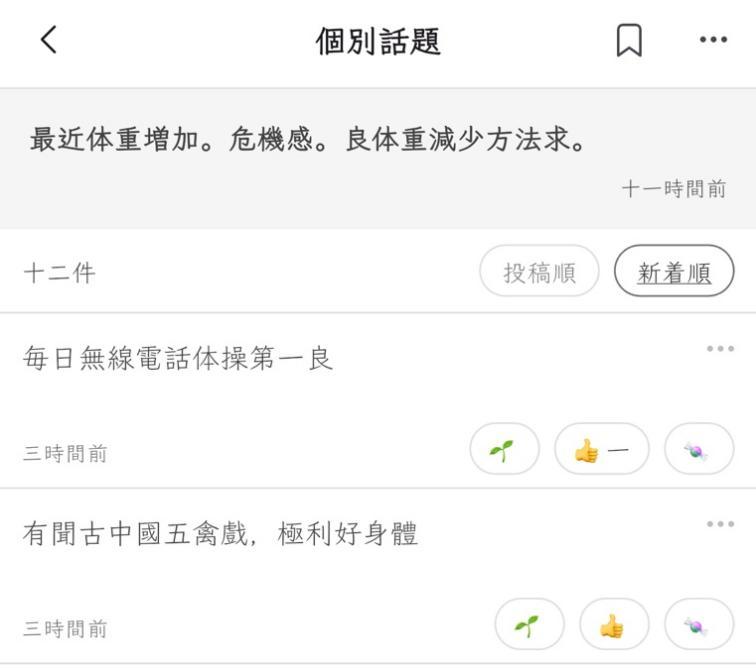
“最近体重增加。危機感。良体重減少方法求。” — “Weight has increased lately. Feeling alarmed. Seeking a good way to lose weight.”
This peculiar string of characters, which looks like Chinese but is actually Japanese, comes from an app called Tsuita. Interestingly, although it uses Japanese kanji, a Chinese reader may still be able to guess its general meaning: I have put on weight lately and am a little worried. Does anyone know a good way to lose weight?
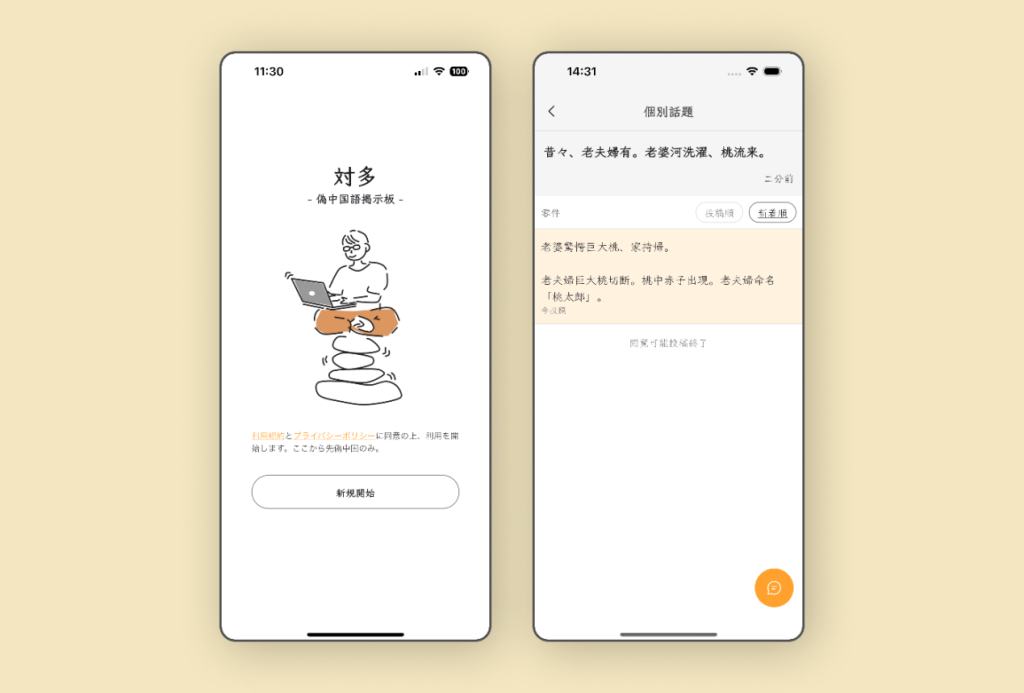
In December 2024, Tsuita quietly appeared in the major Apple and Android app stores. It is essentially an online forum with a single, rather rudimentary function. Users can post only short text messages; there is no way to attach pictures, let alone audio or video. Yet this plain app generated a modest wave of enthusiasm on social networks in Japan and even China. Registrations surged, overwhelming its server and temporarily interrupting service. Users continued to flock to it when service resumed. In just two months, it received more than 3,200 reviews in Japan’s Apple App Store, with a rating of 4.8 stars. Its most appealing—and strangest—feature is that users may write only in Chinese characters, in a form known as ‘pseudo-Chinese,’ or ‘fake Chinese.’
‘Pseudo-Chinese’ first appeared as an internet meme in Japanese online communities around 2000. Put simply, it involves deliberately removing katakana and hiragana from Japanese conversations or passages, leaving only kanji. At first glance the result looks very much like Chinese, but it still follows Japanese grammar and uses words in their Japanese senses: hence ‘pseudo-Chinese.’ In 2019, Japan’s then foreign minister, Taro Kono, posted the following on Twitter in this form:
“……中国外交有識者昼食懇談会、荷造、帰国。” — “...Lunch and discussion with Chinese foreign-affairs specialists; packing; returning home.”
(...Having lunch and a frank discussion with prominent figures in Chinese foreign affairs, packing one’s luggage, and returning home.)
At the time, Kono’s post prompted lively discussion of ‘pseudo-Chinese’ and was widely shared on both the Japanese and Chinese internet.
Tsuita’s creator, a Japanese software engineer who uses the online name asa, also used ‘pseudo-Chinese’ to announce the app’s launch on his personal website:
“我、偽中国語掲示板作成。名称‘対多’。” — “I have made a pseudo-Chinese message board. Its name is ‘Tsuita.’”
Here, 掲示板 is the Japanese kanji term for a message board. The sentence means: ‘I have created a pseudo-Chinese forum called Tsuita.’ Interestingly, the name 対多 is pronounced tsuita (ついた) in Japanese, close to the Japanese pronunciation of Twitter, the former name of the platform X. This is clearly another kanji pun by its creator, asa.
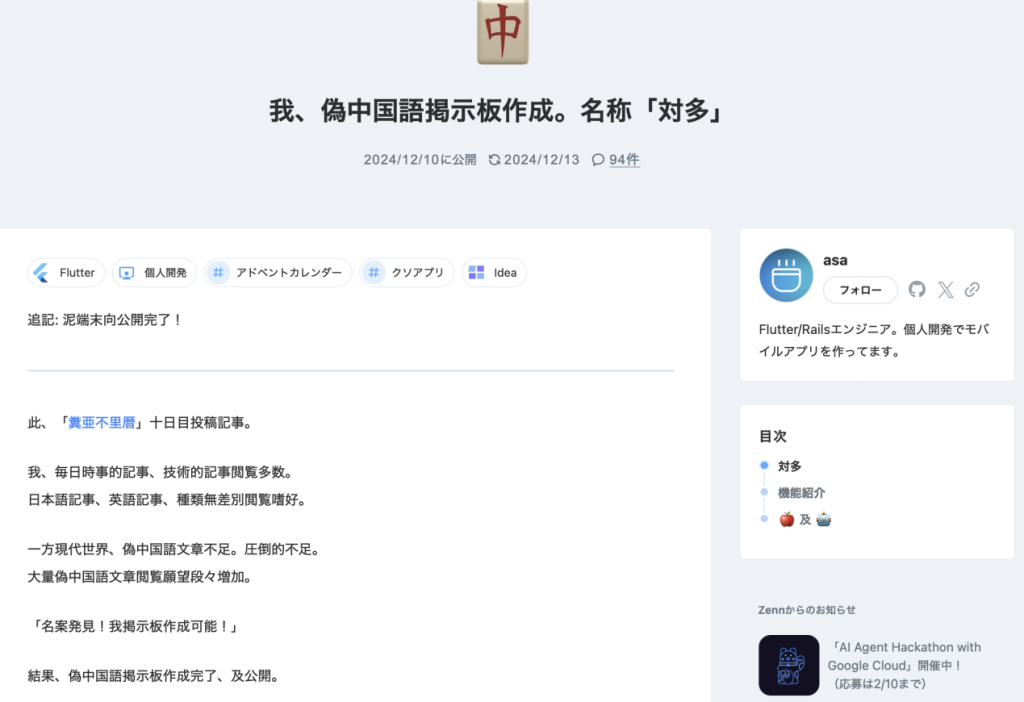
asa’s personal website
Japanese readers can usually make out the meaning of ‘pseudo-Chinese’ from its kanji, despite the absence of katakana and hiragana. More intriguingly, Chinese readers can also guess something of what it means, even when the word order looks odd and certain terms are obscure. This may be precisely where its distinctive appeal and fun lie. Japanese and Chinese users can communicate across languages through characters alone, without knowing Chinese or Japanese respectively. Working out unfamiliar combinations of characters and unusual word order has become one of the chief pleasures for users in both countries.
Throughout history, educated people from different countries and regions of East Asia’s Chinese-character cultural sphere, speaking different mother tongues, could often communicate through Chinese characters and classical Chinese: the practice known as ‘brush talk,’ or written conversation. Literate Japanese in the Edo period could often exchange written messages with Chinese and Korean interlocutors. As more Chinese intellectuals traveled to Japan in the modern era, figures such as Liang Qichao also developed what was called ‘reading Japanese texts as Chinese’ from this practice. Liang described Japanese writing at the time as follows: ‘Chinese characters account for eight or nine parts out of ten in Japanese writing; only connective words, particles and the like use kana alone instead of characters.’ Today, the written exchanges of the two countries’ old literati have unexpectedly reappeared on the twenty-first-century internet as ‘pseudo-Chinese,’ producing intermittent bursts of excitement.
The emergence of both ‘pseudo-Chinese’ and Tsuita in Japan is inseparable from the country’s long history of Chinese-character culture. Historically, Japan began importing Chinese characters on a large scale in the sixth and seventh centuries CE; before then, ancient Japanese society had no writing system. Borrowing Chinese characters made it possible to record Japanese, but using them to express the language still imposed constraints of pronunciation and written style. The need to know so many characters also made it difficult to ensure that ordinary people could learn and write efficiently. Over the following centuries, man’yogana gradually developed, followed by hiragana and katakana, which remain basic elements of written Japanese today.
As Japanese absorbed and adapted Chinese characters, the need to accommodate both their semantic and phonetic functions led to a distinction between on’yomi, or sound-based readings, and kun’yomi, or explanatory readings. Japanese speakers could therefore also use characters to represent Japanese sounds. One example is 夜露死苦, a slogan often used by the motorcycle gangs known as bosozoku. The characters reproduce the pronunciation of 宜しく (yoroshiku, glossed here as ‘good’), while their original meanings lend the slogan a mysterious, dark undertone and help create a distinctive cultural atmosphere. The distinction between on’yomi and kun’yomi is, in fact, one of the conditions that made ‘pseudo-Chinese’ possible in Japan. Under the List of Kanji for Common Use issued by the Japanese government through a Cabinet notification in 2010, modern Japanese has 2,136 common-use kanji, corresponding to 2,352 on’yomi readings and 2,036 kun’yomi readings.
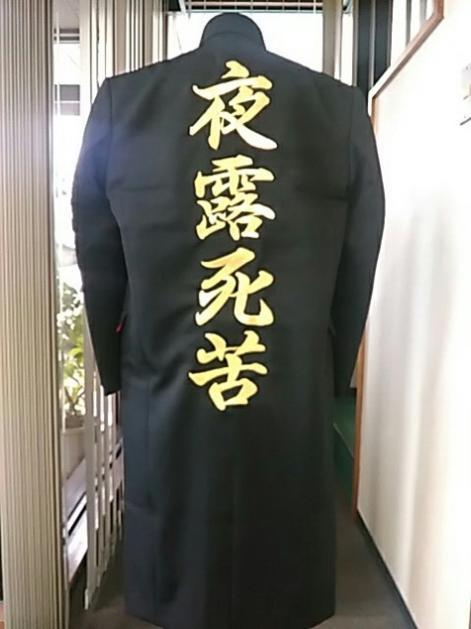
夜露死苦, a phonetic rendering of yoroshiku, on Japanese bosozoku clothing
However, even though both languages belong to the Chinese-character cultural sphere, and ‘pseudo-Chinese’ makes twenty-first-century written conversation possible, Japanese and Chinese remain two distinct languages. Their characters share origins and certain features, but Japanese kanji have developed according to their own logic and patterns. Kanji in Japanese remain part of Japanese—a means of writing that language—not Chinese. Imagining a ‘Chinese meaning’ from the characters alone can lead to enormous misunderstandings. A Chinese reader who knows no Japanese, for example, might take the common Japanese expression 大丈夫 to mean ‘husband’ or ‘man,’ never suspecting that it actually means ‘all right’ or ‘no problem.’ Professor Norio Nakada, an authority on Japanese and a specialist in lexicography, once used a vivid analogy to emphasize the difference between Japanese kanji and Chinese characters:
‘The difference between seawater and freshwater amounts to the presence or absence of a mere 2.4 percent salt. Yet that small difference in salt content makes seawater and freshwater different, with the result that the organisms living in them differ enormously.’
Whatever else may be said, Tsuita has stimulated Japanese internet users’ enthusiasm for ‘pseudo-Chinese’ and kanji, and even attracted the interest of Chinese users. Speaking to the Japanese media about this response, asa said he had made the app purely for his own amusement. He had imagined that perhaps a few dozen people with similar interests would casually play around on it. He never expected thousands upon thousands of ‘pseudo-Chinese’ enthusiasts to arrive, including many Chinese users who joined out of curiosity. The conversations between Chinese and Japanese users through characters and ‘pseudo-Chinese’ invite comparison with the exchanges in which Chinese and American users compared their lives on Xiaohongshu.
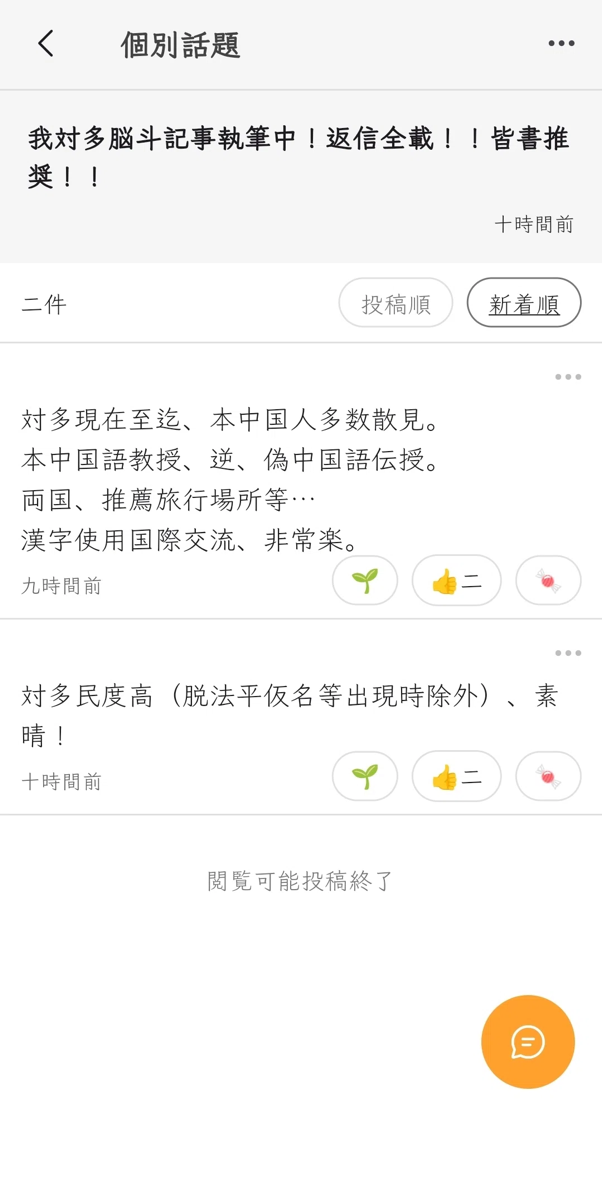
Many Japanese users find communicating in ‘pseudo-Chinese’ on Tsuita highly addictive. Choosing the most appropriate characters to convey an idea can take considerable effort, while an especially apt, vivid expression prompts the response: ‘I never knew those characters could be used like that!’ As Professor Hiroyuki Sasahara, a specialist in Chinese-character culture at Waseda University, writes in his book Japanese Kanji: ‘Since an investigation of characters can never exhaust them all, we might as well approach it as entertainment, memorize as many as we can, and enjoy the pleasure in this demanding process.’ In an age when social networks are everywhere, it is surely a delightful thing for Japanese and Chinese users alike to learn about characters and experience their appeal through conversation and play in a community such as Tsuita.