
Studies in Contemporary Chinese History, Volume 2
中国当代史研究(二)
- Publisher
- Jiuzhou Press
- Published
- August 2011
- Language / Edition
- Simplified Chinese
- Editors
- Centre for Contemporary Chinese History, East China Normal University
- Contribution
- Interpreting and Verifying Personal Historical Narratives: A Tianjin Earthquake Diary
- Chapter authors
- Sha Qingqing
- Chapter pages
- 235–253 (as cited in the author-provided manuscript)
- ISBN
- 9787510810343
- Pages
- 403
- Role
- Chapter contribution
This volume collects research papers on contemporary Chinese history. The title of the paper listed in the bibliography is "Interpretation and Verification of Private Historical Narratives: A Case Study of Tianjin Earthquake Diaries."
Attached below is a manuscript provided by the author, titled "Interpretation of Private Historical Narratives during the Cultural Revolution: A Case Study of Earthquake Diaries by Tianjin Educated Youth." The first page of the manuscript is marked with the year 2010 and pages 235–253; the official book was published in August 2011, and there are discrepancies in the titles and years between the two.
Interpretation of Private Historical Narratives during the Cultural Revolution: A Case Study of Earthquake Diaries by Tianjin Educated Youth
Sha Qingqing
Studies in Contemporary Chinese History, Vol. 2, Beijing: Jiuzhou Publishing House, 2010, pp. 235-253.
I. Introduction
The Tangshan Earthquake has long been considered one of the most devastating natural disasters in contemporary Chinese history. While there has been a significant accumulation of memories, narratives, and scientific research regarding this disaster, explorations from a historical perspective remain rare. On the other hand, the vast majority of memories and narratives concerning this event have focused on the situation in Tangshan City. However, it is worth noting that the power of this major earthquake was so immense that it not only destroyed Tangshan City, which was located at the epicenter, but also affected the vast surrounding areas. Taking Tianjin as an example, it suffered the most severe earthquake disaster in its history at the time. According to the Tianjin General Gazetteer: Earthquake Records, during the Tangshan Earthquake, areas both inside and outside Tianjin's urban districts suffered destruction of intensity levels 6 to 9, with the number of casualties reaching over 140,000, and 67% of the city's houses suffering varying degrees of damage. In July 1986,
1 Compiled by the Tianjin Local Chronicles Compilation Committee: Tianjin General Gazetteer: Earthquake Records, Tianjin Academy of Social Sciences Press, 1995, pp. 58–59, 63. See also Tianjin Seismological Bureau, “The Impact on Tianjin of the Earthquakes in Tianjin
On July 29, on the tenth anniversary of the Tangshan Earthquake, the Tianjin Earthquake Resistance Monument, located at the intersection of Chengdu Road and Nanjing Road, was officially unveiled. However, in the subsequent twenty years, memories of this earthquake seemed to be mentioned less and less by the public.
As an affected disaster area, although Tianjin also suffered unprecedented losses, the severity cannot be compared to that of Tangshan. Whether at the onset of the earthquake or at this present moment, Tianjin has never been the region receiving the most attention during this disaster. Over the subsequent thirty-plus years, Tianjin citizens also seemed to gradually forget the difficult times spent living in temporary tents, and various memories of this earthquake became blurred. For a long period, apart from macro-level descriptions and statistical figures regarding this disaster, historical researchers seemed unable to provide authentic and credible narratives or serious academic analysis. In those few written recollections, apart from knowing how governments at all levels "organized forces for emergency rescue and disaster relief," it has always been difficult for us to understand the actual post-disaster lives of Tianjin residents and the impact on their daily lives at the time.
Besides collecting post-event recollections from survivors, are there other first-hand materials from the scene that can help researchers reconstruct the course of events? Fortunately, the author obtained a private diary recorded around the time of the 1976 major earthquake through a chance opportunity. This diary begins on July 25, 1976, and ends on December 13 of the same year, comprising 140 entries and totaling 178 pages. The owner of the diary was a Tianjin high school student about to go to the countryside to work. This person's name was "Tongshan," and he lived on Shengli Street, Heping District, Tianjin City. His family consisted of six people: besides his parents, he had one older sister and two younger brothers. At the time, he was nearing high school graduation and was about to be assigned to work in rural areas in the suburbs of Tianjin.
As is well known, although narrative materials such as diaries, letters, and notes possess a private attribute, they cannot escape the constraints of ideology and social power relations, especially during special periods when political influence radiated comprehensively.4 Since 1949, state-led ideological factors began to increasingly permeate the diary writing of ordinary people. According to research by Wu Yanhong and David J. Knottnerus: Since 1960, reports on diary writing showed a sharp upward trend, peaking on the eve of the Cultural Revolution. Taking the People's Daily as an example, in 1965, articles with "diary" in the title reached 110, and in 1966, they reached 128, meaning that on average, there was a report on diaries less than every three days.
5 The authorities, through
powerful propaganda and mobilization capabilities, established works such as Lei Feng's Diary and Wang Jie's Diary as revolutionary models for the new era. This type of political propaganda reinforced, to a certain extent, the public political attributes and daily ritualized functions of private diaries. In many
and the Surrounding Areas” (internally printed, 1982, p. 6).
2 Thirty years after the Tangshan Earthquake, among the large-scale commemorative activities held by various sectors in Tianjin at the Tianjin Earthquake Resistance Monument, the most representative were likely the 30th anniversary of the Tangshan Earthquake in 2006 and the mourning activities held after the Wenchuan Earthquake in 2008.
3 Since the diary does not mention the author's full name or the full name of his school, the author's name "Tongshan" can only be known through the narrative in the text. For the convenience of narration, this diary will be referred to as the "Tongshan Diary" hereinafter.
4 In oral recollections of the Cultural Revolution by educated youth, for example, selective memory is extremely common, alongside forgetting. For many narrators who lived through the Cultural Revolution, the shadow of despotism and authoritarianism remains one of the main obstacles to speaking candidly. For relevant studies, see Liu Xiaomeng, “On the Oral History of Educated Youth” (Journal of Guangxi University for Nationalities, no. 5, 2003, pp. 19–24); Liang Lifang, “Remembering Going Up to the Mountains and Down to the Countryside: The Classification and Contributions of Educated Youth Memoirs, and Other Issues” (Free Commentary · Contemporary Literary Circle, no. 1, 2008, pp. 25–29); Wang Hansheng and Liu Yaqiu, “Social Memory and Its Construction: A Study of the Collective Memory of Educated Youth” (Society, no. 3, 2006, pp. 46–68).
5 For relevant research, see Wu Yanhong and David J. Knottnerus, "The Formation of Daily Ritualized Behavior: From Lei Feng's Diary to Educated Youth Diaries" (Society, Issue 1, 2007, pp. 98-119).
cases, diary writing was recognized as a means of political study and self-reflection, while its descriptive function was instead downplayed. On the other hand, with the emergence of so-called "diary crimes," many people worried that their diaries might become "evidence of crime" in the future, so they either simply did not write, or only wrote about daily trivia or copied down quotations.
However, while maintaining a clear understanding of this, we should also acknowledge that even in that special era, diaries may still reflect individuals' true experiences. Although private diaries inevitably became a political channel for expressing revolutionary enthusiasm, diary writing also often became one of the important means for people to relieve inner pressure. When browsing the "Tongshan Diary," one can find the grandiose slogans that filled that era, or the ritualistic repetition of revolutionary discourse; but behind these formulaic writings, one can also discover the author's independent observations of society, and even thoughts that diverge significantly from the mainstream political propaganda of the time. These observations and reflections are precisely what researchers should pay attention to.
II. Grassroots Realities of the Tianjin Earthquake as Recorded in Diaries
If this "Tongshan Diary" merely recorded the fluctuations of personal emotions without observing society, its value in terms of historical and social research would inevitably be limited; at the very least, it would fail to help later generations study the grassroots realities of Tianjin during the earthquake. Fortunately, after the earthquake, facing the terror brought by an unprecedented disaster, the diary's author, Tongshan, "wrote his diary braving the danger of being killed by aftershocks at any moment,"6 persistently recording what he saw and heard each day. Through plain language, he completely preserved his firsthand experiences and observations from the months before and after the earthquake. Undoubtedly, in the absence of detailed accounts related to this event, materials recorded by those involved at the first instance naturally possess research
value.
7 However, regarding the various descriptions in the diary, researchers still need to verify them through archives and other documents. Only in this way can the reliability and accuracy of the narrative content of the material be confirmed.
In the diary entry for July 29, Tongshan described that he was awakened by a violent tremor at around 3:40 a.m., feeling that it was "at least magnitude six or seven," and that "sixty to seventy percent of the houses on nearby streets had collapsed, and fully ninety-five percent of the houses had been damaged, with entire buildings visibly turning into ruins."
According to detailed investigations organized by the authorities after the disaster, housing damage in Tianjin was indeed severe. In Tianjin, surface cracks were distributed across more than 70 locations, totaling over 180 lines. These ranged from tens of meters to hundreds of meters in length and were mainly concentrated in Heping District, Hexi District,
and the southeastern part of the city.
9 The characteristics of housing damage in Tianjin's urban area were that it was lighter in Hedong District and heavier in Hexi District, especially in the area where the diary's author lived,
6 "July 28, 1976," "Tongshan Diary."
7 In the study of modern and contemporary history, unpublished historical materials, including diaries, deserve particular attention from researchers, who need to invest effort, time, and money in collecting them. For related insights, see Jin Dalu, "Preparation of Historical Materials for the Study of the Cultural Revolution in Shanghai" (Social Sciences, Issue 5, 2007, pp. 164-170).
8 "July 28, 1976," "Tongshan Diary."
9 For detailed data, see the Institute of Geology, State Seismological Bureau, "Analysis of Seismic Geological Conditions and Discussion on Seismic Damage Prediction in the Tianjin Area" (Investigation and Research on the Tangshan Earthquake, Seismological Press, 1981,
Heping District was the most severely affected.
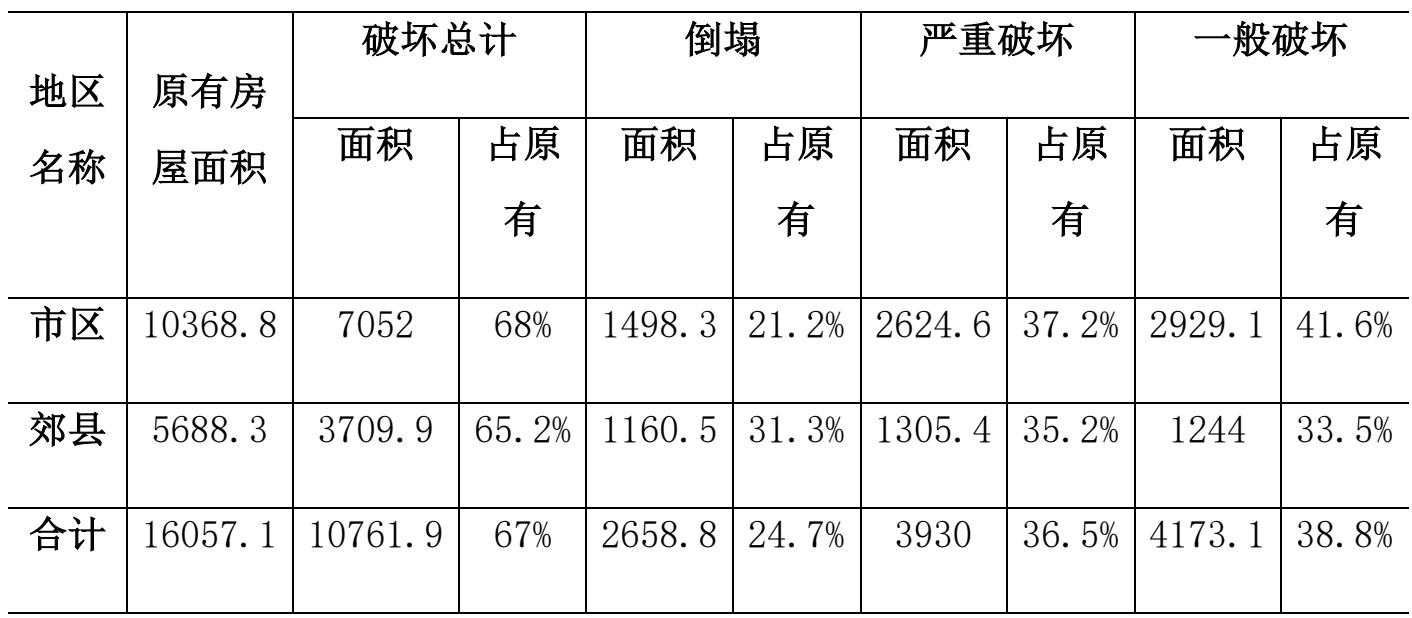
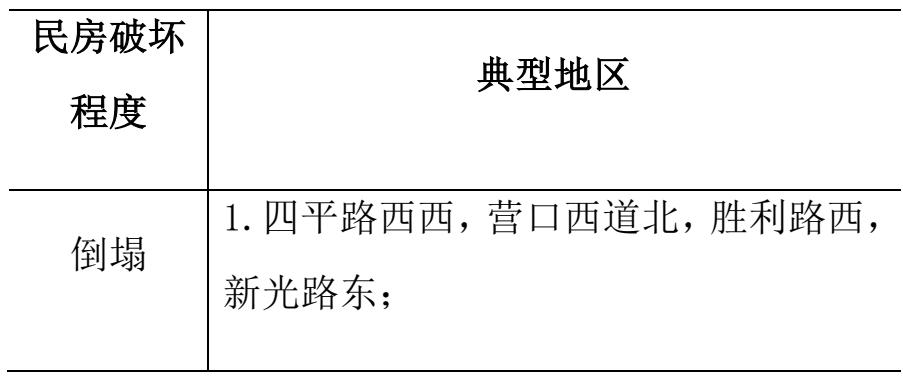
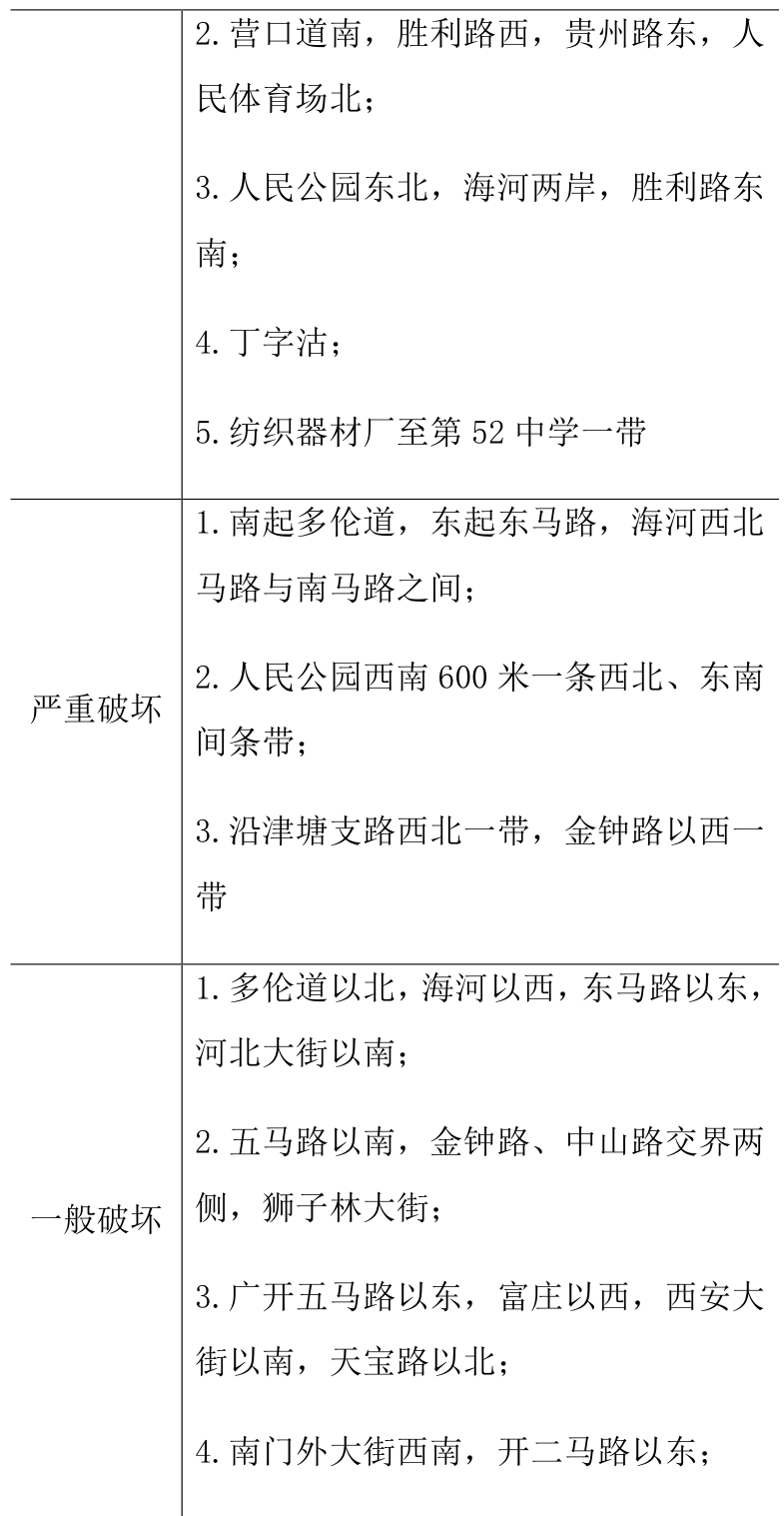
10 The damage rate of housing in Tianjin's urban area during the earthquake was approximately 68%. Housing damage in the urban area was primarily characterized by collapses, mainly distributed in Heping District and Hexi District; among these, there were many collapsed houses in Gansu Road, Xizang Road, Guizhou Road, both banks of the Hai River northeast of People's Park, and the southeast of Shengli Road (Nanjing Road).11 The number of collapsed houses in Heping District and Hexi District accounted for 91.6% of the total number of collapsed houses in the city.12 From this, we can see that the description of housing damage in Heping District in the diary is basically accurate.
Table 1: Statistical Table of Housing Seismic Damage in Tianjin
| Area | Original housing area | Total damage: area | Total damage: % of original | Collapsed: area | Collapsed: % of original | Severe damage: area | Severe damage: % of original | General damage: area | General damage: % of original |
|---|---|---|---|---|---|---|---|---|---|
| Urban districts | 10368.8 | 7052 | 68% | 1498.3 | 21.2% | 2624.6 | 37.2% | 2929.1 | 41.6% |
| Suburban counties | 5688.3 | 3709.9 | 65.2% | 1160.5 | 31.3% | 1305.4 | 35.2% | 1244 | 33.5% |
| Total | 16057.1 | 10761.9 | 67% | 2658.8 | 24.7% | 3930 | 36.5% | 4173.1 | 38.8% |
(Unit: 10,000 square meters)
Source: Tianjin General Gazetteer: Volume on Earthquakes, p. 63.
Table 2: List of Typical Areas of Civilian Housing Damage in Tianjin's Urban Area
| Degree of housing damage | Representative areas |
|---|---|
| Collapse | 1. West of Siping Road, north of Yingkou West Road, west of Shengli Road and east of Xinguang Road. |
| Collapse | 2. South of Yingkou Road, west of Shengli Road, east of Guizhou Road and north of the People’s Stadium. |
| Collapse | 3. Northeast of the People’s Park, along both banks of the Hai River, and southeast of Shengli Road. |
| Collapse | 4. Dingzigu. |
| Collapse | 5. The area from the Textile Equipment Factory to No. 52 Middle School. |
| Severe damage | 1. From Duolun Road in the south and Dongma Road in the east, between the Hai River, Xibei Road and Nan Road. |
| Severe damage | 2. A northwest–southeast strip 600 metres southwest of the People’s Park. |
| Severe damage | 3. Along the northwestern section of Jintang Branch Road and west of Jinzhong Road. |
| General damage | 1. North of Duolun Road, west of the Hai River, east of Dongma Road and south of Hebei Avenue. |
| General damage | 2. South of Wuma Road, on both sides of the junction of Jinzhong Road and Zhongshan Road, and along Shizilin Avenue. |
| General damage | 3. East of Guangkai Wuma Road, west of Fuzhuang, south of Xi’an Avenue and north of Tianbao Road. |
| General damage | 4. Southwest of Nanmenwai Avenue and east of Kai’erma Road. |
edition, pp. 45–55).
10 See Institute of Geology, State Seismological Bureau, "Analysis of Seismic Damage Geological Conditions and Discussion on Seismic Damage Prediction in the Tianjin Area" (compiled by the Scientific Research Division of the State Seismological Bureau, Investigation and Research on the Tangshan Earthquake, pp. 45–55).
11 Tianjin General Gazetteer: Volume on Earthquakes, p. 63.
12 See Revolutionary Committee of Tianjin Municipality, "Report on Seismic Resistance Work in Tianjin Municipality" (compiled by China Architecture & Building Press, Selected Materials from the Summary of Seismic Resistance Investigations of the Tangshan Earthquake, China Architecture & Building Press, 1977 edition, pp. 10–17).
Source: Compiled by the Scientific Research Division of the State Seismological Bureau, Investigation and Research on the Tangshan Earthquake, pp. 49–49.
In addition to extensive damage to buildings, human casualties were even more severe. Since the earthquake occurred in the early hours of the morning, most people were still in deep sleep and completely unprepared for the quake. Still shaken, Tongshan reached a similar conclusion on the day of the earthquake.
He wrote in his diary: “The (earthquake) occurred in the middle of the night, unexpectedly and suddenly; the casualties were truly tragic.”
13. “Regarding
damage to buildings and human casualties, I have always been afraid to face it directly, nor have I gone anywhere to see it, except when I had no choice but to look.”
14. According
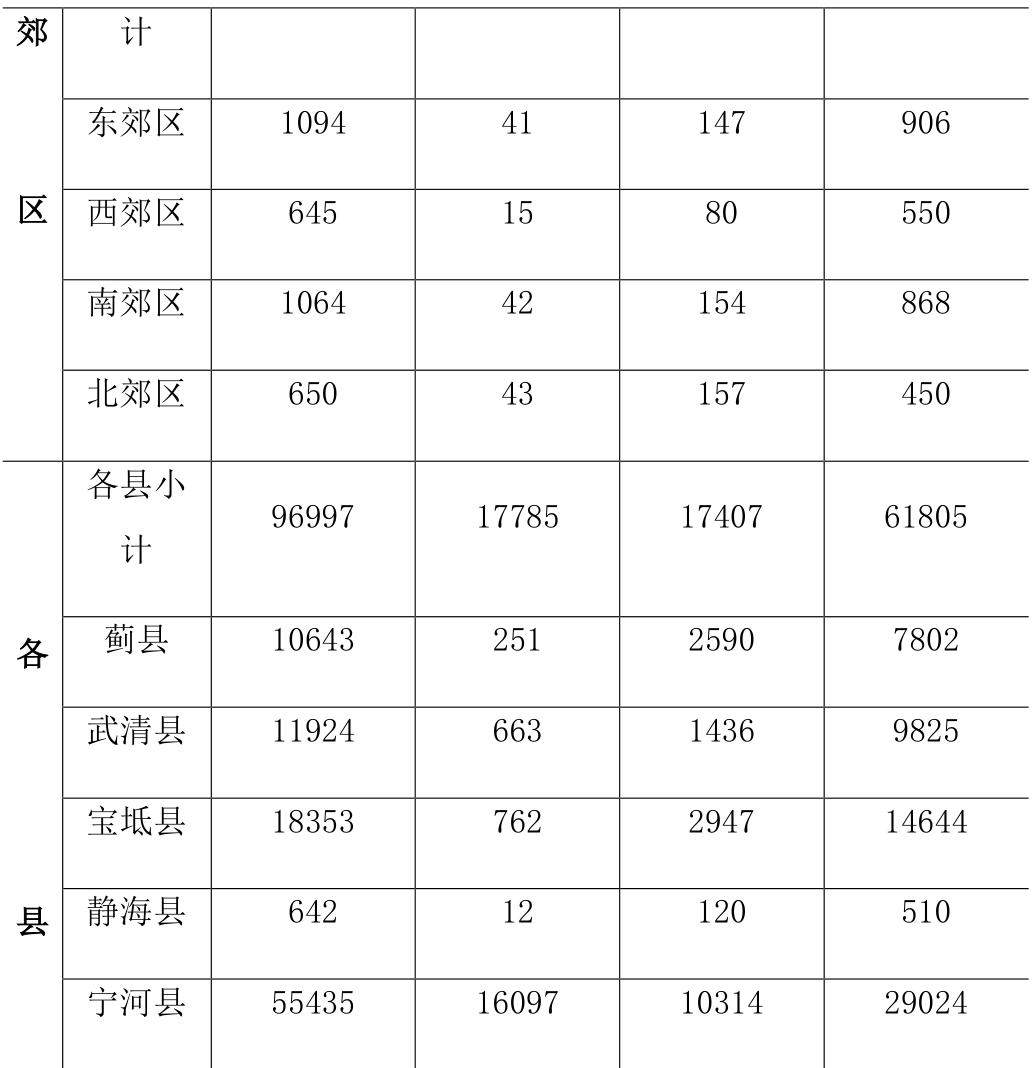
to the post-event statistics of the Tianjin Earthquake Relief Command: during the major earthquake, Heping District, where Tongshan was located, recorded 761 deaths, 1,234 serious injuries, and 5,968 minor injuries, making it the second most severely affected district in terms of casualties within the urban area.15 At that time, the total population of Heping District was 477,123 people, comprising 125,732 households, with an average of 3.7 people per household.
Table 3: Casualties in Tianjin Municipality during the Earthquake from July 28 to August 12, 1976
| District / county | Total casualties | Deaths | Serious injuries | Minor injuries |
|---|---|---|---|---|
| City total | 140337 | 23938 | 32572 | 83827 |
| Urban districts subtotal | 39887 | 6012 | 14627 | 19248 |
| Heping District | 7963 | 761 | 1234 | 5968 |
| Hebei District | 5409 | 185 | 853 | 4371 |
| Hedong District | 3391 | 28 | 325 | 3038 |
| Hexi District | 2990 | 153 | 481 | 2356 |
| Nankai District | 692 | 53 | 170 | 469 |
| Hongqiao District | 856 | 47 | 206 | 603 |
| Tanggu District | 3419 | 405 | 571 | 2443 |
| Hangu District | 15167 | 4380 | 10787 | |
| Suburban districts subtotal | 3453 | 141 | 538 | 2774 |
| Eastern Suburban District | 1094 | 41 | 147 | 906 |
| Western Suburban District | 645 | 15 | 80 | 550 |
| Southern Suburban District | 1064 | 42 | 154 | 868 |
| Northern Suburban District | 650 | 43 | 157 | 450 |
| Counties subtotal | 96997 | 17785 | 17407 | 61805 |
| Ji County | 10643 | 251 | 2590 | 7802 |
| Wuqing County | 11924 | 663 | 1436 | 9825 |
| Baodi County | 18353 | 762 | 2947 | 14644 |
| Jinghai County | 642 | 12 | 120 | 510 |
| Ninghe County | 55435 | 16097 | 10314 | 29024 |
13 “July 28, 1976,” Tongshan Diary.
14 “July 31, 1976,” Tongshan Diary.
15 Tianjin General Gazetteer: Earthquake Volume, p. 78. The district with the heaviest casualties within Tianjin’s urban area was Hangu District, located to the northeast, with 4,380 deaths and 10,787 serious injuries. The suburban county with the highest casualties was Ninghe County, where the death toll reached 16,097. For specific casualty figures, see Table 1.
16 See Planning and Statistics Section of the Heping District Revolutionary Committee, Compilation of National Economic Statistical Data for Heping District, Tianjin Municipality, 1975 (internally printed, 1976 edition), pp. 3–4.
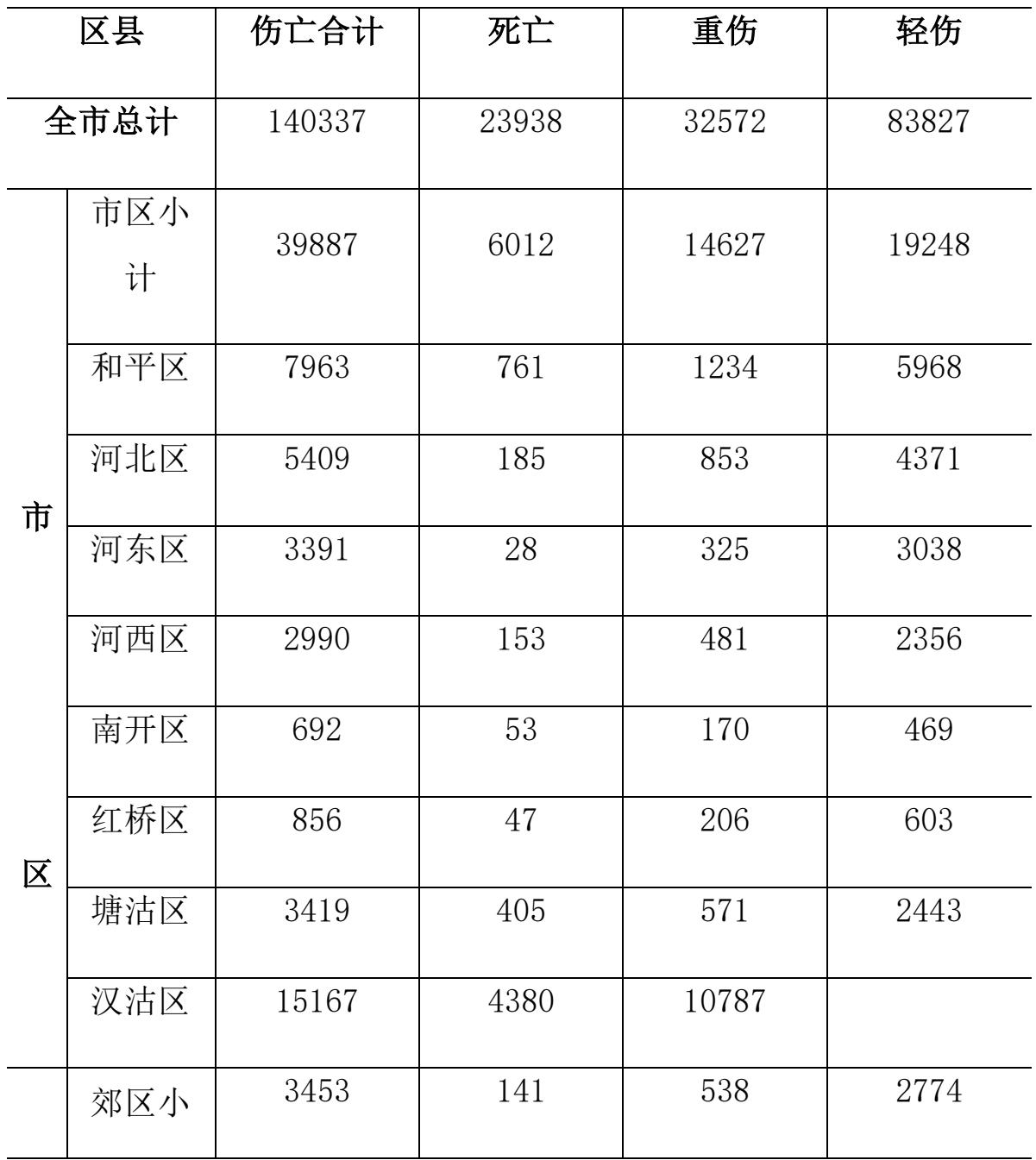
Source: Tianjin General Gazetteer: Earthquake Records, pp. 78-79.
The building where Tong Shan’s family lived had cracks but did not collapse in the earthquake, and there were no casualties in the household; however, “a nearby building threatened my home; if there was another tremor, the building would immediately bury my home, turning everything into ruins.”17 At that time, surrounding residents fled en masse to the streets for refuge. “Victory Road near Tong Shan’s home was lined with tents,” most of which were “tents set up for people to take turns sleeping in while monitoring seismic activity.” The relentless rain throughout the day further filled people’s hearts with anxiety and fear.
Similar situations were ubiquitous throughout Tianjin Municipality. Due to the massive destruction of housing by the earthquake, approximately one million people in the city were forced to sleep outdoors.19 The Tianjin Municipal Government specifically instructed industrial and commercial departments to allocate 90 tons of tarpaulins and plastic film, 1.95 million straw sacks, 8,700 bamboo poles, 18,800 wooden poles, 92,000 reed mats, 50,000 tons of wire, and other materials. Other survivors also recalled that almost overnight, shelters built by people using bamboo poles, wooden sticks, and plastic sheets
17 “July 28, 1976,” “Tong Shan’s Diary.”
18 “July 28, 1976,” “Tong Shan’s Diary.”
19 Tianjin Seismological Bureau: The Impact of Earthquakes in Tianjin and Nearby Areas on Tianjin Municipality, internally printed, 1982, p. 8.
20 Tianjin General Gazetteer: Earthquake Records, pp. 285-286.
seemed to spread throughout the streets and alleys within a single day, winding and meandering like a hundred-li encampment.21 In the first few days after the earthquake, the number of temporary shelters built across the city reached one million square meters. By mid-August, in Tianjin’s Heping District alone, where the diary author lived, the number of temporary structures and shelters built by the government and residents exceeded 11,200.
On the evening of the 28th, a police officer announced to residents sleeping on the streets: “There will still be a significant earthquake tonight. Comrades, please do not go home. Stay calm and avoid tall buildings.”23 Consequently, residents dared not return to their homes, which had not yet collapsed, and had no choice but to “wander the streets like ghosts.” People’s lives became completely irregular, constantly living in fear of aftershocks, to the point where they lost track of how many meals they ate in a day.24 At the same time, unable to return home, many people had no choice but to relieve themselves wherever they stood. Piles of feces could be seen everywhere in the middle of the streets. As Tong Shan put it, “In order to survive, we disregarded everything. Revolutionary ideals and the like— we didn’t even care about saving face anymore.”25 This chaotic situation lasted only two or three days, but the entire road and the hutongs were nearly covered in feces. After the earthquake, the weather was hot, rainy, and humid, causing the sanitary environment to deteriorate further. Cases of infectious diseases such as dysentery, enteritis, and encephalitis had already appeared in many places. On the afternoon of the 31st, street representatives began going door-to-door, requiring every household to send someone out to clean up, and the situation gradually improved.26 Facing the hardships of life brought by the natural disaster, the panicked people looked forward to assistance from all sides.
On the day the earthquake occurred, the Tianjin Municipal Committee held an emergency expanded meeting of its Standing Committee in the morning, issuing a series of instructions for emergency rescue and disaster relief. At 1:30 PM that afternoon, the Municipal Committee issued telephone notifications to all district committees, specifically deploying earthquake relief work.27 However, in the subtle and sensitive political atmosphere of the late Cultural Revolution, even efforts to comfort the people and provide disaster relief could not escape the political shadow of “taking emergency measures and leading the city’s military and civilians to deeply criticize Deng and counter the Right Deviationist Trend of Reversing Verdicts.”28 Until early September, the CPC Tianjin Municipal Committee still insisted on calling on the entire city to “use the criticism of Deng as motivation to carry out all earthquake relief work well.” In his speech, Municipal Party Secretary Xu Xin specifically praised “Comrades such as Wang Zuoshan, Secretary of the Party Branch of the Xiaojinzhuang Brigade, who consistently adhered to taking class struggle as the key link. After the earthquake, the political night school continued its studies as usual.”
On the morning of July 30, the Tianjin Sub-group of the Central Comfort Team arrived in Tianjin. The leaders of the team included Guo Yufeng, head of the Central Organization Department, and Zhang Zongxun, Minister of the General Logistics Department of the PLA, among others. The next day, Tong Shan also heard that “Premier Hua Guofeng came to our city to comfort the disaster victims,
21 Relevant recollections can be found in Bian Jizhe’s “Days in the Tianjin Earthquake” (Essays, Vol. 14, Flower City Publishing House, 1981 edition, pp. 29-31).
22 Tianjin General Gazetteer: Earthquake Records, p. 208.
23 “July 29, 1976,” “Tong Shan’s Diary.”
24 “July 30, 1976,” “Tong Shan’s Diary.”
25 “July 30, 1976,” “Tong Shan’s Diary.”
26 “August 2, 1976,” “Tong Shan’s Diary.”
27 Tianjin General Gazetteer: Earthquake Records, p. 285.
28 “Under the Care of Great Leader Chairman Mao and the Party Central Committee, and with the Great Support of Brother Provinces, Municipalities, and Autonomous Regions, Our City’s Military and Civilians United in Battle and Bravely Fought the Earthquake and Provided Disaster Relief,” Tianjin Daily, July 30, 1976, p. 2.
29 “Speech by Xu Xin, Secretary of the CPC Tianjin Municipal Committee, at the Conference of Advanced Units and Model Figures in Earthquake Relief in Tangshan and Fengnan,” Tianjin Daily, September 3, 1976, p. 2.
30 “The Great Victory of Chairman Mao’s Revolutionary Line—Speech by Comrade Xu Xin, Secretary of the CPC Tianjin Municipal Committee,” The Great Victory of Chairman Mao’s Revolutionary Line: Conference of Advanced Units and Model Figures in Earthquake Relief in Tangshan and Fengnan, September 1976 edition, p. 30.
I didn’t see him myself, but I saw the slogans posted on the streets.”31 However, shortly after, he heard that Hua Guofeng had not actually come that day, but had arrived on August 2, and had only visited the Municipal General Hospital to comfort the wounded.32 In fact, Hua Guofeng did not officially arrive in Tianjin to offer comfort until the evening of August 4. On the afternoon of the 5th, district and county-level cadres in Tianjin were all summoned to the Tianjin Cadres’ Club to collectively hear Hua Guofeng convey relevant spirits on behalf of the Central Committee.33 At this time, most ordinary disaster victims remained in a state of isolation.34 Most Tianjin residents, including the diary author, did not know the extent of the devastation in the Tangshan earthquake at first, and even thought that Tianjin was the epicenter. For instance, the diary author only learned on August 5, when he went to the city center on business, that “Tianjin was so severely affected, yet it was only a region impacted by the quake, while Tangshan and Fengnan were the actual epicenters.”
35。
Under the prevailing atmosphere of politics taking priority, the work of disaster relief was inevitably slow and difficult, especially since Tianjin was not the area most severely affected by this earthquake.36 Consequently, various feelings of dissatisfaction gradually began to spread among the citizens struggling at the grassroots level of society, and all of this was reflected in the diary: "Society has become an anarchic society, no one comes to care, the leadership has not come down... nor have we heard of any condolences"37, "The Central Committee instructed us, the people in the disaster area, to rely on our own efforts. Indeed, we did rely on our own efforts to survive a few days of refugee life, but we have not seen even the slightest aid from the state"
38. In addition, he
also heard people say that "all the cadres are concentrated in Heping District; as long as they flee, no one will look after the common people."39 Of course, whether it was Tongshan's own thoughts or the rumors he heard, they may not have represented the true feelings of all Tianjin disaster victims at the time, but they more or less verified the traumatic
psychological changes that could occur when disaster survivors' expectations of rescue fell short of reality.
III. Going to the Countryside or Staying in the City? The Evolution of Educated Youth's Mindset After the Disaster
Although natural disasters are merciless, in the days following the disaster, the greatest worry troubling Tongshan, this young disaster victim, was not the massive earthquake that might have taken his life, but the impending arrangement for going to the countryside.
31 "July 30, 1976," "Tongshan's Diary."
32 "August 3, 1976," "Tongshan's Diary."
33 See Yang Wujin, "After the Blue Flash: Remembering the Earthquake and Disaster Relief" (Tianjin Hebei Cultural and Historical Materials, Vol. 4, Tianjin People's Publishing House, 1990, pp. 37-43).
34 Regarding the interaction between disaster and daily life, Western scholars have explored the communication mechanisms in earthquake disasters, pointing out that different social forms may generate different modes of information transmission when facing earthquakes. This may also be an area worthy of attention for domestic researchers. See Gary J. Krug, "The Day the Earth Stood Still: Media Messages and Local Life in a Predicted Arkansas Earthquake," Critical Studies in Mass Communication, 1993, vol. 10, pp. 273-285. 35 "August 5, 1976," "Tongshan's Diary."
36 In contrast, the selection of so-called model deeds for earthquake relief had already begun immediately. See "Draft Opinions on the Allocation of Quotas for Our City's Representatives to the Central Meeting on the Tangshan-Fengnan Earthquake and for Our City's Advanced Collectives and Individuals in Earthquake Relief" (Tianjin Earthquake Relief Office, Tianjin Municipal Archives, 401206800).
37 "July 28, 1976," "Tongshan's Diary."
38 "August 3, 1976," "Tongshan's Diary."
39 "August 5, 1976," "Tongshan's Diary."
40 Due to the suddenness, harmfulness, and fearfulness of catastrophic events, survivors are prone to severe psychological imbalance. At the cognitive level, reactions such as denial, self-blame, helplessness, hostility, and distrust of others may occur, forming what is known as trauma psychology. Relevant research can be found in Wu Zelian, He Yuanyuan, and Li Hong, "What Has Disaster Left on Our Psychology—The Roots of Trauma Psychology and the Brain Mechanisms of Post-Traumatic Stress Response" (Advances in Psychological Science, 2009, No. 3, pp. 639-644). Additionally, for cases of the actual psychological reactions of disaster victims after the Tangshan earthquake, see Wang Shaoyu and Ma Chunqin, "The Invisible Disaster: A Record of Psychological and Behavioral Responses to the Tangshan Earthquake" (China Science and Technology Press, 1993 edition). Furthermore, according to post-event surveys, the hierarchical structure of disaster victims' needs after the Tangshan earthquake clearly exhibited a bottom-heavy characteristic. Relevant research can be found in Zou Qijia, Wang Ziping, Chen Feibi, and Wang Shaoyu (eds.), "Research on Social Recovery and Social Problems in the Tangshan Earthquake Disaster Area" (Seismological Press, 1997 edition).
In the days before the earthquake, the diary author Tongshan had been deeply immersed in anxiety and unease. Because shortly afterwards, he would be assigned to farm work in Jixian County, "the first step in life begins with being a farmer."41 Since late July, Tongshan's entire mind seemed to be focused on this matter. In his diary, like most young people of that era, he liked to write down impassioned revolutionary slogans; however, he would also use practical reasoning such as "only through several years of practice in the countryside can one gain the opportunity for further study in the future" to soothe his nervousness.42 Although he had not yet officially gone to the countryside, the diary author had already begun to seriously consider how he should "treat the poor and lower-middle peasants" after arriving in Jixian, and simultaneously, "how I will make the poor and lower-middle peasants trust me."43 Perhaps having heard about the experiences of older educated youth, Tongshan warned himself in his diary on July 27 that "being arrogant towards the poor and lower-middle peasants is not allowed; the poor and lower-middle peasants most envy and look down upon those who are arrogant," and "they most despise educated youth for being lazy in labor and most hate educated youth for dating."
After surviving the earthquake, although he had to endure the hardships of the living environment and live under the shadow of aftershocks, Tongshan quickly resumed thinking about the impending "going to the countryside" arrangement, to the point that he wrote indignantly in his diary: "This earthquake has made me even more uneasy; I am even more dissatisfied with going to the countryside!"
45, "I
thought at that moment that I was finished; the earthquake did not crush me for now, but my future is about to destroy me."46 Unlike the first generation of Red Guards who actively participated in the movement during the early stages of the Cultural Revolution, Tongshan's cohort, who came later, often lacked the revolutionary fervor of "smashing the old world." Instead, after witnessing the various social disorders following the passion of the Cultural Revolution, they were prone to feeling alienated or even dissatisfied with subsequent revolutionary movements.47 For example, in his diary on August 3, Tongshan wrote excitedly, "Because I have to go to Jixian, I am very afraid, as if under pressure. I no longer find the saying that 'going to the countryside is equivalent to disguised labor reform' repulsive; or rather, this saying deeply resonates with people's wishes."48 The phrase "going to the countryside is equivalent to disguised labor reform" mentioned here obviously originates from the "Project 571 Outline."
On August 15, a teacher from the school found Tongshan to inquire about the disaster situation. Tongshan learned that someone from his grade had unfortunately died in the earthquake, and he thus understood the teacher's purpose: on the one hand, to confirm whether he was still able to go to the countryside, and on the
41 "July 25, 1976," "Tongshan's Diary."
42 "July 25, 1976," "Tongshan's Diary."
43 "July 27, 1976," "Tongshan's Diary."
44 "July 27, 1976," "Tongshan's Diary."
45 "August 3, 1976," "Tongshan's Diary."
46 "August 10, 1976," "Tongshan's Diary."
47 Chen Peihua refers to this phenomenon as "depoliticized socialization," noting that the "revolutionary enthusiasm" of many Red Guards often waned during the period of "going to the countryside," followed by distrust and disappointment toward the leadership. See Chen Peihua, Mao's Children: The Growth and Experience of the Red Guard Generation (Bohai Bay Publishing Company, 1988 edition, pp. 235-241). However, Chen Peihua's analysis begins with the concept of the "authoritarian personality," and the author believes its applicability remains open to debate.
48 "August 3, 1976," "Tongshan Diary."
49 After the Lin Biao incident, the CPC Central Committee issued the document The Struggle to Smash the Counter-Revolutionary Coup of the Lin-Chen Anti-Party Clique, allowing ordinary citizens to access this important document, which served as the program for the coup. While voices cursing Lin Biao spread across the country, various heterodox ideas quietly sprouted. Many critical remarks in the document Minutes of the "571 Project" objectively prompted many people to begin rethinking various phenomena of the Cultural Revolution, and even stimulated doubts about the legitimacy of the entire Cultural Revolution. The complaints Tongshan wrote in his diary, which were nearly "treasonous" at the time, resonated with certain passages in these Minutes, thereby confirming this paradoxical social phenomenon.
on the other hand, they were also afraid of not being able to find people during graduation assignments.50 Although harboring resentment, Tongshan himself understood that the policy of "going to the countryside" would not change in the short term. "Going to the countryside, for me as for others, is a matter of last resort,"51
he noted. Some people around him
even advised Tongshan to fabricate situations such as house collapses or damage to his home, using these as excuses to evade going to the countryside. Although Tongshan had heard of such things, he had already deregistered his household registration before the earthquake in preparation for going to the countryside, making the possibility of finding a way to stay in the city now very slim. The only hope was that the massive casualties caused by the earthquake might lead to changes in the school's assignment work. While chatting with classmates, Tongshan learned that peers who had also deregistered their household registrations were harboring similar illusions, believing that "we definitely won't be able to leave; we will all stay in the city, and the household registration issue will be easily resolved."
resolved."
Thereafter, Tongshan ran around constantly regarding his household registration issue. He went to the school to find the school leaders, but they were unwilling to engage with him. He felt as if he were "walking to the guillotine, feeling very uneasy; seeing teachers was like seeing executioners, and in their eyes, he sensed a look of contempt toward us."53 The homeroom teacher who had originally pressured the students going to the countryside to deregister their household registrations now, upon seeing Tongshan, made an excuse to buy cigarettes and fled. The cold attitude of the school filled students like Tongshan with immense despair. "Since you forced us to deregister our household registrations, and now you won't take responsibility, aren't you driving us to our deaths?" Such resentment filled almost all the diary entries from those days. "I always thought there were no bad people now, but that is not the case. Some are bad people, some are becoming bad people, and some who were never evil are transforming into good people."54 For Tongshan, after experiencing the baptism of the earthquake, he could no longer convince himself to calmly accept the fate of going to the countryside. Instead, going to the countryside became the fuse that ignited various dissatisfactions within him, as he stated in his diary: "If even the minimum standard of living cannot be guaranteed, how can educated youth survive?"
One month after the earthquake, the school indicated that graduation assignments would continue.56 On August 23, the school indeed held a meeting and announced a new assignment plan. The original plan stated that out of 46,000 graduates, 13,000 were eligible to stay in the city. Now, due to the disaster, 10,000 people were to be selected from the 33,000 sent to the countryside to stay in the city and work in the infrastructure construction sector. Among them, those who had already deregistered their household registrations and met the conditions would have their registrations re-established after the district compiled statistics and issued certificates.57 Thus, a new term, "Zhenliu" (Earthquake Retention), emerged among that year's graduates. Thirty years later, many Tianjin citizens still recalled: they were notified to re-register their household registrations at the end of August, and reported to the engineering teams of construction companies on September 1.58 However, Tongshan did not become a member of the "Zhenliu"
50 "August 12, 1976," "Tongshan Diary."
51 "August 9, 1976," "Tongshan Diary."
52 "August 14, 1976," "Tongshan Diary."
53 "August 18, 1976," "Tongshan Diary."
54 "August 19, 1976," "Tongshan Diary."
55 "October 13, 1976," "Tongshan Diary."
56 "August 22, 1976," "Tongshan Diary."
57 "August 23, 1976," "Tongshan Diary."
58 See Wang Yuqiao, Zhenliu: A Name from Extraordinary Times (in Jia Changhua, ed., The 1976 Great Earthquake, Tianjin Academy of Social Sciences Press, 2006 edition), pp. 81-82.
army, so he still could not register his household and had to continue waiting for the fate of going to the countryside. His class had 37 students in total: 24 were assigned to industrial and mining enterprises, 1 was recruited through social hiring, 2 returned to their original hometowns, and the remaining 10 were all assigned to the countryside. Facing this unchangeable situation, Tongshan appeared disheartened, writing, "Regarding my fate, there won't be much change. I am unable
to change my fate."
During the agony of waiting for the final assignment, Tongshan witnessed the death of Mao Zedong and the downfall of the "Gang of Four." Just as with his attitude toward "going to the countryside," although he copied newspaper editorials into his diary for several days as a matter of routine, the young Tongshan boldly speculated on the political situation in his diary entry on September 16: "Finding a leader now is really difficult. The veteran generals are not suitable to take over, and new figures have not been cultivated. Among the adults, there is only Hua Guofeng. Zhang Chunqiao is not well understood, and Yao Wenyuan is not very famous. How I wish Yao Wenyuan were famous!" Similar remarks appeared repeatedly in the following month. For example, on October 12, he wrote: "Comrade Hua Guofeng being elected Chairman is something people expected," and "As for who will become Premier, no document has been issued yet. Judging by the situation, it is likely to be Zhang Chunqiao, but it is not certain; it might be Li Xiannian." The diary entry on the 17th read: "It is said that another attempted coup occurred in the Central Committee. Regarding the issue of succession after Chairman Mao Zedong's death, several leaders in the Central Committee engaged in fierce struggle."
struggle."
Although the political situation at the highest levels was turbulent, the mobilization and assignment for the "Sent-Down Youth" movement continued. Classmates around Tongsan, "in order to be assigned to good work posts," "spared no effort, visiting the homes of their teachers." However, due to concerns about face, Tongsan himself could never bring himself to "use back-door connections," and could only sigh in his diary that he was "too naive." All he could do was enthusiastically participate in the labor organized by the school. It is said that at the time, other schools in Tianjin did not organize graduates sent down to the countryside to participate in post-disaster reconstruction labor, with Tongsan's school being the sole exception. He himself was "more active than classmates assigned to industrial and mining enterprises," hoping only to exchange excellent labor performance for "the school's consideration, to be assigned to a place closer and better." Although he knew this approach was "perhaps very naive," he still held onto a sliver of fantasy—"as long as it can have some effect, let's persist for a few more days!"
However, fate was ultimately unchangeable. On October 29, 1976, the school and the Jixian authorities formally notified Tongsan: he had been assigned to the Malonggang Brigade of Yangjinzhuang in Jixian County. For Tongsan, the hope of "being assigned to a place closer and better" was "like a bubble, crushed by the school."62 Afterwards, Tongsan discovered that on the "Sent-Down List" published by the school, his name was listed first. Witnessing this, he did not feel honored; rather, he felt "a sense of being treated as a pup
59 "August 23, 1976," "Tongsan's Diary."
60 "September 27, 1976," "Tongsan's Diary."
61 "September 29, 1976," "Tongsan's Diary."
62 "October 29, 1976," "Tongsan's Diary."
pet. Indeed, when a teacher saw him, he tried to push him to speak as a representative, but was refused. By this time, Tongsan had firmly recognized the principle that "in the future, one should act within one's means; if one can carry ninety-nine, never carry one hundred."
Before and after the Cultural Revolution, the diaries of the vast number of sent-down youth often displayed similar emotional expressions. Although, on the one hand, keeping a diary at the time inevitably became a politicized ritual; on the other hand, sent-down youth diaries also paid attention to the surrounding environment and daily life. Private writing, represented by diaries, should not be blindly viewed as a simple replica of the widespread promotion of ideology in society. Each diary needs to be treated as a separate case for specific analysis. This diary preserves records from approximately four months before and after the Tangshan Earthquake, from which many vivid and authentic historical details can be unearthed. These seemingly insignificant details can precisely help us glimpse the true post-disaster social mentality at the end of the Cultural Revolution.
In the case of this diary, self-soothing, self-venting, and self-clarification can perhaps be regarded as one of the author's most important writing motivations. Before the earthquake, the author perhaps hoped to soothe his anxiety with some grand revolutionary principles. However, after the earthquake, the diary became a place for him to vent personal dissatisfaction. The expression of this type of mentality also gave researchers the opportunity to observe the differences between Social Memory and individual Historical Mentality. Through this examination, we may be able to understand the inner feelings of ordinary sent-down youth at the end of the Cultural Revolution. At the same time, it allows researchers to understand the writing psychology of the diary author, thereby better interpreting this type of diary text.
IV. Sent-Down Youth Movement Beginning with Aftershocks: A Comparison with Past Sent-Down Youth Life
Tongsan ultimately could not escape the fate of being sent to Jixian. However, if this had been just a few years earlier, for Tianjin sent-down youth to be assigned to this place would have been considered very favorable placement, and one might even have needed to "open a back door" to achieve it. In fact, Jixian County had already been transferred from Hebei Province to Tianjin Municipality in 1972. It was just that, out of habit, Tianjin citizens at the time still regarded the aforementioned areas as "other places" rather than suburban districts. Prior to this, the situation faced by Tianjin sent-down youth was much more severe than at this time. Among the three municipalities directly under the central government—Beijing, Shanghai, and Tianjin—Tianjin had the highest proportion of sent-down youth assigned across provincial lines. In 1967, when Tianjin was restored as a municipality directly under the central government, the city's total area was only 4,994 square kilometers, equivalent to only half of present-day Tianjin. At that time, Tianjin's suburban areas were narrow and could not possibly cope with the endless tide of sent-down youth. Consequently, this resulted in a large number of early Tianjin sent-down youth being forced into cross-provincial assignments. Their footprints spread across nine provinces and regions: Heilongjiang, Jilin, Liaoning, Ningxia, Gansu, Inner Mongolia, Shanxi, Xinjiang, and Hebei. This situation did not change until August 1972, when the State Council approved the formal transfer of five counties—Jixian, Baodi, Jinghe, Ning
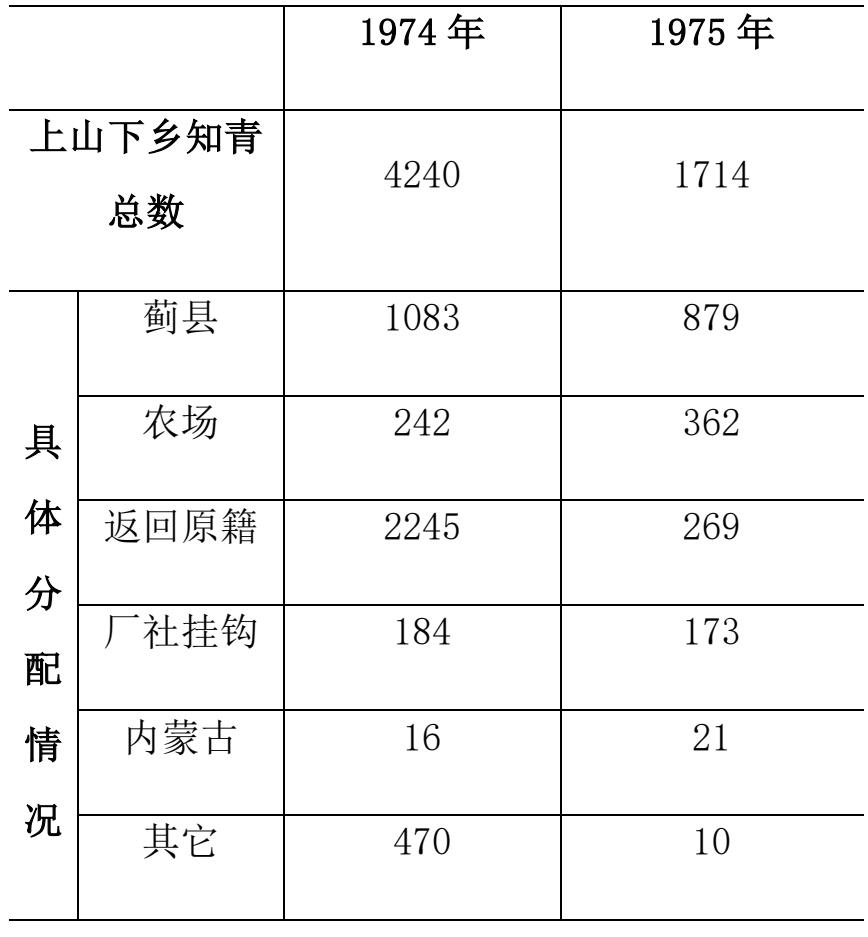
he, and Wuqing—to Tianjin. Since December 1973, when the first batch of junior high school graduates from Heping District went to Jixian County to settle down and join production teams, sent-down youth from Heping District also began to be assigned to the county in large numbers successively.
Table 4: Assignment of Sent-Down Youth from Heping District, Tianjin Municipality, 1974-1975
| Placement | 1974 | 1975 |
|---|---|---|
| Total educated youth sent down | 4240 | 1714 |
| Ji County | 1083 | 879 |
| State farms | 242 | 362 |
| Return to place of origin | 2245 | 269 |
| Factory–commune arrangements | 184 | 173 |
| Inner Mongolia | 16 | 21 |
| Other destinations | 470 | 10 |
(Unit: persons)
Source: Compilation of National Economic Statistical Data for Heping District, Tianjin Municipality, 1975, p. 71.
On the afternoon of November 6, the school held a farewell gathering. Tongshan, feeling depressed, deliberately delayed for an hour before going to the venue. Faced with the awkward atmosphere in the hall, the school leaders also lost their enthusiasm for giving mobilization speeches, and the originally planned symposium had to be hastily concluded. Everyone took their consolation gifts and immediately went home.64 Two days later, Tongshan, with a heart full of unease, had already boarded the train, heading to Malonggang Brigade in Yangjinzhuang, Ji County—where it would be his “second school for study and ideological remolding.”
63 Heping District Education Bureau of Tianjin Municipality: Tianjin Heping Education Yearbook: 1949-1983 (Draft for Comments), internally printed, 1984 edition.
64 “November 6, 1976,” Tongshan’s Diary.
65 “November 8, 1976,” Tongshan’s Diary.
Shortly after arriving in Jixian, the two teachers who had accompanied the sent-down youth, before leaving Jixian, set five requirements for Tongshan and his classmates: first, work more and talk less; second, obey local leaders; third, strengthen internal unity and unify thinking; fourth, do not create divisions or stir up disagreements; fifth, do not gossip about others privately. In addition, they specifically cautioned Tongshan “not to get involved in disputes over personal disagreements” and to absolutely “not get involved in factional struggles among commune members.”66 Evidently, these suggestions were neither vague revolutionary slogans nor enthusiastic mobilization orders, but rather resembled lessons in how to get along and settle down. Although the teachers had given this advice, faced with various unsatisfactory conditions, the sent-down youth’s morale remained extremely
poor.
On the second day of formal labor, a serious brawl broke out among the sent-down youth. The brigade secretary personally rushed over to resolve the issue, and a general meeting of all commune members was convened specifically to publicly criticize the incident and rectify the sent-down youth’s ideological style.67 Tongshan sighed helplessly in his diary: “The collective life of the sent-down youth has only just begun for a few days, and problems have already emerged. What exactly is the problem?”68 On the other hand, although they had only been in the area for a few days, Tongshan had unexpectedly discovered that the “poor and lower-middle peasants” also had many “bad habits,” with the so-called “private ownership mentality tying their hands and feet, preventing them from freeing themselves.”69 Although he had just arrived at Malonggang Brigade, Tongshan had already observed that “among the commune members, there was no manifestation of communist cooperative spirit, but rather a naked commodity relationship; they refused to do even a little extra work, and all defended their own interests with their lives.”
Although Jixian was not the poorest rural area, the labor life there was not easy, and it was filled with many things that urban sent-down youth had not anticipated. The first day of sent-down labor began with river dredging work. “Since I had never done this kind of work before,” Tongshan “felt uncertain and feared doing it poorly.”71 Because they had heard that “the brigade uses work points to measure us,” these newly arrived sent-down youth were also somewhat nervous: “Our work now is the basis for earning work points; if we don’t do well now, we shouldn’t even think about earning work points in the future.”72 Like sent-down youth in other regions, most sent-down youth generally found it difficult to be self-sufficient. This was partly because their income from collective production was always lower than that of local peasants, and their individual income was also lower. When work points were distributed, the sent-down youth naturally received fewer. Those sent-down youth who devoted themselves fully to labor often felt this was unfair, but to local cadres, this was perfectly normal. Over time, the sent-down youth’s inability to sustain themselves in the countryside created a vicious cycle, and discouragement and resistance naturally arose from this.
66 “November 9, 1976,” “Tongshan’s Diary.”
67 “November 14, 1976,” “Tongshan’s Diary.”
68 “November 23, 1976,” “Tongshan’s Diary.”
69 “November 12, 1976,” “Tongshan’s Diary.”
70 “November 17, 1976,” “Tongshan’s Diary.”
71 “November 12, 1976,” “Tongshan’s Diary.”
72 “November 12, 1976,” “Tongshan’s Diary.”
73 For relevant analysis, see Michel Bonnin, The Lost Generation: The Chinese Sent-Down Youth Movement, 1968–1980 (translated by Ouyang Yin, The Chinese University Press, 2009), pp. 237–239.
While the sent-down youth were still grappling with the mixed feelings of their initial arrival in the countryside, they once again faced the threat of earthquakes. Late at night on November 15, a strong earthquake of magnitude 6.9 occurred in the Ninghe and Nanfeng area.74 When the earthquake struck, Tongshan was writing a letter to a classmate. “Suddenly, an earthquake occurred,” and he “hurriedly woke up his sleeping comrades, who all ran out wearing only their shorts.” The Ninghe earthquake, an aftershock of the Tangshan earthquake, further exacerbated earthquake damage in the Tianjin area, and subsequently caused “ideological fluctuations” among the local sent-down youth.
ideological fluctuations.
75 When the sent-down youth heard that the Nanshi area of Tianjin had suffered severe damage, some cried and insisted on going home to check on their families, going directly to the brigade party branch. Under strong requests, the party branch approved for the local sent-down youth to send representatives back to Tianjin’s urban area to check on their families’ safety. Thus, less than ten days after being sent down, some sent-down youth were already trying every means possible to return to the city to visit their families. In 1975, as many as 1,160 sent-down youth from Heping District, where Tongshan’s family lived, returned to Tianjin under various pretexts such as illness or extreme hardship.
Subsequently, at the sent-down youth life meetings held one after another, “the comrades had no reaction to politics at all.” In Tongshan’s view, “the fantasy of creating a strong political atmosphere would become a bubble.” He had always heard that “nowadays, the vast majority of young people do not seek progress,” and now he could only sigh, “Has what such people said been confirmed in our collective?” In fact, wasn’t Tongshan himself one of them? His coldness and dissatisfaction with his classmates around him might have been because he himself felt that “if we detached ourselves from politics, how boring our lives would be.”77 Among the older Red Guards, many had explicitly joined the movement for political ideals, and after being sent down, they hoped to continue political discussions among their peers. However, by the late Cultural Revolution, such political discussions among sent-down youth had mostly become mere formalities, or were difficult to organize, and even gradually became a breeding ground for heterodox ideas.
Less than half a month after being sent down, the heavy labor and the lifeless atmosphere had already left Tongshan with no illusions about sent-down youth life in Jixian. Local cadres in the commune had once complained to Tongshan that “the sent-down youth from the city are ungrateful and have deceived many commune members; the commune members either give them pickled vegetables or tobacco leaves, and as soon as they are selected for transfer, they forget all about us.”79 Although Tongshan also felt that “it was unreasonable for the sent-down youth to forget their ‘second hometown,’” when he heard the notice on the brigade loudspeaker that “colleges and universities are recruiting students,” he immediately began to think about his future prospects. He frankly admitted in his diary: “For me, it is indeed necessary to temper myself in the countryside for a few years, but it is not suitable to put down roots in the countryside for a lifetime.” The recruitment conditions in this notice were quite strict: first, applicants must have two years of “agricultural age”; second, the principle for higher education was “from the commune, back to the commune,” meaning that after graduation, they would still have to return to the original
74 See “November 15, 1976, Ninghe, Tianjin, Magnitude 6.9 Earthquake” (China Earthquake Yearbook: 1949–1981, China Earthquake Publishing House, 1990 edition, pp. 325–326). 75 “November 16, 1976,” “Tongshan’s Diary.”
76 Planning and Statistics Section, Revolutionary Committee of Heping District, Tianjin Municipality, Compilation of Statistical Data on the National Economy of Heping District, Tianjin Municipality, 1975, internally printed edition, 1976, p. 71. In addition, for macro-level discussions on the nationwide "sick return" and "hardship return" of educated youth, see Shi Weimin, "The Issues of 'Sick Return' and 'Hardship Return' among Sent-Down Educated Youth" (Youth Research, No. 2, 1995), pp. 46–49. See also Pan Yi, "Exploring the Causes of the Great Return-to-City Wave among Educated Youth" (Youth Research, No. 3, 1994), pp. 26–28. 77 "December 12, 1976," Tongshan Diary.
78 See Michel Bonnin, The Lost Generation: The Chinese Sent-Down Youth Movement, 1968–1980 (translated by Ouyang Yin, The Chinese University Press, 2009), pp. 342–344. 79 "November 28, 1976," Tongshan Diary.
the commune he had come to. Nevertheless, Tongshan was still unwilling to give up the idea of taking the college entrance examination in the future, to the extent that his classmates, upon learning of this, mocked him, saying he would "probably go insane from failing the exam."
Just as educated youth like Tongshan personally experienced, by this stage the sent-down youth movement had reached a dead end at the grassroots level. In fact, as early as the Changchun Symposium on Educated Youth held in August 1975, there had been a growing number of voices advocating for a rotation system for educated youth, rather than long-term or even lifelong settlement in rural areas, marking the emergence of "two different guiding ideologies."
emerged."
81 To counter this ideological tendency, Wu Guixian, then Vice Premier, forwarded a letter from grassroots opponents of the large-scale recruitment and return of educated youth to Mao Zedong on February 1, 1976. Mao, who was already seriously ill at the time, issued only a single instruction on February 12: "Distribute to the Politburo. The issue of educated youth should be studied as a special topic. First make preparations, then hold a meeting to resolve it." Consequently, to implement this highest directive, the State Council's Leading Group for the Sent-Down Youth Movement was formally established in early May. Upon its establishment, the Leading Group immediately assembled personnel to travel across the country for investigations, collecting information for the meeting on educated youth originally scheduled for November and seeking out typical examples of the "rooted faction" and the "uprooted faction." However, the entire investigation was temporarily suspended due to the Tangshan earthquake. Mao died on September 9, followed by the arrest of the Gang of Four on October 6. The meeting was postponed indefinitely, and discussions on the educated youth issue were temporarily shelved. It was not until 1980 that the entire movement finally came to an end.
As for Tongshan's subsequent fate, the diary does not provide any account, with the records ending on December 13, 1976. Tongshan, who had been sent down to the suburbs of Tianjin, had very likely already returned to his original home in the urban area of Tianjin.82 However, that unforgettable experience of the earthquake must have inevitably added an unusual hue to his subsequent life as an educated youth.
V. Some Reflections
Since the Chinese Communist Party came to power in 1949, and especially during the more than a decade following 1960, diary writing became a political ritual promoted by the state regime and entered the daily lives of young people. Such diaries naturally abounded with highly politicized slogan-like statements, but behind these formal manifestations lay the distinct writing contents and complex, unique motivations of individual diary writers. The harsh living conditions, the repeatedly collapsing revolutionary ideals, and the unpredictable political situation were enough to make many young people feel lost and confused, even feeling immense pressure.83 Thus, diary writing, originally a political ritual of revolutionary life, gradually shifted towards personal expressive needs, and even became a process of self-"disenchantment" (deenchanted). Taking the Tongshan Diary as an example, one can read how he vented his dissatisfaction with the fate of educated youth between the lines of his diary, and how
80 "November 18, 1976," Tongshan Diary.
81 Gu Hongzhang, Chronicle of Major Events in the Sent-Down Youth Movement in China, People's Daily Publishing House, 2009 edition, p. 136.
82 Although the vast majority of educated youth sent down to rural areas in the suburbs of Tianjin returned to the urban areas one after another after the Cultural Revolution, according to fieldwork conducted by Jeremy Brown, a small number of Tianjin educated youth did not return to the city but remained in the suburban counties.
83 See Wu Yanhong and David J. Knottnerus, "The Formation of Ritualized Daily Behavior: From Lei Feng's Diary to Educated Youth Diaries" (Society, No. 1, 2007, pp. 98–119).
how he adjusted and soothed this resentful emotion under his pen. Through the verification and reconstruction of the content he recorded, what emerges before our eyes is not only the social reality of Tianjin before and after the earthquake disaster, but also a microcosm of grassroots life in China during the late Cultural Revolution.
When later generations look back on similar disasters, they always cherish the recollections of those involved, viewing them as valuable things rather than focusing on the content of the evidence itself, so that "memory" becomes "commemoration."84 However, if later researchers view history merely as a "memorial," they effectively limit historical narrative to present-day thoughts and actions. In the case of the Tangshan earthquake, disaster memory itself often became an object of commemoration and worship for later generations, and narrative recollections of related experiences seem to have become the only resources currently available for us to understand the actual social conditions at the time. However, a lack of understanding of historical realities hinders later generations from delving into the actual context of social changes during the disaster. In other words, researchers need to engage in historiographical dialogue with post-hoc recollections through other forms of historical traces, and then verify them. Thus, the value of private historical narratives is thereby demonstrated.
Furthermore, from the perspective of social research, we often find a significant cognitive gap between the actual experiences of ordinary Chinese people and researchers' speculations. The formation of such gaps is partly due to researchers' inability to fill the voids between different basic facts. In the field of contemporary Chinese history research, only by filling these gaps as much as possible can one truly understand the actual historical context of that time and place. Only then can researchers truly enter into the historical realities at the grassroots level, thereby gradually forming a unified historical understanding between public experience and research speculation. Of course, no private narrative historical source can completely align with the macro-historical trajectory, but at least it can provide researchers with a new observational perspective.
In summary, compared to the accounts of social celebrities, the verifiable private historical records left by the "nameless" people at the grassroots level may actually be more valuable.86 Although these "nameless" people at the bottom of society were often swept up in various movements, they were not absolute followers or purely passive recipients. Whether facing natural disasters or man-made calamities, the experiences of any ordinary person are unique and worthy of attention, for they are the true bearers of that history.
84 Peter Novick, in his renowned work The Holocaust in American Life, described the process of "sacralization" of the Jewish Holocaust in American society after the 1960s and provided a highly valuable scholarly summary. See Peter Novick, The Holocaust in American Life, Mariner Books, 2000.
85 Frederik Rosen, “Off The Record: Outsourcing Security And State Building To Private Firms And The Question Of Record Keeping, Archives, And Collective Memory”, Archive Science, 2008 Vol.8, pp1-14. 86 Diaries of people from the lower and middle strata of society often lack concerns about future public display. According to Luo Zhitian, such diaries often undergo a process from "being for others" to "being for oneself," and sometimes possess greater historical value than celebrity diaries specifically written for outsiders. See Luo Zhitian, “Thought, Scholarship, and Politics in the Early Republic as Seen in Diaries—An Observation by a Scholar in the 1920s” (Dongfang Wenhua, Issue 2, 2003, pp. 24-30).