
Did Mossad Really Support Ahmadinejad?
摩萨德真的“扶持”了艾哈迈迪内贾德吗?
On July 13, 2026, The New York Times published a rather astonishing investigative report titled "Inside Israel's Secret Effort to Prop Up Ahmadinejad." The article was co-authored by journalists Mark Mazzetti, Julian Barnes, Farnaz Fassihi, and Ronen Bergman, the latter being a veteran reporter who has long tracked Israel's intelligence system.
The subject of the report is Mahmoud Ahmadinejad, who served as President of Iran from 2005 to 2013. During his tenure, he was known for advancing the nuclear program, suppressing the 2009 domestic protest movement, denying the Holocaust, and making fierce anti-Israel and anti-American statements.
According to the report, Mossad began approaching Ahmadinejad around 2022. After his visit to Guatemala in 2023, the two sides had initial contact. In 2024, a conference on environmental and climate issues in Budapest, Hungary, served as a cover for further contact, with then-Mossad Director David Barnea personally traveling to meet him. The Israeli side subsequently considered propping Ahmadinejad back onto the political stage and overthrowing the current Iranian regime after toppling the existing government.
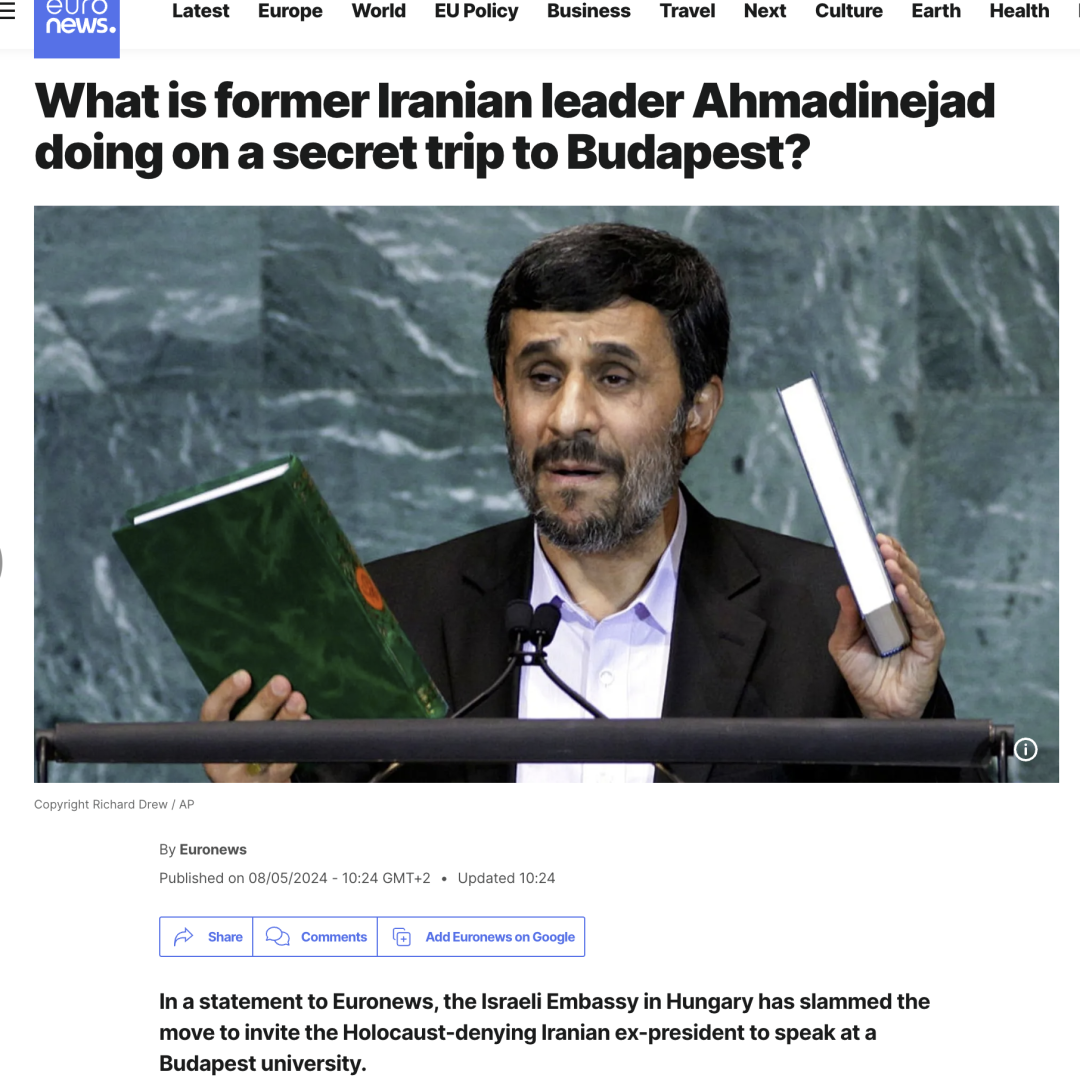
Euro News report on Ahmadinejad's visit to Budapest in August 2024
The latter half of the report reads more like a spy novel.
After the US and Israel began attacking Iran on February 28, a black Peugeot car picked up Ahmadinejad from his residence, which had been struck. The four people in the car were reportedly all Mossad personnel. He was taken to a safe house in Tehran but left on his own, eventually falling into the hands of the intelligence department of the Iranian Revolutionary Guard Corps. The regime change operation originally planned by Israel also failed as a result.
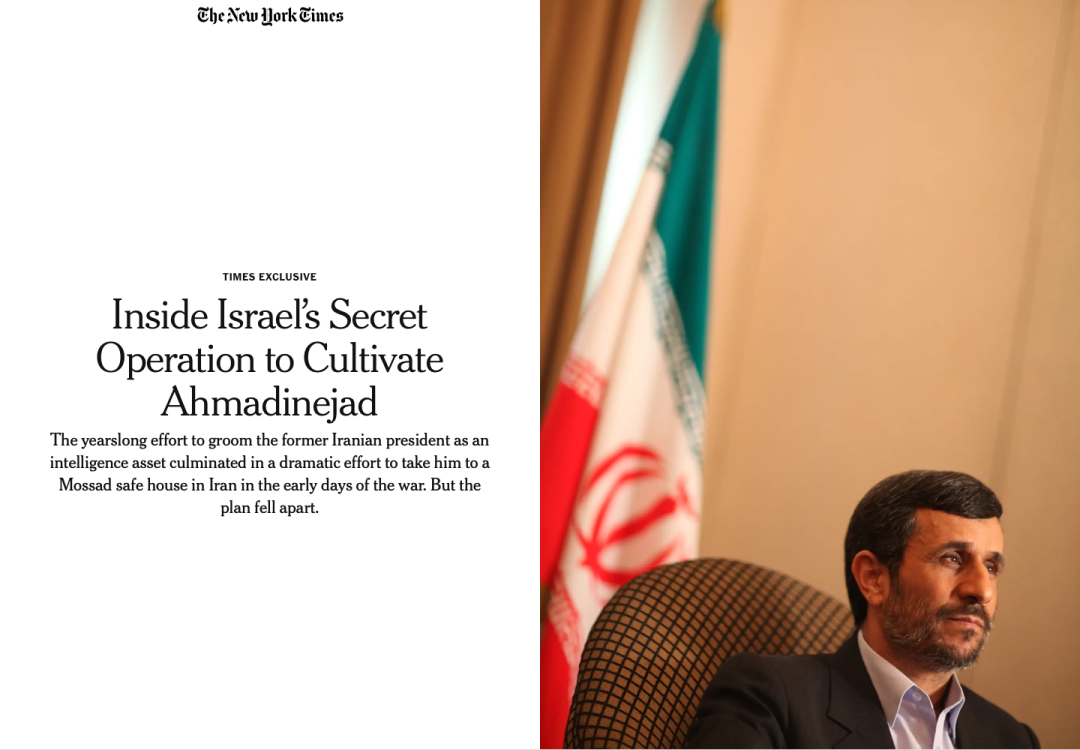
The New York Times investigative report page from July 13, 2026
This report reminded me of the French series "The Bureau" (Le Bureau des Légendes). In the first two seasons, the French Directorate-General for External Security (DGSE) sent agent Marina Loiseau into Iran under the cover of a seismologist. She was originally planned to approach a nuclear industry worker, but the mission was temporarily redirected to the son of a high-ranking Iranian official. The French and Americans were interested in the family connections, social networks, and future position within the Iranian power structure of this Iranian "second-generation official."
However, according to The New York Times, reality may be more exaggerated than in TV dramas, with the target of infiltration shifting directly from an Iranian second-generation official to a former president.
The New York Times is not the only media outlet to investigate or disclose this matter. Israel's Haaretz also published another set of investigations. As relayed by Iran International, that investigation interviewed more than 30 political, defense, diplomatic, and foreign sources. The reports from both outlets were largely consistent regarding Mossad's involvement, long-term contact, and internal debates within Israel.
Tamir Hayman, former head of Israel's Military Intelligence Directorate (Aman), acknowledged in an interview that the US and Israel had prepared a series of special operations that have not been fully disclosed, with Ahmadinejad being one part of them. According to Hayman, Ahmadinejad was merely one component of a comprehensive regime change operation by Israel and the US, the true starting point of which was an offensive launched by the Kurds. However, Turkish President Erdogan, fearing that supporting Kurdish forces would directly threaten Turkey's security, persuaded Trump to cancel the relevant plans.
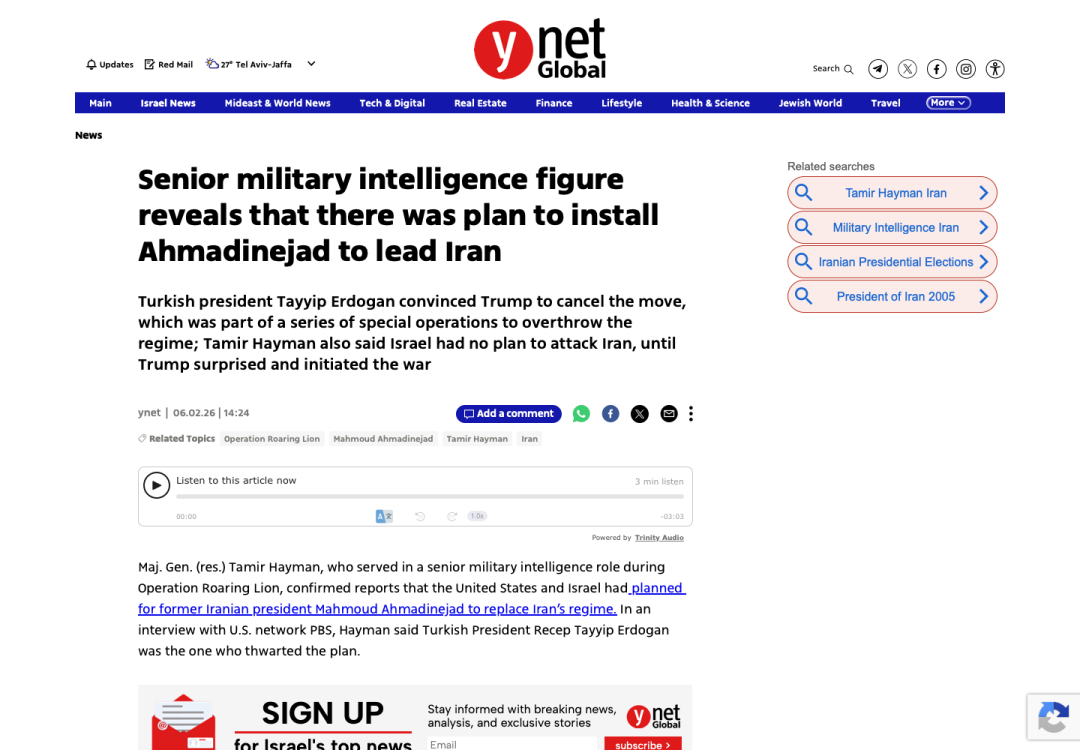
Report on the interview with Tamir Hayman
On the other hand, there was no consensus within Israel regarding contacting and propping up Ahmadinejad. According to disclosures by Haaretz, former Israeli National Security Advisor Tzachi Hanegbi called the relevant plans a "crazy fantasy"; IDF Chief of Staff Eyal Zamir reportedly requested to halt the operation days before it began, but Netanyahu ultimately rejected these objections and decided to support this risky venture.
As for Ahmadinejad's side, did he have any motivation to disengage from Israel? This may need to be explained starting from his situation after leaving office.
After leaving office, Ahmadinejad gradually drifted apart from Khamenei and the core of Iranian power, running for re-election several times only to be rejected by the Guardian Council. Consequently, he began to adjust his public image, turning to criticize the authorities' suppression of protesters (although he had done the same thing back then), and even actively learned English. In the eyes of Mossad intelligence officers, a former president with national fame, who had a rift with the old system while still retaining some supporters, was clearly worth probing.
This choice may seem absurd, but it is not without political logic. Opposition forces outside Iran often lack the bureaucratic networks and social base within Iran, while those still within the system find it difficult to openly defect to external forces. Ahmadinejad happened to be stuck in the middle: he was a national political figure created by the old system who had fallen out with the power core; he was familiar with the state apparatus and might have believed he still had a chance to return to the center of power, being ambitious.
However, on July 6, Ahmadinejad still appeared at Khamenei's funeral. News footage from the scene proved that he was at least able to appear in public at the time, although he was seemingly surrounded by a large number of security personnel. Ahmadinejad's office subsequently issued a statement on July 13, denying any secret contact with Mossad and denying that he was under house arrest by the authorities, stating that he was still handling daily affairs.
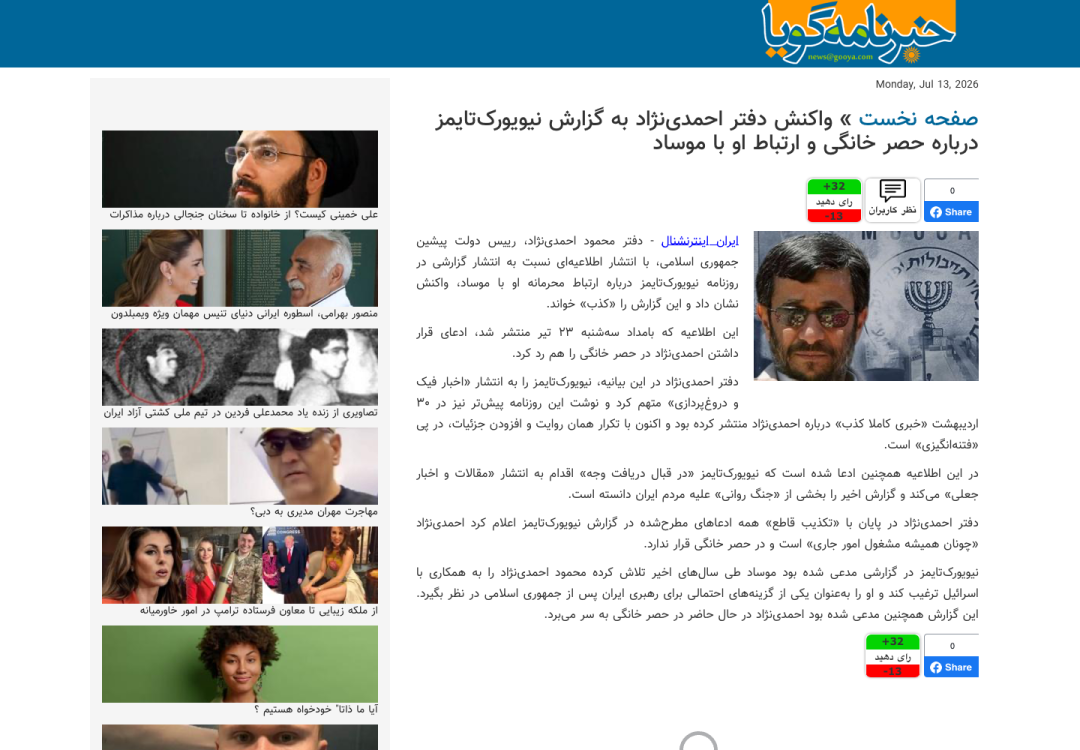
Persian news websiteGooya News relaying the denial from Ahmadinejad's office
It is worth noting that reports by US and Israeli media may themselves be part of an "intelligence operation."
The British Guardian cited the skepticism of Alex Vatanka, Director of the Iran Program at the Middle East Institute in the US: If Mossad had invested so much, why would they let Ahmadinejad easily leave the safe house on his own? And releasing this information deliberately at this moment may have been aimed at creating suspicion and unease within Iran.