
The Human–Machine Commute
沙青青评《通勤梦魇》︱“人机组合”的通勤之路
Sha Qingqing, “The Human–Machine Commute,” The Paper · Shanghai Review of Books, 14 May 2025.
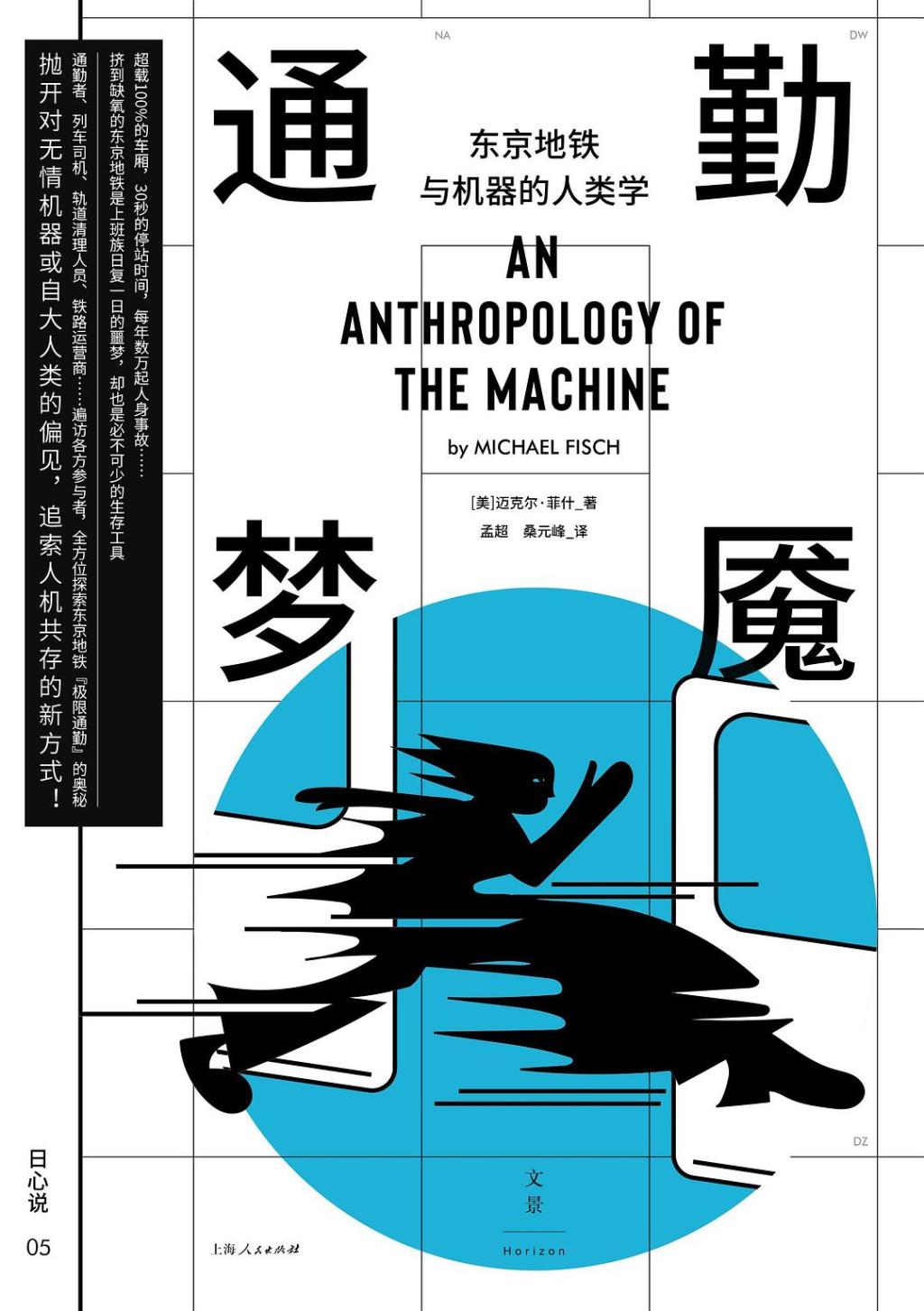
An Anthropology of the Machine: Tokyo Metro and the Anthropology of Machines, by Michael Fish, translated by Meng Chao and Sang Yuanfeng, published by Shanghai People’s Publishing House in January 2025, 384 pages, 69.00 yuan.
At major railway or subway stations in Tokyo, one often sees a particular scene: several foreigners staring blankly at the train route maps hanging on the walls, which are as complex as spider webs, or looking bewildered, alternately looking down at their phones and then up at the route maps on the wall. As one of the largest metropolitan areas in the world, the Tokyo metropolitan area boasts a rail transit network whose complexity is among the highest in the world. Currently, there are nearly 160 rail lines within the Tokyo metropolitan area, with a total operating track length exceeding 4,700 kilometers, transporting over 40 million passenger trips per day (transfers between different operating entities are recounted). Within the Tokyo region, there are 0.24 stations per square kilometer, demonstrating the high density of the network.
Trains of various types shuttling between skyscrapers and low-rise residential buildings, passengers in suits, shirts, or uniforms waiting to board or alight, and crowded yet orderly crowds have all become part of the daily landscape of this massive city of Tokyo. Every day, millions of people take trains through the city’s streets and alleys; the densely packed rail transit lines have long become the blood vessels of this giant metropolis. The expansion and development of the train network and urban expansion mutually promote each other, much like the relationship between blood vessels and the body. New communities and commercial centers have emerged along the train lines, and urban planning often revolves around stations, forming a unique layout of “station-city integration” that shapes the basic pattern of life for Tokyo’s citizens.
Michael Fish, an associate professor at the Department of Anthropology and Sociology at the University of Chicago, through meticulous fieldwork combined with his personal experiences living in Tokyo, conducted a fresh anthropological investigation of Tokyo’s train commuting network in his book An Anthropology of the Machine: Tokyo Metro and the Anthropology of Machines (An Anthropology of the Machine:Tokyo’s Commuter Train Network), exploring how Tokyo’s rail transit system is intertwined with urban development and citizens’ lives. He keenly points out that although Tokyo’s train system often operates at overload, it still maintains high efficiency, thanks to the “collaboration” between train operators and commuters. This collaboration is not only reflected at the technical level but also involves social and cultural interactions, reshaping the state of urban life, such as the “sense of time.”
As is well known, Tokyo’s train schedules are extremely tight and globally renowned for their punctuality. This highly institutionalized train timetable has shaped the sense of time among Tokyo’s citizens. The daily routines of office workers are regulated by train schedules: rushing for the first train in the early morning, while the late-night “last train” determines when people return home. These have all become part of urbanites’ biological clocks, with even overtime work and nightlife revolving around the train timetable. Interestingly, Michael Fish was also impressed by a certain “special skill” of Tokyo’s citizens. Passengers dozing in their seats on the train seem to always wake up in time when it is their turn to get off, dragging themselves out of the carriage with sleepy eyes. In Fish’s view, this is almost a “paradigm of the relationship between modern humans and machines,” where commuting passengers are “domesticated” into objects that obey machine operating instructions during their daily travels, even internalizing this into a subconscious.
The dense train schedules make people particularly sensitive to time—the tens of seconds of countdown on the screen while waiting for a train seem to slow down and stretch the internal sense of time. Tokyo commuters can often precisely remember their commuting time, such as “exactly 55 minutes” from their doorstep to the office, or transfers that must be completed “within 90 seconds.” Opening a local Japanese traffic navigation app can even tell you which car to exit from to make transfers faster and more convenient. As Fish cites, there are commuters who depart daily from Ikebukuro Station or Shimbashi Station, transferring at Shibuya, Shinjuku, or Otemachi. Their daily walking paths, station choices, and door positions are precisely consistent, day after day, without error. Their bodies have become “automated,” forming a tacitly coordinated rhythm with the train system. This precise perception of time stems from long-term regular train commuting experiences, making Tokyo commuters feel as if they live in a rhythm as precise as clock gears. However, when this rhythm is disrupted due to unforeseen circumstances (such as train delays), people often experience strong unease or even anxiety. Thus, Fish introduces a very important concept in this book—“interval.”
By “interval,” Fish explains the difference between the train timetable and actual operations. Obviously, this difference inevitably exists, whether caused by delays due to unexpected events or the result of the system itself being overloaded. Facing this unavoidable “interval,” the Tokyo train network always manages to maintain operations through a series of adjustments. These adjustments are not solely the result of unilateral efforts by network operators (train companies) but also rely on the cooperation of commuters, which precisely reflects the collaborative relationship between humans and machines. In the book, Fish also borrows another concept proposed by the French philosopher Gilbert Simondon, namely the so-called “margin of indeterminacy.” In the Tokyo train network, scenarios of this “margin of indeterminacy” play out every day: drivers slightly adjust departure times based on the speed of passengers boarding and alighting, passengers change transfer plans based on real-time information, and staff handle unexpected incidents, and so on. In these tiny spatiotemporal “gaps,” humans and machines work together to maintain the “temporary stability” of this massive system—the Tokyo train network. In crowded and narrow carriages, people can maintain a subtle balance, being in a public space while preserving personal space. This is also an image frequently borrowed in Japanese literary and artistic works; for example, Neon Genesis Evangelion (EVA) repeatedly uses scenes inside train carriages to depict the psychological state of the protagonist Shinji Ikari. The train carriage, as a public yet enclosed space, mirrors Shinji Ikari’s state of being in the same city as others yet finding it difficult to interact with them.
In his book, Fish describes Tokyo's train network as a machine system operating with precision "at the limit of its load capacity." Passengers must strive to "embed" themselves within this high-speed system and constantly remind themselves "not to cause trouble for others." Consequently, a set of "train etiquette" with distinct Japanese characteristics has emerged. Anyone who has ridden a train in Japan should be deeply impressed by the quiet and silence inside the carriages. Making phone calls or speaking loudly in the carriage is considered a serious breach of etiquette, especially during rush hour. In Fish's words, "silence is the highest expression of Japanese train etiquette." Furthermore, to board and alight quickly and efficiently, how one queues at the doors is naturally an important component of this etiquette. All of this is to ensure that this transportation network, which operates at high load—or even overload—year-round, can continue to function. In other words, amidst the "commuter nightmare" of a megacity, passengers busy with their commutes have "evolved" a way of coping and a collective tacit understanding, thereby maintaining the efficiency and order of daily travel. This is precisely the interesting perspective Fish offers us in his book. It is obvious that anyone living in a large city will not find the scenes depicted in An Anthropology of the Machine unfamiliar. The urban commuting system constructed by Tokyo's trains is merely a microcosm of the survival conditions of most cities and humanity, which lends Fish's research greater value and significance.
In the picture painted by An Anthropology of the Machine, the train network is the mechanical infrastructure upon which the city depends for its survival; its smooth operation relies on human cooperation and adaptation, while human lifestyles are also shaped and defined by this machine system. Thus, the commuting path of Tokyoites is essentially a product of a "human-machine combination," where humans and the train network together constitute an organic whole. People's rhythms of life synchronize with the machines, and their bodily senses are extended through machine technology. However, Fish does not view this merely as the "alienation" of humans by machines or technology, as suggested by stereotypes, nor is he advocating a return to pastoral "anti-technology" rhetoric. Tokyo's commuters are not merely passively accepting the arrangements of the technological system; rather, through their daily behaviors and habits, they actively participate in the system's operation. This relationship is one of mutual interaction and causality. In other words, what Fish hopes to emphasize is that contemporary human lifestyles are co-constructed by humans and technological systems. The commuters rushing between stations such as Ikebukuro, Shinjuku, Shibuya, and Shimbashi are by no means just small cogs in a vast system, but vibrant lives endowed with subjectivity. Although they are disciplined by this machine system, they also inversely define the operating rules of this machine system. From a philosophical perspective, people situated within Tokyo's train system are unconsciously playing the role of a certain "Cyborg"—that is, a hybrid of human and machine. In this regard, current society seems essentially no different from the future presented in cyberpunk stories such as Ghost in the Shell, differing only in degree. As Fish states, "there is no turning back," but we may need to recognize the relationship between technology, machines, and humans. Through the perspectives of philosophy and anthropology, one can observe how technological systems and human life mutually shape each other, and how the cyborgian state of human-machine symbiosis becomes everyday reality in daily commuting.
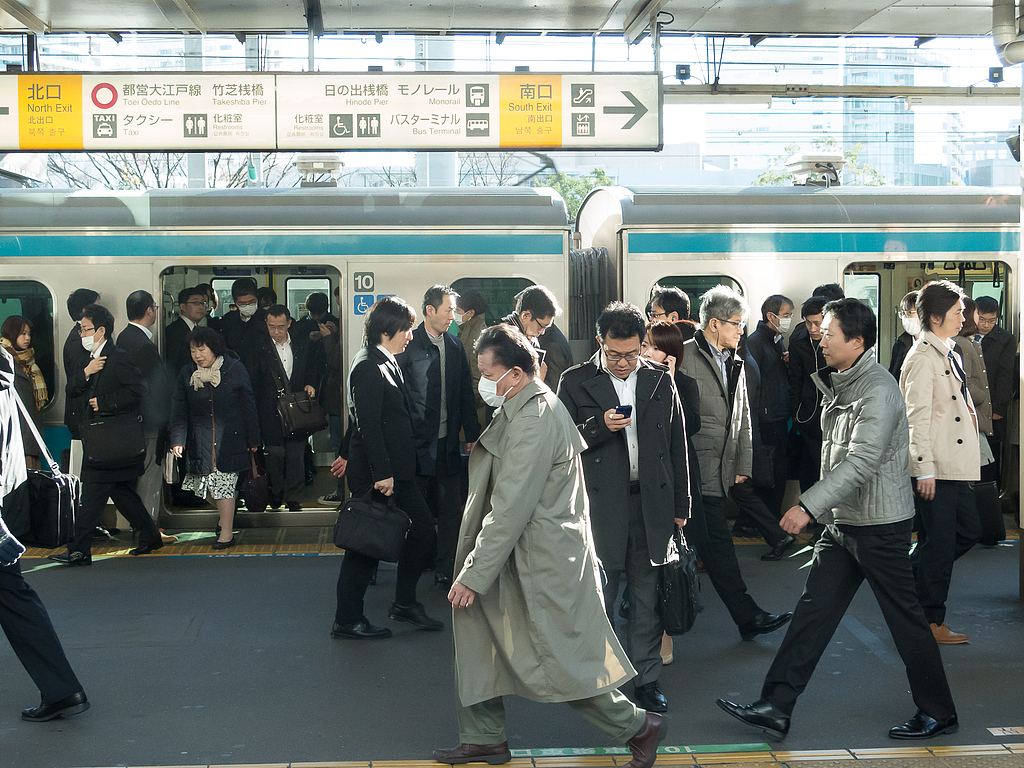
The busy Tokyo subway
Finally, a brief note: the Chinese translation of this work is titled An Anthropology of the Machine: Tokyo Subway and the Anthropology of Machines. The translation of "Tokyo Subway" in the subtitle may be inaccurate and easily leads to misunderstanding or confusion. This is because Tokyo's rail transit network is composed of multiple independent operating entities. The term "subway" in the Chinese context cannot correspond to Tokyo's rail transit network.
For example, the "Yamanote Line," which loops around central Tokyo, belongs to the "East Japan Railway Company" (i.e., "JR East"), and "JR East" is the most important railway company within the Tokyo metropolitan area, possessing numerous major trunk lines. As for "Tokyo Subway," it is another company: "Tokyo Metro Co., Ltd." (i.e., Tokyo Metro), which operates nine subway lines within Tokyo. In fact, besides "Tokyo Metro," Tokyo has another "subway system," namely the "Toei Subway" operated by the Tokyo Metropolitan Bureau of Transportation, which has four lines and is independent of "Tokyo Metro." Additionally, there are numerous other railway companies within the Tokyo metropolitan area, such as "Seibu Railway," "Tobu Railway," and "Keio Corporation," totaling dozens of companies. The rail transit lines operated by these different enterprises collectively construct the vast and complex train commuting network of the Tokyo metropolitan area, and the translation of "Tokyo Subway" in the subtitle easily leads Chinese readers to a plausible but mistaken understanding. In fact, the author Michael Fish is fully aware of this, so the original English text of the book uses the term "Commuter Train Network." Therefore, translating it as "commuter rail transit" might be more precise and faithful to the original meaning, or one could simply borrow the meaning of the Japanese kanji and translate it as "Tokyo Trains."