
The Vatican’s Secret War
沙青青评《间谍教廷》|暗地运营反纳粹情报网的“间谍大师”
Sha Qingqing, “The Vatican’s Secret War,” The Paper · Shanghai Review of Books, 15 July 2025.
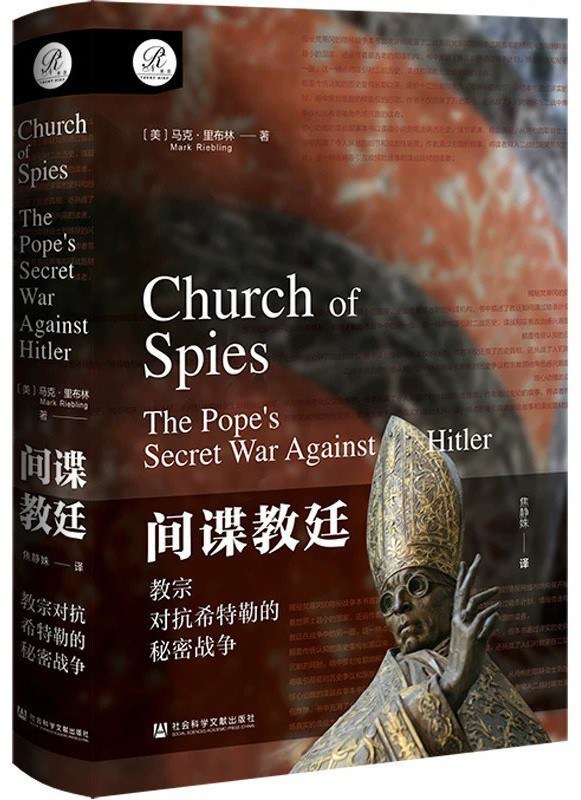
Church of Spies: The Pope’s Secret War Against Hitler by Mark Riebling, translated by Jiao Jingshu, published by Social Sciences Academic Press in June 2025, 409 pages, 89.00 yuan
On March 11, 1940, Pope Pius XII received an unwelcome "uninvited guest" at the Vatican—Joachim von Ribbentrop, the then Nazi German Foreign Minister, who was at the peak of his power. Shortly before, he had gained Hitler’s high regard for successfully facilitating the signing of the Molotov–Ribbentrop Pact. Since Germany’s invasion of Poland in September 1939, the Western Front in Europe had been in a strange stalemate, and Italy’s Mussolini had not yet declared war on Britain and France. Ribbentrop’s primary mission on this trip was naturally to persuade Mussolini to formally declare war on Britain and France as soon as possible, and his secondary mission was to meet with Pope Pius XII (Eugenio Pacelli).
In May 1938, when Hitler visited Rome, Pope Pius XI chose to leave the Vatican and Rome for Castel Gandolfo to the southeast, thereby avoiding the possibility of meeting Hitler. In Pius XI’s own words, he did not wish to remain in a city that would fly the "pagan cross hostile to Christ" (i.e., the Nazi swastika flag). Compared to his predecessor, Pius XII was open to meeting with the highest levels of the Nazi leadership, perhaps due to his long experience serving as a Vatican diplomat abroad and as Secretary of State, responsible for diplomatic affairs. As early as 1933, he had promoted the signing of a so-called "concordat" between the Vatican and Germany regarding the status of Catholicism and church authority, but the subsequent Nazi government did not abide by this document. After Pius XII was elected Pope, the European war broke out, and he at least outwardly decided to emulate the approach of Benedict XV during World War I—namely, to maintain neutrality.
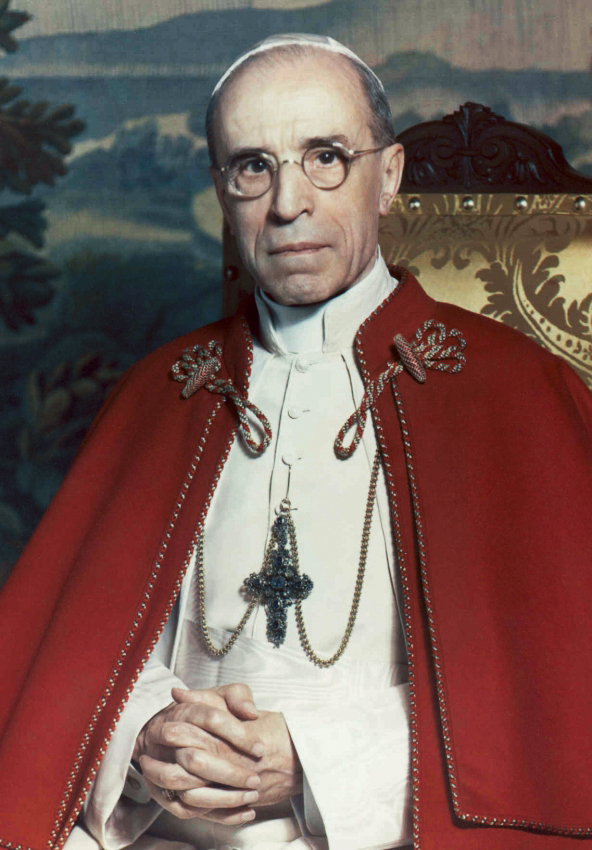
Pope Pius XII
For a long time, how the Vatican and the Pope himself viewed the fascist movement and Nazi Germany has been a topic of great interest and sensitivity. Even before the end of the war, many people viewed Pius XII’s failure to publicly and explicitly criticize Nazi atrocities as a form of acquiescence or even complicity, believing that the Catholic Church had chosen to bow to "tyrants" and compromise for its own survival; as for Pius XII, he may have had "sympathies" for the Nazis and anti-Semitic tendencies. Such views became mainstream for a time in the 1950s and 1960s, exemplified by Jewish historian Saul Friedländer’s Pius XII and the Third Reich (Pius XII and the Third Reich), which is representative of this school of thought. In this monograph published in 1966, Friedländer vividly depicted the meeting between Ribbentrop and Pius XII: the Nazi German government presented the Vatican with so-called conditions for peace negotiations with the Western Allies, and the Vatican reached a consensus with Berlin on opposing the Soviet Union and communism. Hitler also hoped to drag Pius XII into this game of spoils before launching a large-scale offensive on the Western Front. Friedländer argued that this could explain why Pius XII later chose to ignore Nazi atrocities such as the Holocaust during the war and maintained so-called "silence" in public. In 1999, British journalist John Cornwell repeated and reinforced this view in his monograph Hitler’s Pope (Hitler's Pope).
However, neither the Vatican archives nor the German or Italian archives have found records that substantiate the descriptions in Friedländer’s book. In fact, from the perspective of Nazi Germany, the meeting in March 1940 was not a "successful" diplomatic encounter. For Nazi Germany at the time, Ribbentrop’s visit was largely motivated by considerations of diplomatic propaganda, as well as to placate and co-opt Catholics within Germany and Italy. During the meeting, Ribbentrop conveyed Hitler’s message to Pius XII: "A basic reconciliation between National Socialism and the Catholic Church is entirely possible." Pius XII’s response was a memorandum detailing how the German Catholic Church was suffering persecution, bluntly stating: "The facts show that Germany is waging a war against the Church." On other issues, Ribbentrop also failed to convince Pius XII that Germany’s total victory was imminent; the latter repeatedly expressed sympathy for Poland. When Ribbentrop accused "Polish clergy of only engaging in politics and opposing the Germans," Pius XII stated: "One can ask Polish priests to remain silent, focus only on their pastoral duties, and not cause trouble for the occupying authorities, but one cannot expect them to abandon their love for their homeland."
It is not hard to imagine that this meeting ultimately ended in near-disagreement.
Afterward, the Nazi German Foreign Ministry did not issue any communiqué or press release regarding this meeting, leading to widespread speculation in the international community about the content of the talks. Some considered it a "Nazi victory," others saw it as a repeat of the "Trip to Casablanca," and still others viewed it as Berlin’s final warning, among other interpretations. As for the Vatican, although it also did not issue an official communiqué on the meeting, it expressed its stance indirectly in another form. On the 12th and 13th following the meeting, Pius XII emphasized the importance of justice and peace in public addresses for two consecutive days, implicitly demanding that Germany correct its unjust actions so that peace could be achieved. This attracted international attention, and The New York Times, far across the ocean, published a report titled "Pope Speaks for Persecuted in Germany and Poland in Talks with Ribbentrop." On March 17, Pius XII wrote in a letter to the German cardinals: "From a human perspective, we currently see no signs favorable to peace or the situation of the German Church..." From this meeting in March 1940 alone, it is not difficult to discern the basic strategy adopted by Pius XII: not to openly confront Nazi Germany, but to uphold his fundamental positions in a covert and indirect manner. In fact, the efforts made by Pius XII during the war may have gone far beyond this; he even participated directly in the war against Hitler in an even more secret manner.
Since the 1990s, more diverse perspectives and interpretations have gradually emerged regarding how to understand Pius XII and the role played by the Vatican during World War II. For instance, intelligence research expert and historical writer Mark Riebling’s Church of Spies: The Pope’s Secret War Against Hitler seeks to challenge and even overturn the accusations that Pius XII colluded with the Nazis, through a systematic review of archives that have been declassified over the past three to four decades. The content presented in his book is precisely the opposite: Pius XII was a "master spy" who secretly operated an anti-Nazi intelligence network.
Among the materials collected by Riebling, two parts are particularly noteworthy.
The first is the surveillance recordings from the Vatican, particularly those of Pius XII. After being elected Pope, Pius XII decided to install listening devices in his study to record his conversations with visitors. Of course, the surveillance was not limited to the papal study; it could take place anywhere in the Vatican, such as in a dim corner of the Sistine Chapel. Rippin referred to these recordings as "one of the most closely guarded secrets of the Vatican," which only gradually became known in the early twenty-first century. The second source was intelligence files collected by James Angleton, the former head of counterintelligence at the US Central Intelligence Agency (CIA). Before and after World War II, Angleton had been the head of the Rome station of the US Office of Strategic Services (OSS), and he had collected a large amount of material concerning Pius XII and his close associates through various means. Incidentally, Mr. Angleton was at that time a close friend of Kim Philby, a senior official of the British Secret Intelligence Service (MI6) who was later revealed to be a Soviet spy. From the materials collected by Angleton, one can glimpse how Pius XII operated the Vatican's intelligence network during the war.
First, the establishment of this intelligence network relied on anti-Nazi forces within Germany. As early as the autumn of 1939, anti-Hitler officers within the German Wehrmacht began attempting to establish secret contacts with Pius XII. On the one hand, this was because many of these officers had a Catholic background. For example, Stauffenberg, who nearly succeeded in assassinating Hitler in July 1944, was a Catholic. After establishing contact with this group of anti-Hitler officers, Pius XII even gave them a religious "green light" for the assassination plot. The Pope had advised these officers that, according to Catholic doctrine, citizens could assassinate a tyrant who "unjustly exercised power," and Hitler fell into this category. They could plant a bomb on Hitler's plane, as this was necessary for the struggle against evil.
On the other hand, anti-Nazis within Germany also believed that the Vatican could transmit information to the Allies through its worldwide network. Perhaps the most important figure was Admiral Wilhelm Canaris, head of the Abwehr, the military intelligence agency of the German Wehrmacht. After witnessing the atrocities of the SS on the Polish front, Canaris resolved to use his special status and position to work towards overthrowing Hitler and Nazi rule. Establishing a direct secret communication channel with the Vatican and Pius XII was a crucial part of this effort. In fact, Canaris and Pius XII were old acquaintances. As early as the 1920s, he had met Pius XII, who was then the Apostolic Nuncio to Germany. Canaris greatly admired Pius XII's caution, realism, and aversion to Nazi ideology. Consequently, at the end of 1939, Josef Müller, a lawyer from Bavaria, a veteran of World War I, and a devout Catholic, became the secret messenger between Canaris and Pius XII. This daring and skilled Bavarian giant braved enormous risks, shuttling multiple times between Germany and the Vatican, even personally flying a small plane to transport secret documents. To cover up the liaison operations with the Vatican, Canaris disguised them as another secret task of the Abwehr: monitoring "anti-German elements" and "pacifists" within Italy, with Müller recruited as an external agent to carry out this work. The person actually responsible for meeting with Müller was Pius XII's private assistant, the German bishop Robert Leiber.
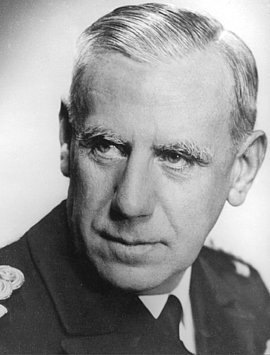
Wilhelm Canaris
Josef Müller
It was through the Canaris-Müller channel that Pius XII learned of an anti-Nazi force within Germany attempting to assassinate Hitler himself. In early 1940, he secretly informed the British government of this situation and expressed his willingness to act as an intermediary between the German anti-Nazi forces and the Allies. Additionally, Pius XII transmitted the same intelligence to the United States via American Jesuit missionaries and the Office of Strategic Services.
On May 6, 1940, on the eve of Nazi Germany's full-scale offensive on the Western Front, Wilhelm Canaris and Josef Müller managed to secretly transmit this military intelligence to the Vatican. The content was very detailed, including the time of the attack and troop deployments. On the 7th, Pius XII sent his assistant to inform French diplomats of this intelligence: within the next three to four days, Germany would launch a massive invasion of the Low Countries, providing "tactical intelligence on the expected mode of operation, including the deployment of paratroopers and sabotage actions." At the same time, Pius XII also issued warnings directly to the Belgian government through other channels and personally conveyed this intelligence to Princess Marie José of Belgium. However, it is obvious that neither France nor Belgium took the intelligence from the Vatican seriously or had enough time to prepare.
In addition to organizing military and political intelligence networks, Pius XII also learned of the horrific massacres committed by the Nazis across Eastern Europe through reports, photographs, and even film reels transmitted by Müller. Pius XII once described Hitler as "not only an untrustworthy villain but also a figure who was evil to the bone." When he learned that the Nazis had carried out large-scale, systematic massacres, he even wept like a child. However, when the Western Campaign officially began, and especially after Italy formally entered the war, the Vatican became like a lone boat on the sea, deeply surrounded by the Axis powers. This was perhaps the fundamental reason why Pius XII remained silent about Nazi atrocities in public.
Rippin argues that the so-called "silence of the Pope" was actually a strategic choice made after careful deliberation, and that the anti-Hitler forces within Germany at the time also hoped Pius XII would remain silent to avoid Catholic Germans becoming victims of retaliation. In contrast, Hitler, who had always despised the Catholic Church, might have even hoped for the Vatican to publicly condemn the Nazis, so that he could "crush the church like a toad" with "legitimate justification." His long experience in diplomatic affairs undoubtedly shaped Pius XII's realist approach to handling matters, which inevitably created a tension with the moral responsibilities of a religious leader. Although he maintained silence on the surface, Pius XII not only sustained a transnational anti-Nazi intelligence network but also repeatedly defied Hitler's demands in diplomacy, as he did during his meeting with Ribbentrop. For example, he refused to accept the Nazi German ambassador to the Vatican—Franz von Papen, a long-standing political ally of the Nazi Party.
Of course, it must be pointed out that although Rebling, in Church of Spies, draws on extensive sources and employs an engaging, vivid narrative style to recount the "shadow war" in which Pius XII participated, this does not mean that Pius XII himself and the Vatican’s policies and actions during World War II were beyond reproach. In fact, there remain many points worthy of debate, discussion, and even criticism regarding his "public silence," the extent of his efforts to save Jews, and his attitude toward former Nazis after the war. How Pius XII sought to reassert papal authority through various secret means is also a theme worthy of attention.
Additionally, those interested in the intelligence history of the Vatican may refer to the works of two other scholars: David Alvarez’s Spies in the Vatican: Espionage and Intrigue from Napoleon to the Holocaust (Spies in the Vatican: Espionage and Intrigue from Napoleon to the Holocaust), and Yvonnick Denoël’s Vatican Spies: From World War II to Pope Francis (Vatican Spies:From the Second World War to Pope Francis). Both works describe, from a broader perspective and over a longer historical timeframe, how the Vatican has quietly influenced the direction of international affairs through covert means. They can supplement themes not covered in Church of Spies, featuring no shortage of "startling conspiracies" and "dirty tricks."
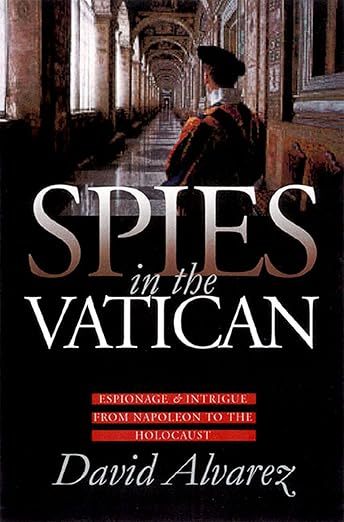
Spies in the Vatican: Espionage and Intrigue from Napoleon to the Holocaust
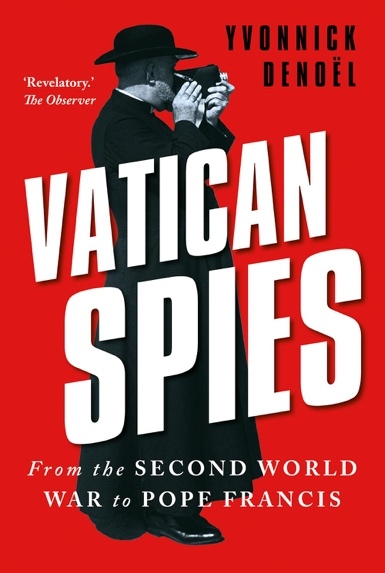
Vatican Spies: From World War II to Pope Francis
As for how to ultimately view Pius XII’s own actions during World War II, perhaps his own words can serve as a summary.
On March 6, 1939, Pius XII, who had recently been elected, received anxious German and Austrian bishops in his study. Listening devices recorded the dialogue of this meeting. At the end of the meeting, Pius XII told the protagonists:
We cannot abandon our principles... If they want to fight, we must not be afraid. But we must still see if there is a way to resolve things peacefully... If we have tried every method and they are determined to fight, we will certainly strike back. If they refuse, we must fight.
Church of Spies, through its compelling text and meticulous research, reveals to us how Pius XII fulfilled his promise and threw himself into this secret war.