
Restriction and Development: Early PRC Tobacco Policy in Shanghai
限制与发展:新中国烟业改造政策的肇始及其在上海的实践
Sha Qingqing, “Restriction and Development: Early PRC Tobacco Policy in Shanghai,” Historical Review, 2018, no. 3, pp. 185–197, 222.
Restriction and Development: The Origins of the New China's Tobacco Industry Transformation Policy and Its Practice in Shanghai
Sha Qingqing
[Abstract] Since modern times, Shanghai has been the most important production and sales hub for the national cigarette industry. Before the liberation of Shanghai, there were 112 tobacco factories in the city. More than half of the nation's cigarette production equipment was concentrated in Shanghai, and the number of workers in the tobacco industry exceeded 100,000. In the early days of the founding of the People's Republic of China, Shanghai's cigarette industry fell into a slump. Against this backdrop, the first National Cigarette Industry Conference was held in Beijing in July 1950, led and hosted by the State Ministry of Food Industry. This conference marked a pivotal event in the transformation of tobacco industry policy at the beginning of the Communist Party's establishment of the regime, and set the tone for the new regime's future tobacco industry regulation policies. It outlined the future development directions for state-owned, private, and foreign-invested tobacco enterprises, laying the groundwork for the formation of the tobacco monopoly system in Shanghai and nationwide. This article primarily discusses the changes in national tobacco policy before and after the first National Cigarette Industry Conference in 1950 and the fluctuations it triggered in Shanghai.
[Keywords] New China; Shanghai; Socialist Transformation; Cigarette Industry; Monopoly System
[CLC Number] K295.1; K271 [Document Code] A [Article ID] 1007—1873(2018)03—0185—13
[Author Biography] Sha Qingqing, Deputy Director of the Competitive Intelligence Department, Information Consulting and Research Center, Shanghai Library (Shanghai Institute of Scientific and Technical Information), 200031
For a long time, there have been few specialized studies on the transformation and restructuring of China's tobacco industry after the founding of the People's Republic of China.1 Generally, the academic community has examined this field within the broader category of "socialist transformation," failing to effectively analyze it in conjunction with the specific characteristics of the tobacco industry.
2 In
fact, compared to other industrial and commercial sectors dominated by private enterprises, the tobacco industry was among the first to undergo comprehensive nationalization, public ownership, and state monopoly transformation. Before the new regime announced in October 1953 its vigorous promotion of agricultural cooperativization and public-private partnerships in industry and commerce, the cigarette industry had already been incorporated into the state monopoly system, and the proportion of private enterprises rapidly declined to a low level. By 1952, Shanghai, which had once been the region with the largest number of private tobacco enterprises in the country, saw the share of output value from private tobacco enterprises drop to only 24%.3 By 1955, private cigarette enterprises existed in name only, with capital owners losing control over the enterprises, and it was a foregone conclusion that the government had taken full control of Shanghai's cigarette industry.
Regarding the history of the transformation of private industry and commerce, including the cigarette industry, the academic community generally holds a dualistic view: acknowledging that the new regime adopted a policy combining support and restriction, while also believing that most private industrialists and merchants voluntarily or semi-voluntarily accepted public-private
[1] Currently, academic research on China's tobacco industry mostly focuses on two periods: the first is from the late Qing Dynasty to the founding of the People's Republic of China, and the second is the period of reform and opening up since 1980. For an overview of the first period, see Fang Xiantang (ed.), Modern National Cigarette Industry in Shanghai (Shanghai Academy of Social Sciences Press, 1989 edition). For research on the second period, see: Peng Yali, "Smoke and Power: The Political Economy of Chinese Tobacco," Ph.D. Thesis, University of Oregon, 1997; Wang Junmin, "Market-Building as State-Building in China's Tobacco Industry," Ph.D. Thesis, New York University, 2007; Tao Ming, China's Tobacco Industry Under Monopoly Control—Theory, Problems, and Institutional Change, Ph.D. Thesis, School of Economics, Fudan University, 2005, etc.
[2] In fact, as early as the 1980s, scholars attempted to explore this issue from a macro perspective. See Dorothy J. Solinger, Chinese Business under Socialism: The Politics of Domestic Commerce in Contemporary China, Berkeley and Los Angeles: University of California Press, 1984. Recent research findings can be found in: Gui Yong, The Social Foundation of Private Property Rights—The Political Reconstruction of Urban Enterprise Property Rights (1949—1956), Lixin Accounting Publishing House, 2006 edition; Li Fuzhong, The Chinese Communist Party's Policy on Private Industry and Commerce During the New Democracy Period (1949—1956), Ph.D. Thesis, Institute of History, National Taiwan University, 2002; Matthew Kohrman, Gan Quan, Liu Wennan, Robert N. Proctor, eds., Poisonous Pandas: Chinese Cigarette Manufacturing in Critical Historical Perspectives, California: Stanford University Press, 2018.
[3] Overview of Shanghai's Cigarette Industry (1954), Archive Number: B163—2—389—61, Shanghai Municipal Archives.
partnerships and similar political arrangements.1 However, taking China's cigarette industry around 1950 as an example, it can be seen that the new regime had a clear predetermined policy regarding transformation and takeover—to achieve state monopoly and exclusive operation in the cigarette industry as soon as possible. To implement this policy, it adopted a series of coherent transformation strategies, supplemented by specific methods such as probing and detours. Most private industrialists and merchants in the cigarette industry, when facing the pressure of transformation from the new regime, engaged in varying degrees of "resistance," with Shanghai's cigarette
industry practitioners being the most prominent.
This "resistance" became publicly evident at the first National Cigarette Industry Conference held in July 1950.
2 In Shanghai, the
Under the chairmanship of the table, some proposals from the government's competent authorities encountered fierce opposition and fell into a predicament where they were difficult to advance. Due to the intense bargaining between the two sides, the relevant competent authorities turned to a more moderate approach to promote the transformation of the cigarette industry and began to construct a broader basis of legitimacy for their policies. Meanwhile, following this meeting, the new regime regarded Shanghai's cigarette industry as the most important battlefield in the nationwide process of transforming the cigarette industry. This article will focus on Shanghai's cigarette industry to examine the evolution of the CCP's transformation strategies before and after the First National Cigarette Industry Conference in 1950, aiming to reveal the initial process of the formation of the tobacco monopoly system in New China, as well as the dynamic relationship of coexisting restriction and development that existed during this process.
I. The Decline of Shanghai's Cigarette Industry in the Early Years of the Founding of New China and Its Impact
(1) Deterioration of Business Operations and the Decline in Cigarette Production
In early 1949, Shanghai had a total of 112 tobacco factories. Among them, 15 were Category B tobacco factories lacking specialized production machinery and equipment, including Huadong; two were foreign-capital enterprises, namely Yizhong and Huazi; only one was state-owned, namely Zhonghua; and the rest were all private cigarette enterprises.3 After entering Shanghai at the end of May 1949, the CCP attached great importance to the takeover of cigarette enterprises and specifically established a Tobacco Takeover Group.4 The East China Military and Political Committee took over the state-owned Zhonghua Tobacco Company, converted Nanyang Brothers, Luxin, Dechang, and Zhongyuanchangji into public-private partnerships (or placed them under trusteeship), and newly established the Hualun Tobacco Factory, increasing the number of tobacco factories in Shanghai to 113.5 Nevertheless, since June, Shanghai's cigarette industry suffered the most severe and longest-lasting production cut crisis in its history.
June coincided with Shanghai's plum rain season. Since goods were prone to moisture, tobacco enterprises typically planned for production cuts during this season. After the midsummer of July and August, September should have marked the peak season for cigarette production in the Shanghai region, but in 1949, an unprecedented situation occurred where production during the peak season remained sluggish. The reasons for this, apart from factors such as the recent end of war and disruptions in raw material transportation, were closely related to the deterioration of Shanghai's overall economic situation at the time. Since June, except for an average profit of approximately 5% for cigarette enterprises in October and a break-even situation in September, all other months incurred losses. In November, Shanghai experienced violent price fluctuations, with the prices of raw materials and supplies across all industries soaring. The wholesale price index for that month rose by as much as 132.7% compared to the previous month, with the wholesale price index gradually increasing from 270.29 in September to 892.41 in November (with June 1949 as
the base index of 100).
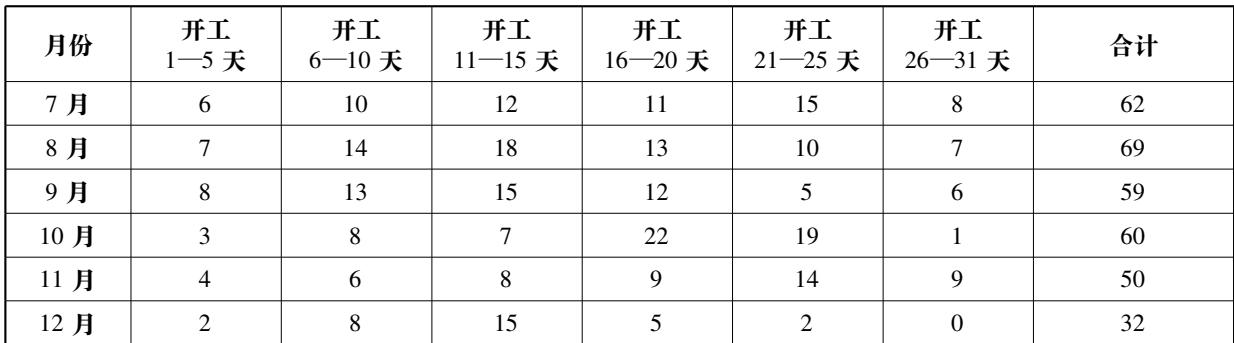
By the end of the year, prices of all kinds in Shanghai had increased significantly, resulting in a scissors gap where cigarette production costs exceeded market prices. The more manufacturers produced, the greater their losses, ultimately forcing most tobacco enterprises to cut production to survive. In December 1949, the Nanyang Brothers Tobacco Factory operated for only 13 days (23 days in November), the Huamei Tobacco Factory operated for only 13 days (22 days in November), and the Yizhong Tobacco Factory operated for only 14 days (18 days in November). According to the state-
[1] For representative studies of this kind in recent years, see: “Capitalists Choosing Communist China,” in Jeremy Brown and Paul Pickowicz eds., Dilemmas of Victory: The Early Years of the People's Republic of China, Cambridge: Harvard University Press, 2007, pp. 359–385.
[2] Academic research on the First National Cigarette Industry Conference is almost a blank space. Related narrative texts are mostly limited to internal publications of China's tobacco industry, such as Deng Donglin: “The Highest-Standard Grand Gathering—A Review of China's First Cigarette Industry Conference,” Hunan Tobacco, Issue 3, 2010; Qu Zhenming: “Overview of the Development of the Tobacco Industry from 1949 to 1981,” Hunan Tobacco, Issue 4, 2007, etc.
[3] State-Owned Zhonghua Tobacco Company (ed. and printed), Overview of Shanghai's Cigarette Industry, 1950, p. 1.
[4] To effectively take over Shanghai's industrial and commercial enterprises, the Shanghai Light Industry Division established three takeover groups. Besides the Tobacco Takeover Group, there were also the China Textile Takeover Group and the Chemical Industry Takeover Group, along with a separate mobile group. See Report of the Shanghai Light Industry Division (June 1949), compiled by the Party History Research Office of the CPC Shanghai Municipal Committee and the Shanghai Municipal Archives, Taking Over Shanghai, Vol. 1, China Broadcasting and Television Publishing House, 1993 edition, p. 272.
[5] State-Owned Zhonghua Tobacco Company (ed. and printed), Overview of Shanghai's Cigarette Industry, p. 4.
[6] Compiled by the Shanghai Economic Research Institute of the Chinese Academy of Sciences and the Economic Research Institute of the Shanghai Academy of Social Sciences, Compilation of Price Data in Shanghai Before and After Liberation (1921–1957), Shanghai People's Publishing House, 1958 edition, p. 355.
-owned Zhonghua Tobacco Company and relevant departments of the East China Military and Political Committee, surveys indicated that Shanghai's cigarette enterprises could be roughly divided into six categories: 36 capable of continuing production, 20 unable to produce, 10 requesting to cease operations, 4 that had relocated their factories, 6 that had already stopped production, 10 with no machinery or equipment or that had never started operations, and the rest were in a semi-stagnant state.1 At the end of May 1949, the total number of employees in cigarette enterprises across the city was 40,593; by the end of May 1950, this had dropped to 23,326.2
Table 1: Statistical Table of Operating Status of Shanghai Tobacco Enterprises in the Second Half of 1949 (Unit: Firms)
Month | Operating 1–5 days | Operating 6–10 days | Operating 11–15 days | Operating 16–20 days | Operating 21–25 days | Operating 26–31 days | Total
July | 6 | 10 | 12 | 11 | 15 | 8 | 62
August | 7 | 14 | 18 | 13 | 10 | 7 | 69
September | 8 | 13 | 15 | 12 | 5 | 6 | 59
October | 3 | 8 | 7 | 22 | 19 | 1 | 60
November | 4 | 6 | 8 | 9 | 14 | 9 | 50
December | 2 | 8 | 15 | 5 | 2 | 0 | 32
Source: State-Owned Zhonghua Tobacco Company (ed. and printed), Overview of Shanghai's Cigarette Industry, pp. 26–29.
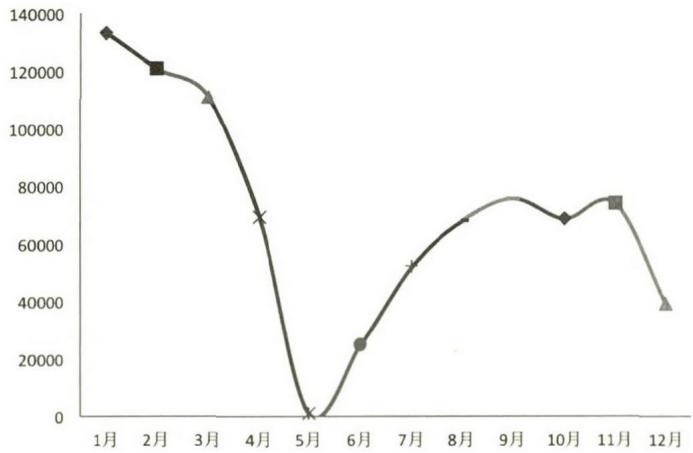
A comparison of cigarette production in Shanghai before and after the takeover in May 1949 reveals that, after May, Shanghai's cigarette production generally trended downward. From January to April 1949, Shanghai's total cigarette production was 434,857 cases. In May, due to the impact of the war, production dropped to just over 900 cases. In June, production began to recover, reaching over 24,000 cases that month. Although production briefly increased to over 75,000 cases in September, a decline in production during the peak season followed, and by December, production had fallen to just over 30,000 cases, a situation "unprecedented in Shanghai's cigarette industry." Despite the tense war situation in 1948, Shanghai's cigarette production still reached a historic high of 1,270,321 cases; however, the total production for the entire year of 1949 was only 836,672 cases, a year-on-year decrease of approximately 34%. The vast majority of this production came from large cigarette enterprises in the Shanghai area, such as Yizhong, Citi, Huacheng, Fuxin, Dadongnan, Zhonghua, and Nanyang, while small and medium-sized cigarette enterprises were mostly in precarious situations.
Figure 1: Changes in Shanghai's Cigarette Production in 1949 (Unit: Cases)
Source: Compiled by the Research Office of the Industrial and Commercial Department of the Shanghai Municipal People's Government, Overview of Shanghai's Cigarette Industry (August 18, 1949), Archive No.: B182—1—43, Shanghai Municipal Archives; State-Owned Zhonghua Tobacco Company, Overview of Shanghai's Cigarette Industry, pp. 17–18. (II) The Impact of the Difficulties Facing Shanghai's Cigarette Industry
As the most important cigarette production base in the country at the time, Shanghai's significant decline in production inevitably caused great fluctuations in the national cigarette market. The difficulties encountered and the chaos displayed by the cigarette industry in Shanghai and the entire East China region were "largely similar; this difficulty and
[1] State-Owned Zhonghua Tobacco Company, Overview of Shanghai's Cigarette Industry, pp. 5, 26.
[2] Statistical Table of Current and Unemployed Workers in Shanghai's Cigarette Industry (May 31, 1950), Documents Related to the Shanghai Cigarette Industry Trade Association's Attendance at the National Cigarette Industry Conference, Archive No.: S68—4—73, Shanghai Municipal Archives.
[3] State-Owned Zhonghua Tobacco Company, Overview of Shanghai's Cigarette Industry, pp. 13–14, 17–18. Note: In this article, production and sales units are based on 50,000 cigarettes per case.
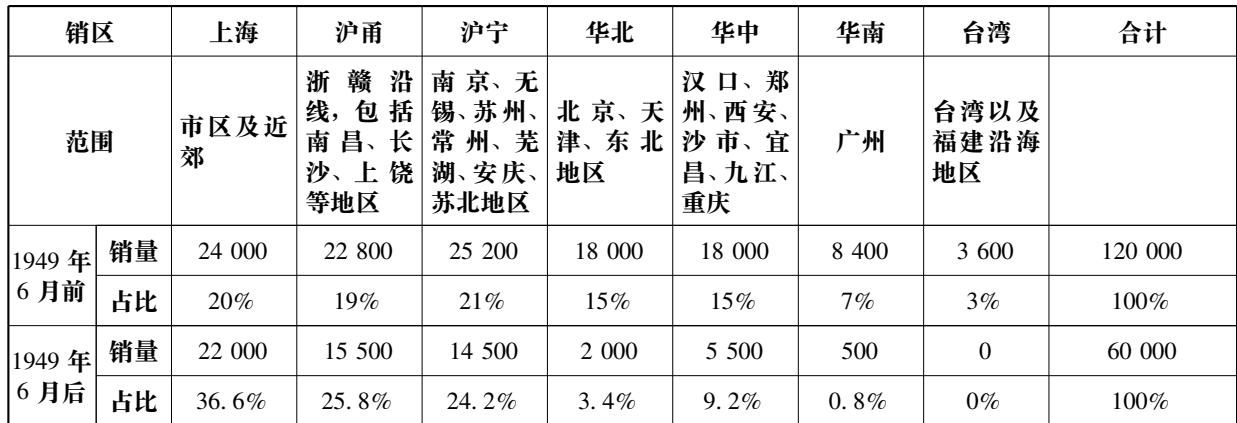
chaos, when viewed from a national perspective, can also be said to be largely similar." After June 1949, the national sales volume of Shanghai-produced cigarettes dropped by about half compared to before, plummeting from approximately 120,000 cases per month to less than 60,000 cases; the average monthly sales volume of cigarettes from Shanghai to North China decreased by 88.8%, and sales in the Shanghai-Nanjing region also decreased by approximately 42.5%. By early 1950, due to the stagnation of north-south trade and transportation across the country, the market share of Shanghai-produced cigarettes shrank significantly, leading to shortages in cigarette supplies, especially mid-to-high-end cigarettes, in regions such as North China and Central China. Chen Yun had already pointed out at the Central Financial and Economic Conference attended by cadres from the East China, North China, Central China, Northeast, and Northwest regions that after June 1949, "fewer goods were shipped out of Shanghai, mainly cloth, yarn, and cigarettes."
Table 2: Changes in Monthly Average Sales of Shanghai Cigarettes by Region Before and After June 1949 (Unit: Cases)
Sales Region: Shanghai, Shanghai-Ningbo, Shanghai-Nanjing, North China, Central China, South China, Taiwan, Total
Scope: Urban area and suburbs
Along the Zhejiang-Jiangxi line, including Nanchang, Changsha, Shangrao, and other regions
Nanjing, Wuxi, Suzhou, Changzhou, Wuhu, Anqing, Northern Jiangsu region
Beijing, Tianjin, Northeast region
Hankou, Zhengzhou, Xi'an, Shashi, Yichang, Jiujiang, Chongqing
Guangzhou
Taiwan and coastal areas of Fujian
Before June 1949
Sales Volume: 24,000, 22,800, 25,200, 18,000, 18,000, 8,400, 3,600, 120,000
Proportion: 20%, 19%, 21%, 15%, 15%, 7%, 3%, 100%
After June 1949
Sales Volume: 22,000, 15,500, 14,500, 2,000, 5,500, 500, 0, 60,000
Proportion: 36.6%, 25.8%, 24.2%, 3.4%, 9.2%, 0.8%, 0%, 100%
Source: State-Owned Zhonghua Tobacco Company, Overview of Shanghai's Cigarette Industry, pp. 30–31.
Affected by the decline in production and sales nationwide, Shanghai's cigarette tax revenue decreased significantly. Cigarette taxes accounted for a very large proportion of all commodity taxes in the city; according to statistics from early 1950, cigarette taxes accounted for approximately 65%–70% of all commodity taxes. When discussing Shanghai's fiscal issues, Chen Yun had requested that the East China Bureau "strive to maintain the operating rate of Shanghai's major industries (textiles, printing and dyeing, cigarettes, etc.) at two-thirds. East China's cigarettes can be sold across the country, allowing Shanghai's cigarette factories to restore production as much as possible to increase tax revenue."
Regarding specific cigarette tax rates, the East China Military and Political Committee initially levied taxes on Shanghai cigarette enterprises at a rate of 120%. Later, considering the market slump, the rate was temporarily lowered to 80%. In February 1950, the cigarette tax rate was adjusted back to 120%. Shanghai cigarette enterprises, especially private ones, believed that with rising prices and low social purchasing power, the government's continued implementation of the high 120% tax rate constituted "shifting the burden"; they hoped for a unified tax rate with inland cigarette factories to lower the cigarette tax rate in the Shanghai area. With continuously rising manufacturing costs and an overall decline in market sales, such a high tax rate plunged the vast majority of cigarette enterprises into a predicament of exhausted working capital.
8 Shanghai private
cigarette enterprises universally appealed for "conveniences to be provided to manufacturers," stating that "Shanghai cigarette factories contribute greatly to tax revenue, and superior conditions should be granted to Shanghai."
Shanghai."
9 In the view of these enterprises, only by increasing production and sales in Shanghai's cigarette industry could government tax revenue be increased.
In June 1949, only over 20,000 cases of cigarettes had paid taxes citywide; by November, this figure had gradually increased to over 70,000 cases. Due to price fluctuations citywide in November,
[1] Zhang Chunshen: "Speech by Zhang Chunshen, Representative of Private Enterprises in the East China Region," in Yang Guo'an (ed.), A Compendium of the History of China's Tobacco Industry, Guangming Daily Publishing House, 2002 edition, p. 1674.
[2] State-owned China Tobacco Company (compiled and printed), Overview of the Shanghai Cigarette Industry, pp. 30–31.
[3] Overview of the Shanghai Cigarette Industry (1950), Archive No.: A4—1—13—12, Shanghai Municipal Archives.
[4] "Overcoming the Severe Difficulties in Finance and Economy" (August 8, 1949), in Selected Works of Chen Yun, Vol. 2, People's Publishing House, 1995 edition, p. 4.
[5] State-owned China Tobacco Company (compiled and printed), Overview of the Shanghai Cigarette Industry, pp. 41–42.
[6] "Overcoming the Severe Difficulties in Finance and Economy" (August 8, 1949), in Selected Works of Chen Yun, Vol. 2, p. 5.
[7] At this time, due to significant price fluctuations, the Goods Tax Bureau adopted a principle of flexible adjustment, adjusting taxes whenever the rate of increase in cigarette prices exceeded 20% of the originally set fixed price, resulting in frequent adjustments to cigarette taxes. See State-owned China Tobacco Company (compiled and printed), Overview of the Shanghai Cigarette Industry, pp. 43–44; Yu Yinyu: "The Shanghai Cigarette Industry After Liberation," China Tobacco Monthly, 1950,
Issue 3.
[8] Policy Research Office of the CPC Shanghai Municipal Committee: "The Current Situation of Shanghai Cigarette Factories: Survey Materials on the Difficulties Facing Industry and Commerce in Shanghai and the Maintenance of Production" (April 12, 1950), Archive No.: A4—1—14—59, Shanghai Municipal Archives.
[9] Record of the Shanghai Tobacco Industry Symposium (January 8, 1950), China Tobacco Monthly, 1950, Issue 2.
[10] During the implementation of the cigarette monopoly in the Northeast region, the CPC became aware of the importance of cigarette taxes and subsequently proposed that the cigarette industry was conducive to "increasing revenue" and "recirculating currency." See "On Improving Tobacco and Alcohol Monopoly Operations to Increase Revenue and Facilitate Currency Recirculation" (May 17, 1949), in Editorial Group for the History of Finance and Economy in the Northeast Liberation Area: Selected Materials on the History of Finance and Economy in the Northeast Liberation Area, Vol. 4, Heilongjiang People's Publishing House, 1988 edition, pp. 183–185.
were severe, and in December, the number of tax-paid cigarette cases dropped again to over 30,000. During this period, although the amount of cigarette taxes paid increased month by month, growing nearly 16 times from June to December 1949, this was merely an increase in book figures and could not reflect the actual correspondence between production and sales volumes and tax revenue amounts; it was primarily influenced by the currency value and market inflation at the time.
After 1950, from the central government to local governments including Shanghai, centralized planned management systems began to be adopted to cope with the severe economic situation. On February 24, 1950, the Financial and Economic Committee of the Government Administration Council issued instructions requiring that wholesale prices in various localities be determined according to decisions by the Central Ministry of Trade, with wholesale prices in major cities like Shanghai to be telegraphed by the Central Ministry of Trade at any time. The Decision on Unifying National Financial and Economic Work, promulgated on March 3, further strictly regulated national fiscal revenue and expenditure, material allocation, and even market circulation.2 As the most important component of the national light industry, the rise and fall of Shanghai's cigarette industry was directly linked to national market circulation and government fiscal revenue. How to quickly restore Shanghai's and the nation's cigarette industry became the urgent priority for the competent authorities. In addition, the new regime hoped to transform and adjust the market structure and production and sales systems of the national cigarette industry. At the same time, it was necessary to gather consensus on the new regime's tobacco industry policies through a conference of national industry representatives, and the First National Cigarette Industry Conference was convened against this background.
II. Policy Maneuvering at the First National Cigarette Industry Conference
(1) The Convening of the Conference and Preparations by the Shanghai Industry In February 1950, the Government Administration Council approved the request from the Financial and Economic Committee, officially placing the cigarette industry under the scope of work of the Ministry of Food Industry.3 A major challenge facing the Ministry of Food Industry was how to restore cigarette industrial production nationwide, making it a stable source of tax revenue for the new regime. To unify the thoughts of cigarette practitioners nationwide and clarify relevant production and sales tasks, the Central Financial and Economic Committee and the Ministry of Food Industry decided to convene the National Cigarette Industry Conference in July 1950, hoping to coordinate internal operational methods within the industry through this conference. This conference was the first attempt after the founding of New China to solve overall industry problems and discuss the future direction of the industry through the form of a practitioners' assembly.
The Shanghai cigarette industry attached great importance to this conference. In May, it began discussing preparations for attending the conference with the East China Military and Political Committee through the Shanghai Cigarette Industry Guild, which was still dominated by private enterprises at the time, such as collecting relevant industrial data and materials, and drafting proposals.4 From June 20 to July 1, the East China Military and Political Committee and the Shanghai Cigarette Industry Guild held relevant working meetings for this conference, selecting representatives to attend the National Cigarette Industry Conference and drafting the content of reports.
It is worth noting that this National Cigarette Industry Conference only organized participation by state-owned, joint state-private, and private enterprises; foreign firms were not on the invitation list. Therefore, before the conference, the Yizhong Tobacco Company reported its operational status to the East China Military and Political Committee through various channels, hoping that the competent authorities would guarantee a production and sales volume of at least 10,000 cases per month, otherwise the enterprise would find it difficult to sustain itself.6 In fact, the various problems encountered by the Yizhong Tobacco Company at this time were also the predicaments faced by other large and medium-sized private cigarette enterprises in Shanghai.
In July 1950, a total of 96 representatives from across the country attended this conference in Beijing, coming from the East China, Northeast, Southwest, Central-South, and North China regions. Among the representatives from each region, the North China region had the largest number, with 31 people; the East China region was second with 29 people; the Central-South region had 22 people; the Northeast region and
[1] For a description of the overall situation of Shanghai's commercial tax revenue during this period, see Chen Yongfa: "Industrial and Commercial Tax Revenue in the Early Years of the PRC—Taking Tianjin and Shanghai as Examples," Bulletin of the Institute of Modern History, Academia Sinica, 2005, Cumulative Issue 48.
[2] Decision of the Government Administration Council on Unifying National Financial and Economic Work, in Comprehensive Planning Department of the Ministry of Finance (ed.), Historical Materials on Finance of the People's Republic of China, Vol. 1: Fiscal Management System (1950–1980), China Financial and Economic Publishing House, 1982 edition, pp. 31–36.
[3] Reply to the Request for Instructions on the Scope of Work of the Ministry of Food Industry by the Central Financial and Economic Committee (February 1, 1950), in Research Office of CPC Central Committee Documents and Central Archives (eds.), Zhou Enlai's Manuscripts Since the Founding of the PRC, Vol. 2, Central Party Literature Press, 2008 edition, p. 60.
[4] Shanghai Cigarette Trade Association: "Regarding the Preparation of Production and Sales Data for the East China Cigarette Industry and the Election of Representatives to Beijing" (June 1950), in "Documents Related to the Shanghai Cigarette Industry Trade Association's Attendance at the National Cigarette Industry Conference," Archive No. S68—4—73, Shanghai Municipal Archives; "Compilation of Proposals from the East China Cigarette Industry" (July 1950), in "Documents Related to the Shanghai Cigarette Industry Trade Association's Attendance at the East China Regional Cigarette Industry Conference," Archive No. S68—4—72, Shanghai Municipal Archives.
[5] Shanghai Municipal People's Government Bureau of Industry and Commerce: "Draft Summary of the First East China Cigarette Industry Conference" (July 1950), Archive No. B182—1—112—30, Shanghai Municipal Archives; Xie Gang: "The Cigarette Industry Moves Toward a New Life: A Record of the East China Cigarette Industry Conference (June 21–July 1)," China Tobacco Monthly, Issue 3, 1950; "Closing of the East China Regional Cigarette Industry Reporting Conference," China Tobacco Monthly, Issue 3, 1950.
[6] Yizhong Tobacco Co., Ltd.: "Statement of Reasons for Submission" (1950), in "Documents Related to the Shanghai Cigarette Industry Trade Association's Attendance at the National Cigarette Industry Conference," Archive No.:
S68—4—73, Shanghai Municipal Archives.
seven representatives from the Southwest Region.1 The conference officially opened on July 18. From July 19 to 20, representatives from each region delivered reports on their respective situations. The East China Region, the most important area for national cigarette production, presented its report first, with speakers from the state-owned China Tobacco Company and the privately owned Dadongnan Tobacco Factory. From July 21 to 27, discussions were held in subgroups, and a summary report was delivered on July 29. The conference established four discussion groups: the Raw Materials Group, the Production Group, the Finished Product Specifications Group, and the Sales and Promotion Group. Relevant proposals and policy discussions were first debated within these subgroups before being consolidated by the conference secretariat.
office.
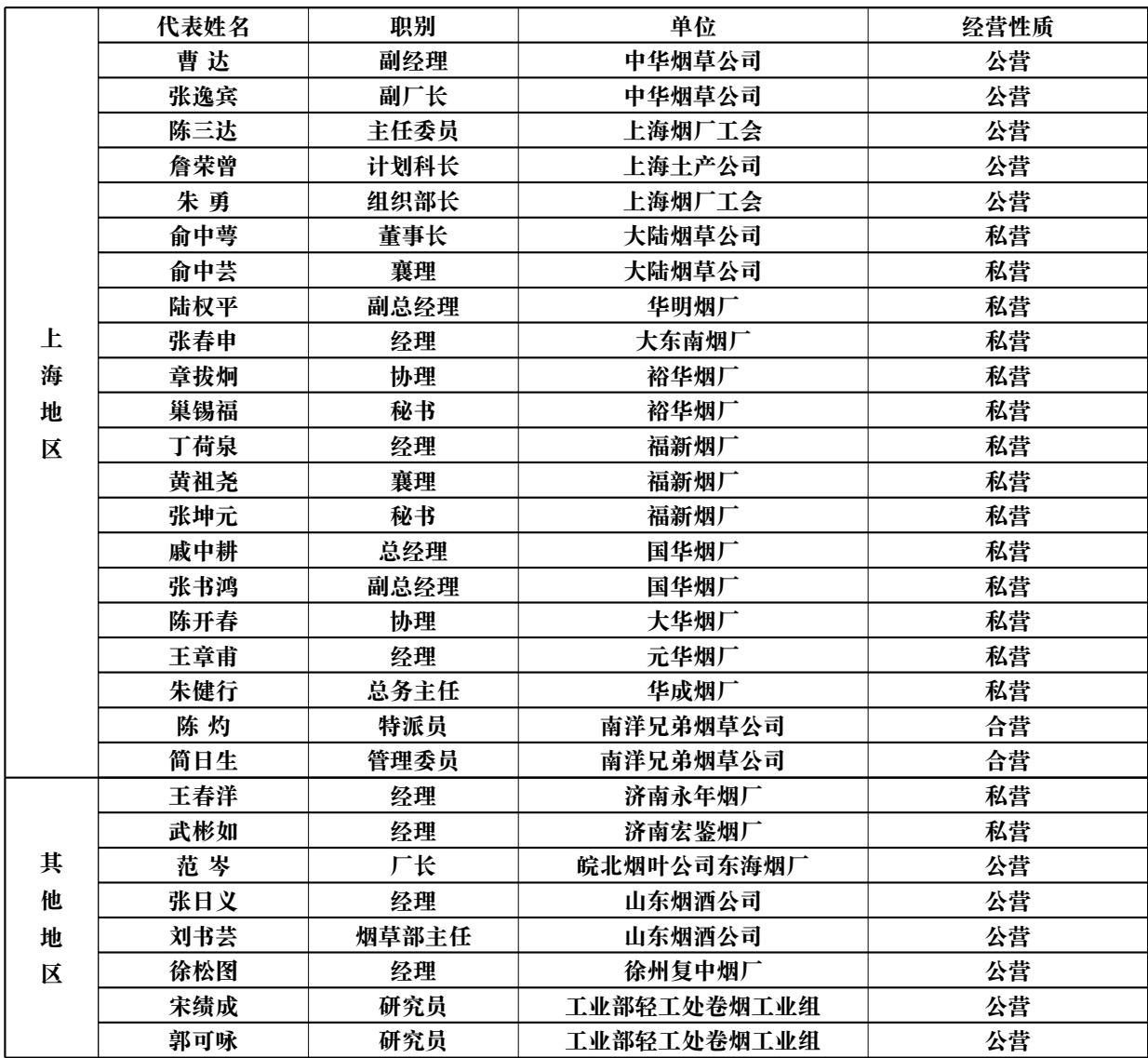
Table 3: List of East China Region Representatives at the First National Cigarette Industry Conference
Shang
hai
Re
gion
Representative Name Position Unit Nature of Operation
Cao Da Deputy Manager China Tobacco Company State-owned
Zhang Yibin Deputy Factory Director China Tobacco Company State-owned
Chen Sanda Chairman Shanghai Tobacco Factory Trade Union State-owned
Zhan Rongzeng Planning Section Chief Shanghai Native Products Company State-owned
Zhu Yong Organization Department Head Shanghai Tobacco Factory Trade Union State-owned
Yu Zhong'e Chairman Continental Tobacco Company Privately owned
Yu Zhongyun Assistant Manager Continental Tobacco Company Privately owned
Lu Quanping Deputy General Manager Huaming Tobacco Factory Privately owned
Zhang Chunshen Manager Dadongnan Tobacco Factory Privately owned
Zhang Bajiong Assistant Manager Yuhua Tobacco Factory Privately owned
Chao Xifu Secretary Yuhua Tobacco Factory Privately owned
Ding Hequan Manager Fuxin Tobacco Factory Privately owned
Huang Zuyao Assistant Manager Fuxin Tobacco Factory Privately owned
Zhang Kunyuan Secretary Fuxin Tobacco Factory Privately owned
Qi Zhonggeng General Manager Guohua Tobacco Factory Privately owned
Zhang Shuhong Deputy General Manager Guohua Tobacco Factory Privately owned
Chen Kaichun Assistant Manager Dahua Tobacco Factory Privately owned
Wang Zhangfu Manager Yuanhua Tobacco Factory Privately owned
Zhu Jianxing General Affairs Director Huacheng Tobacco Factory Privately owned
Chen Zhuo Special Commissioner Nanyang Brothers Tobacco Company Jointly owned
Jian Risheng Management Committee Member Nanyang Brothers Tobacco Company Jointly owned
Ot
hers
Region
Region
Manager Wang Chunyang, Jinan Yongnian Tobacco Factory, privately owned
Manager Wu Binru, Jinan Hongjian Tobacco Factory, privately owned
Fan Cen, Factory Director, Wanbei Tobacco Leaf Company, Donghai Tobacco Factory, Publicly Owned
Zhang Riyi, Manager, Shandong Tobacco and Alcohol Company, Publicly Owned
Liu Shuyi, Director of the Tobacco Department, Shandong Tobacco and Alcohol Company, Publicly Owned
Xu Songtu, Manager, Xuzhou Fuzhong Tobacco Factory, Publicly Owned
Song Jicheng, Researcher, Tobacco Industry Group, Light Industry Division, Ministry of Industry, Public Sector
Guo Keyong, Researcher, Tobacco Industry Group, Light Industry Division, Ministry of Industry, Public Sector
Source: Secretariat of the First National Conference on the Tobacco Industry, Ministry of Food Industry, Central People's Government, Instructions for Attendees (July 16, 1950),
Documents Related to the Shanghai Tobacco Industry Trade Association's Attendance at the National Tobacco Industry Conference, Archive No.: S68—4—73, Shanghai Municipal Archives.
(2) Debates Surrounding the "State Monopoly on the Market"
During the reports from various districts over the previous two days, the conference proceeded smoothly. However, during the subsequent group discussions, exceptionally fierce debates erupted. Within the various groups, the Raw Materials Group, the Production Group, and the Finished Product Specifications Group primarily discussed issues from the perspective of production technology, while the Sales Group focused on the restructuring of the national tobacco market landscape and the supply-and-marketing mechanism. This issue was precisely the focal point of contradictions and debates at this conference.
[1] List of Delegates to the First National Conference on the Tobacco Industry (1950), Documents Related to the Shanghai Tobacco Industry Trade Association's Attendance at the National Tobacco Industry Conference, Archive No.:
S68—4—73, Shanghai Municipal Archives.
[2] Secretariat of the First National Conference on the Cigarette Industry, Ministry of Food Industry, Central People's Government: "Instructions for Attendees" (July 16, 1950), Shanghai Cigarette Industry Trade Association
Documents Related to Attendance at the National Conference on the Cigarette Industry," Archive No.: S68—4—73, Shanghai Municipal Archives.
At the time this conference was convened, the Northeast region had already begun implementing the "market monopoly system," while other regions within the customs line still maintained an operational status of "free production and sales, free trade."1 In the view of the central competent authorities, "blind anarchy" was the "most serious phenomenon" in the cigarette industry at the time, and the process of "free production and sales" was often accompanied by problems such as "overcapacity" and "tax evasion."2 Just on the eve of the opening of the National Conference on the Cigarette Industry, Zhou Enlai had just issued instructions on "strengthening the work of the Private Enterprise Bureau of the Financial and Economic Committee," requiring strengthened control over private enterprises and market order in various localities.3 Thus, how to effectively govern the entire market through planning and monopoly naturally became a topic on the agenda. In view of the severe difficulties occurring in the national cigarette industry, especially in the Shanghai area, the relevant central competent authorities intended to explore at this conference the possibility of promoting the "Northeast Region Tobacco Monopoly System" nationwide. In fact, even before the conference was convened, the Ministry of Food Industry had already begun promoting the "advanced, socialist production experience" of the Northeast Region within the tobacco production system.4 This stance could also be discerned from the opening speech by Song Yuhe, Vice Minister of the Central Ministry of Food Industry.
In his opening address on July 18, Song Yuhe compared the cigarette industry in the Northeast region with that in Shanghai, pointing out that the cigarette industry in the Northeast region "sold an average of 7,678 cases per month from February to December 1949, and an average of 13,648 cases per month from January to May 1950, an increase of 77.75% over the average of the previous year," whereas the cigarette industry in Shanghai "produced an average of 35,593 cases per month from January to April 1950, a decrease of 36.53% over the previous year." Through the above comparison, Song Yuhe further summarized: "The former is a phenomenon of development after the transition from a semi-colonial economy to a New Democratic economy, while the latter is a situation of temporary decline amidst the rapid transformation of the New Democratic economy."
5 At the same
time, policy researchers from the Ministry of Food Industry attributed the development difficulties of the Shanghai cigarette industry at the time to "blind management causing a highly distorted and bloated state," requiring the government to readjust the market and industrial structure.
During the formal discussion by the Sales Group on July 21, representatives from the North China region took the lead in proposing the suggestion of "regional market division."
7 This suggestion
made the Sales Group have the "most heated discussions" among all groups; at the meeting, there were "completely opposite views on the question of whether to divide national sales regions." According to the recollections of Zhang Bajiong, a conference representative from the Shanghai Yuhua Tobacco Factory, the North China representatives "listed no fewer than ten reasons, methods, etc.," but "representatives from Guangzhou and Zhengzhou in the Central-South region, representatives from Chongqing in the Southwest region, and representatives from Shandong and Shanghai in the East China region generally did not agree with dividing the markets." In contrast, representatives from the North China and Northeast regions, which were old liberated areas, firmly supported the suggestion of "regional market division," and the debate between the two sides was quite fierce, with no conclusion reached even by the end of the day's meeting. This became the "most important and central issue" for the Sales Group and indeed the entire cigarette industry work conference.
The so-called "regional market division" mainly referred to planning the implementation of regional tobacco monopolies in various regions nationwide, meaning that cigarette products produced in each region could only be sold within that region and could not be exported to other areas. [10] For example, after the monopoly system was implemented starting in February 1949, cigarettes produced in the Northeast region were "restricted to sales within the Northeast region, while cigarettes from other regions were restricted from entering," and both local and central competent authorities believed this would "avoid creating a competitive market that would affect production." [11] Representatives opposing this suggestion mostly came from China's traditional cigarette production bases, whose cigarette products were sold nationwide, and which still gathered a relatively large number of private tobacco enterprises, with Shanghai being the most prominent. Therefore, the reaction from the Shanghai area, especially from representatives of private tobacco factories, was the most intense. Meanwhile, local representatives supporting this suggestion mostly came from emerging "tobacco production areas" or those that had already begun implementing tobacco
[1] Tobacco Group, Ministry of Food Industry: "Rectification Documents: Warnings for the Cigarette Industry," China Tobacco Monthly, Issue 3, 1950.
[2] Song Yuhe: "Opening Speech at the First National Cigarette Conference," China Tobacco Monthly, Combined Issues 4 and 5, 1950.
[3] "Instructions on Adjusting Public-Private Relations and Strengthening the Work of the Private Enterprise Bureau" (July 15, 1950), edited by the CPC Central Committee Literature Research Office and the Central Archives, Zhou Enlai's Manuscripts Since the Founding of the Nation, Volume 3, Central Party Literature Press, 2008 edition, pp. 43–44.
[4] Data Room of China Tobacco Monthly: "The Northeast Cigarette Industry," China Tobacco Monthly, Issue 2, 1950.
[5] Song Yuhe: "Opening Speech at the First National Cigarette Conference," China Tobacco Monthly, Combined Issues 4 and 5, 1950.
[6] “Appropriate Business Steps to Be Urgently Adopted to Rescue the Cigarette Industry in Shanghai, Which Is Facing a Very Serious Crisis Amidst the Current World Situation” (August 1950), in Relevant Documents of the Shanghai Cigarette Industry Trade Association’s Attendance at the National Cigarette Industry Conference, Archive No.: S68—4—73, Shanghai Municipal Archives.
[7] Compilation of Proposals from Various Regions: XII. On the Issue of Accelerating the Implementation of the Regional Monopoly System for Cigarettes, China Tobacco Monthly, Combined Issues No. 4 and 5, 1950.
[8] Ministry of Food Industry of the Central People’s Government: Daily Work Report of the National Cigarette Industry Conference (July 21, 1950), in *Relevant Documents of the Shanghai Cigarette Industry Trade Association’s Attendance at the National Cigarette Industry
Conference*, Archive No.: S68—4—73, Shanghai Municipal Archives.
[9] “Report by Zhang Bajiong at the Dissemination Conference of the First National Cigarette Industry Conference” (August 7, 1950), in *Relevant Documents of the Shanghai Cigarette Industry Trade Association’s Attendance at the National Cigarette Industry Confe-
rence*, Archive No.: S68—4—73, Shanghai Municipal Archives.
[10] Compilation of Proposals from Various Regions: XII. On the Issue of Accelerating the Implementation of the Regional Monopoly System for Cigarettes, China Tobacco Monthly, Combined Issues No. 4 and 5, 1950.
[11] Huang Shaoming: “Speech by Huang Shaoming, Representative of Private Enterprises in the Northeast Region,” in Yang Guo’an (ed.), A Compendium of the History of China’s Tobacco Industry, pp. 1693–1694; Compilation of Proposals from Various Regions: XII. On the Issue of Accelerating the Implementation of the Regional Monopoly System for Cigarettes, China Tobacco Monthly, Combined Issues No. 4 and 5, 1950; Provisional Regulations on the Monopoly System in the Northeast Liberated Area (February 20, 1949), in Editorial Group for the History of Finance and Economy in the Northeast Liberated Area, Selected Materials on the History of Finance and Economy in the Northeast Liberated Area, Vol. 4, pp. 156–158.
regions for the monopoly of tobacco, such as the North China Region and the Northeast Region. From the standpoint of the central authorities, “division of local markets” could be regarded as the initial preparatory stage for implementing a “national tobacco monopoly system.” The fierce opposition encountered at the conference, led by representatives of Shanghai cigarette enterprises, seemed
to have been unforeseen.
On July 22, the discussion on the issue of “division of regional markets” was supposed to continue, but the Ministry of Food Industry temporarily requested all representatives of the plenary session to attend the National Conference on Financial and Economic Rectification and listen to a report by Minister of Finance Bo Yibo, so the discussion was postponed to the 24th.
1 In
the discussion on the 24th, since the previous proposal continued to face fierce opposition, the North China Region had to make certain compromises, lowering the requirements of its proposal and stating, “This proposal to divide regions does not mean absolute non-circulation between markets; rather, there should be appropriate restrictions on cigarettes sold from one region to another, preventing blind dumping that disrupts planned production.”2 However, apart from representatives from the North China and Northeast Regions, representatives from other regions still expressed dissent, arguing that this proposal violated the principle of “freedom of domestic trade” stipulated in the Common Program. Ultimately, the proposal for “division of regional markets” failed to pass. Subsequently, the Beijing representative from the North China Region proposed “establishing a regional monopoly system,” but Shanghai representatives immediately pointed out that “this proposal indeed bears the suspicion of disguised market division,” and it also failed to pass after group discussions.
(III) The Emergence of Regulatory Opinions in Other Areas
Since the proposal for “division of regional markets” met with widespread opposition and the vast majority of enterprises were unwilling to endorse this policy, the Ministry of Food Industry and other competent authorities decided to adopt a temporarily compromising stance on this issue. On July 29, in the summary report of the National Cigarette Industry Conference, Minister of Food Industry Yang Lisang abandoned the advocacy of “division of regional markets.” The report stated, “Under the principles of Article 26 of the Common Program—‘develop production, prosper the economy, mutual assistance between urban and rural areas, and exchange between domestic and foreign markets’—and Article 37—‘implement freedom of domestic trade within the framework of the state’s unified economic plan’—except for the Northeast, which has long been a monopoly area, provinces and cities in the interior may freely transport and sell goods according to market needs, and implement contract and responsibility systems. As drafted by the tax conference, joint operations in other regions must be approved by the local government before they can operate,” while also requiring all enterprises to “pay attention to avoiding oversupply and causing blind competition.”
Although the Ministry of Food Industry and other government departments adopted the mainstream opinion of the national representatives in the summary report, agreeing to temporarily refrain from implementing “division of regional markets,” the report still added an extra requirement: “joint operations in other regions must be approved by the local government before they can operate,” laying the groundwork for future policies. At the same time, this compromise on the issue did not mean that the new regime abandoned its main objective of promoting the transformation of the cigarette industry; rather, it shifted to a more cautious and covert transformation strategy, tightening control over production and sales channels, taxation, raw material supply, and other aspects
urgently.
First, in the summary report of the conference, the Ministry of Food Industry determined for the first time on a national scale the profit margins for each stage of cigarette sales, taking an important step toward a de facto “monopoly system” through the price mechanism. According to the regulations mentioned in the conference summary report, each stage of the national cigarette sales process had its respective so-called “legitimate profits,” specifically as follows: (1) The manufacturing profit for cigarette factories was 5% of net profit; (2) The sales profit for distributors was 1% of net profit; (3) The wholesale profit for wholesalers was 2% of net profit; (4) The retail profit for retailers was 10% of gross profit.5 At that time, similar price controls had already been implemented in the Northeast Region for over a year and were regarded as effective policy provisions within the Northeast Region’s tobacco monopoly system.6 This move effectively set the ex-factory, wholesale, and retail prices of cigarettes, and caused profit margins among factories to converge.
Second, the conference summary report explicitly specified the concrete production quotas for various regions across the country for the first time, requiring that “when designating production plans for each region, they should
[1] Ministry of Food Industry of the Central People’s Government: Daily Work Report of the National Cigarette Industry Conference (July 22, 1950), in Relevant Documents of the Shanghai Cigarette Industry Trade Association’s Attendance at the National Cigarette Industry Conference, Archive No.: S68—4—73, Shanghai Municipal Archives.
[2] “Report by Zhang Bajiong at the Dissemination Conference of the First National Cigarette Industry Conference” (August 7, 1950), in *Relevant Documents of the Shanghai Cigarette Industry Trade Association’s Attendance at the National Cigarette Industry Confe-
rence*, Archive No.: S68—4—73, Shanghai Municipal Archives.
[3] Ministry of Food Industry of the Central People’s Government: Daily Work Report of the National Cigarette Industry Conference (July 24, 1950), in Relevant Documents of the Shanghai Cigarette Industry Trade Association’s Attendance at the National Cigarette Industry Conference, Archive No.: S68—4—73, Shanghai Municipal Archives; “Report by Zhang Bajiong at the Dissemination Conference of the First National Cigarette Industry Conference” (August 7, 1950), in Relevant Documents of the Shanghai Cigarette Industry Trade Association’s Attendance at the National Cigarette Industry Conference, Archive No.: S68—4—73, Shanghai Municipal Archives.
[4] Yang Lisang: Summary Report of the National Cigarette Industry Conference (July 1950), in Relevant Documents of the Shanghai Cigarette Industry Trade Association’s Attendance at the National Cigarette Industry Conference, Archive
Archive No. S68—4—73, Shanghai Municipal Archives.
[5] Yang Lisan, "Summary Report of the National Cigarette Industry Conference" (July 1950), in "Documents Related to the Shanghai Cigarette Industry Trade Association's Attendance at the National Cigarette Industry Conference," Archive
Archive No. S68—4—73, Shanghai Municipal Archives.
[6] "National Tobacco Situation Report: Northeast Region," China Tobacco Monthly, Combined Issue No. 4–5, 1950.
Based on the principle of "production determined by sales," and premised on mutual coordination between this region and neighboring regions, between public and private enterprises, between large and small enterprises, and between machine-made and hand-made production, tasks were negotiated and determined." The production quotas for each region from July to December 1950 were allocated as follows: Northeast Region 78,000 cases, North China Region 88,000 cases, East China Region 394,000 cases, Central-South Region 270,000 cases, Southwest Region 65,000 cases, Northwest Region 3,000 cases, Inner Mongolia Region 2,000 cases, totaling 900,000
cases.
Thirdly, regarding raw material supply, the summary report of the conference proposed that the basic principle should be "mutual benefit for industry and agriculture," stating that "the government should uniformly plan tobacco cultivation, redrying, grading, standard specifications, and appropriate prices, subject to conditional management." Furthermore, "illegal operations such as hoarding for non-production purposes, and the manipulation of tobacco leaves, cigarette paper, and copper-foil paper that disrupt the market, should be suppressed."2 Against this backdrop, all delegates at the conference ultimately agreed that "the government should establish a unified procurement agency to lead regional branches, which would in turn liaise with individual factories."3 The establishment of a "unified procurement agency" allowed the government to further intervene in and regulate the direction of the entire cigarette industry from the source of the industrial chain.
In addition, tax issues were a focal point of concern for all parties, especially the Shanghai delegates, prompting the State Administration of Taxation to specifically send personnel to attend the conference. During the discussions, Shanghai enterprise representatives raised three demands: First, they hoped to readjust the tax rates for different grades of cigarettes and raise the tax threshold for low-grade cigarettes, to avoid situations where, when raw material prices rose, selling prices were controlled while enterprises still had to pay substantial taxes, making it difficult to maintain a balance between revenue and expenses
;
4 Second, they hoped to lower the business tax, which was then approximately 3%; Third, they hoped that the industrial and commercial tax departments would restore "audit-based tax collection" rather than continuing to adopt the method of "democratic assessment."5 The tax authorities did not give a positive or affirmative response to these demands: First, regarding the issue of raising the tax threshold for low-grade cigarettes, they remained noncommittal, stating that it "required further study and consideration before an announcement could be made"; Second, they rejected the request to lower the business tax, arguing that "industries with high tax rates on other goods all pay a 3% business tax; if cigarettes were allowed a reduction, other industries would follow suit, so it cannot be changed"; Third, the State Administration of Taxation also acknowledged that "audit-based tax collection is much better than democratic assessment. However, first, the tax bureau lacks sufficient staff, and second, the account books of some manufacturers are unsound, so democratic assessment can only be used as a substitute."
During the conference, a delegate raised the question of whether the government would establish a specialized tobacco company. The initial response was that "this falls under government leadership and cannot be put up for discussion; the timing and methods for establishing such an institution should also be decided by the government itself."7 In response, the conference summary report explicitly stated that a "national cigarette industry management agency" would be established, hoping thereby to "unify policy control, formulate plans, and execute operations." Before the establishment of this agency, "local cigarette industries could all establish trade associations with the participation of state-owned tobacco factories," and within such trade associations, "representatives of state-owned factories should play a leading role."
The original intentions of the new regime in organizing the National Cigarette Industry Conference can be roughly summarized in two aspects: First, it hoped to use the conference to compile information on the cigarette industry across all regions of the country and discuss relevant policies; Second, it hoped to use the form of consultation to build a consensus foundation for the planned transformation of the cigarette industry, while also hoping that the numerous private business owners attending the conference would endorse systems such as "regional monopoly",
9 Therefore, it was
that the approach was adopted whereby delegates from regions that had already implemented monopolies, such as the Northeast and North China, or from the "old liberated areas," would raise relevant proposals during discussions as a way to test the waters. However, this plan encountered fierce opposition from delegates from Shanghai and other places, forcing the competent authorities to turn to
[1] "Major Achievements of the First National Cigarette Industry Conference," China Tobacco Monthly, Combined Issue No. 4–5, 1950.
[2] Yang Lisan, "Summary Report of the National Cigarette Industry Conference" (July 1950), in "Documents Related to the Shanghai Cigarette Industry Trade Association's Attendance at the National Cigarette Industry Conference," Archive No. S68—4—73, Shanghai Municipal Archives.
[3] "Minutes of Group Discussions" (July 21, 1950), in "Documents Related to the Shanghai Cigarette Industry Trade Association's Attendance at the National Cigarette Industry Conference," Archive No. S68—4—
73, Shanghai Municipal Archives.
[4] "Compilation of Proposals from the East China Cigarette Industry" (July 10, 1950), in "Documents Related to the Shanghai Cigarette Industry Trade Association's Attendance at the East China Regional Cigarette Industry Conference," Archive No. S68—4—72, Shanghai Municipal Archives.
[5] In the early period of the founding of the People's Republic of China, the "fixed-point assessment" method was first adopted, and later changed to "democratic assessment," which involved first forming tax assessment committees composed of representatives from governments at various levels, tax authorities, trade unions, and chambers of commerce, and then having each industry assess the taxable turnover of each merchant based on the merchants' self-reported turnover and typical materials provided by the tax authorities, before finally making a determination. This type of tax collection method often resulted in the assessed turnover being greater than the enterprise's actual turnover.
[6] "Report by Zhang Bajiong at the Dissemination Conference of the First National Cigarette Industry Conference" (August 7, 1950), in "Documents Related to the Shanghai Cigarette Industry Trade Association's Attendance at the National Cigarette Industry Confe
rence," Archive No. S68—4—73, Shanghai Municipal Archives.
[7] "Report by Zhang Bajiong at the Dissemination Conference of the First National Cigarette Industry Conference" (August 7, 1950), in "Documents Related to the Shanghai Cigarette Industry Trade Association's Attendance at the National Cigarette Industry Confe
[8] rence," Archive No. S68—4—73, Shanghai Municipal Archives. Yang Lisan, "Summary Report of the National Cigarette Industry Conference" (July 1950), in "Documents Related to the Shanghai Cigarette Industry Trade Association's Attendance at the National Cigarette Industry Conference," Archive No. S68—4—73, Shanghai Municipal Archives.
[9] Song Jicheng, "Random Thoughts on Improving the Business Model of the Future Cigarette Industry: Reflections on Attending the First National Cigarette Industry Conference," China Tobacco Monthly, Combined Issue No. 4–5, 1950,
issue.
other means to advance the established goal of "tobacco monopoly."
III. The Process of Transforming Shanghai's Cigarette Industry
(1) The Comprehensive Takeover of Foreign-Owned Tobacco Enterprises
After the conclusion of the National Tobacco Industry Conference, the Shanghai delegation returned to Shanghai on August 2 and immediately convened a mass meeting on August 7 to convey the outcomes of the First National Tobacco Industry Conference.1 At this meeting, delegates reviewed the entire process and proceedings of the conference, focusing on conveying the debates regarding "regional monopoly" at the national conference and the government's response to requests for tax regulation revisions. Each participating delegate gave a detailed report. From October 11 to 13, 1950, the East China Military and Political Committee convened another, larger-scale meeting to convey directives and assign tasks.2 Before the National Tobacco Industry Conference was held, the Shanghai tobacco industry generally viewed it as a consultative meeting between the national tobacco industry and the government, but the actual content and policy direction of the conference left them somewhat disappointed. The operational difficulties that tobacco enterprises truly cared about were not effectively resolved, and the proposal for "regional exclusive operation" made them uneasy.3 Shanghai tobacco factories generally believed that the total production quota assigned to Shanghai by the central government was too low, and they "requested an adjustment to the total task figures for Shanghai."4 These requests did not receive a positive response from the Industrial Department of the East China Military and Political Committee, and by the end of 1950, they faced a new round of transformation campaigns.
On November 21, 1950, Yang Lisan, Minister of the Ministry of Food Industry, submitted a report to Mao Zedong regarding the improvement of quality at state-owned tobacco factories, and instructed Vice Minister Song Yuhe to personally deliver several cartons of Shanghai cigarettes from the "East China State-Owned Flying Horse Tobacco Company" to Mao Zedong. The next day, Mao Zedong issued a directive requiring that "all Party and government personnel must not use foreign or foreign-invested cigarettes, and preferably should not smoke privately owned cigarettes either."5 This simple directive became a prelude to the massive changes that would later occur in the landscape of China's and Shanghai's tobacco industries.
Subsequently, the Financial and Economic Committee began to promote the work of taking over foreign-owned tobacco factories. On January 22, 1951, Chen Yun, Chairman of the Financial and Economic Committee, entrusted Gong Yinbing, Party Secretary and Vice Minister of the Ministry of Light Industry, to convene a special meeting to study the "Yizhong Issue." Participants included leading cadres from the Financial and Economic Committee, the Private Enterprise Administration Bureau, the China Food Industry Union, and the Food Division of the Ministry of Light Industry, such as Xue Muqiao, Guan Datong, and Li Shuying.6 In December of that year, the Government Administration Council approved the acceptance of the transfer request from the Yizhong Tobacco Company. Both sides immediately engaged in multiple rounds of negotiations regarding the transfer. On April 2, 1952, the Yizhong Tobacco Company finally agreed to the transfer contract proposed by the government.7 According to Xue Muqiao, at that time, Yizhong "had lost its privileged position of monopoly over the supply, production, and sales of tobacco in China, was operating at a loss with liabilities exceeding assets, and voluntarily handed over operations to China."8 The Nanyang Brothers Tobacco Company was also formally reorganized into a public-private joint venture in February 1951, and subsequently, its various branch factories in the interior were converted into state-owned tobacco factories.
(2) The China Monopoly Business Company and its Control over Tobacco Raw Materials
In addition to taking over foreign-owned tobacco enterprises, the new regime planned to gradually lead and control the development landscape of the entire tobacco industry through the supply channels of raw materials for the vast number of privately owned tobacco enterprises, especially those in Shanghai.9 In December 1950, led by the China Tobacco Company, 20 tobacco production enterprises in Shanghai formed the Shanghai Tobacco Industry Leaf Joint Purchasing Office, among which 17 were privately owned tobacco factories, all of which were the most important enterprises in the Shanghai industry.
[1] Shanghai Tobacco Industry Trade Association: Notice on Attending the Industrial and Commercial Registration Meeting (August 4, 1950), Documents Related to the Shanghai Tobacco Industry Trade Association's Attendance at the National Tobacco Industry Conference, Archive No.: S68—4—73, Shanghai Municipal Archives.
[2] Shanghai Municipal People's Government Bureau of Industry and Commerce: Regarding the Preparation for the East China Industrial Department's Letter Scheduling the East China Tobacco Industry Conference, Please Select Representatives to Prepare Materials and Attend, Documents Related to the Shanghai Tobacco Industry Trade Association's Attendance at the East China Region Tobacco Industry Conference (October 1950), Archive No.: S68—4—72, Shanghai Municipal Archives.
[3] Appropriate Business Steps That Must Be Urgently Adopted to Save the Shanghai Tobacco Industry from the Severe Crisis It Currently Faces (August 1950), Documents Related to the Shanghai Tobacco Industry Trade Association's Attendance at the National Tobacco Industry Conference, Archive No.: S68—4—73, Shanghai Municipal Archives.
Shanghai Tobacco Industry Trade Association: Basis for Verification of Actual Sales and Allocation Among Factories (September 2, 1950), Documents Related to the Shanghai Tobacco Industry Trade Association's Attendance at the East China Region Tobacco Industry Conference, Archive No.: S68—4—72, Shanghai Municipal Archives.
[4] Original copies of Yang Lisan's request for instructions and Mao Zedong's directive are currently collected at the China Tobacco Museum (No. 728 Changyang Road, Yangpu District, Shanghai).
[5] The original Ministry of Food Industry was officially abolished in December 1950. The industries previously under its jurisdiction, including sugar manufacturing, tobacco, oils and fats, brewing, and grain processing, were all transferred to the management of the Ministry of Light Industry of the Central People's Government.
[6] Editorial Committee of the Shanghai Tobacco Gazette, eds., Shanghai Tobacco Gazette, Shanghai Academy of Social Sciences Press, 1998 edition, p. 26.
[7] Xue Muqiao: Memoirs of Xue Muqiao, Tianjin People's Publishing House, 2006 edition, p. 210.
[8] For enterprises that already had "historical issues," the government often took more direct measures for compulsory takeover. For example, in 1950, the two tobacco factories Luxin and Dechang, which had "Japanese puppet backgrounds," were merged and renamed the East China Industrial Department Dechang Tobacco Company, subordinate to the China Tobacco Company; in the same year, the Fuxin Tobacco Company, which also had a "Japanese puppet background," was placed under supervision, and supervisory commissioners were dispatched. See Editorial Committee of the Shanghai Tobacco Gazette, eds., Shanghai Tobacco Gazette, p. 47.
[9] The reason for requiring privately owned tobacco factories to participate in the work of the Joint Purchasing Office was primarily to hope that they would bear more of the economic costs of raw material procurement and allocation. Chen Yun once frankly stated: "Now some capitalists have this idea: the government handles heavy industry, they handle light industry; the government handles raw material industries, they handle manufacturing industries; the government bears all the burdens, and they make money. We certainly cannot do it this way."
The most important enterprises. The reason for requiring privately owned tobacco factories to participate in the work of the Joint Purchasing Office was primarily to hope that they would bear more of the economic costs of raw material procurement and allocation. Chen Yun once frankly stated: "Now some capitalists have this idea: the government handles heavy industry, they handle light industry; the government handles raw material industries, they handle manufacturing industries; the government bears all the burdens, and they make money. We certainly cannot do it this way."
While requiring private enterprises to participate in "raw material industries," the competent authorities gradually tightened control over the supply of relevant raw materials. In May 1951, the Ministry of Finance of the Central People's Government promulgated the "Regulations on the Monopoly Business (Draft)" and the "Organizational Regulations for Monopoly Companies at All Levels."2 Article 2 of these "Regulations" explicitly included "cigarette paper" within the scope of state monopoly goods and established the China Monopoly Business General Corporation, responsible for the operation and management of monopoly agencies at all levels.3 In January of the following year, the China Monopoly Business Corporation was formally established.4 By this point, the most important raw materials for cigarette production, such as tobacco leaves and cigarette paper, had all been brought under comprehensive state control. Consequently, 1952 marked a year of significant reversal in the public-private ratio of Shanghai's cigarette industry, with the share of private enterprises plummeting from 72% in 1951 to 24% in 1952.5 The "Five Anti" campaign of 1952 dealt a massive blow to private industry and commerce, and Shanghai's cigarette industry was no exception.6 In 1952, private industry still accounted for 61% of Shanghai's total industrial output value; in the total business turnover of industrial and commercial enterprises across the city, the private sector still accounted for 53%. Compared to other industrial sectors in the city, the cigarette industry was one of those where the share of private enterprises declined the most.
After gaining control over raw material channels, state-owned cigarette enterprises began to receive more policy support. On June 2, 1952, the Ministry of Light Industry established the China Tobacco Industry Corporation. The Shanghai Tobacco Company was renamed the State-Owned Shanghai Tobacco Company. The following month, all cigarettes produced by Shanghai's state-owned tobacco factories were exclusively distributed by the East China Regional Company of the China Department Store Company. In January 1953, the Zhonghua Tobacco Company was merged into the State-Owned Shanghai Tobacco Company, becoming a unit covering the entire supply, production, and sales chain of the cigarette industry, and bearing the responsibility for guiding Shanghai's cigarette industry. Simultaneously, the China Monopoly Business Corporation was formally established, setting up regional branches and provincial/municipal companies accordingly. The cigarette business previously operated by the East China Department Store Company was transferred to the Shanghai Procurement and Supply Station of the China Monopoly Business Corporation and the Shanghai Branch of the China Monopoly Business Corporation. In October 1953, the State-Owned Shanghai Tobacco Company was dissolved, with all work transferred to the Tobacco Bureau of the Central Ministry of Light Industry, and its subordinate factories placed under the leadership of the Tobacco Industry Division of the East China Office of the Ministry of Industry. This marked the beginning of the phenomenon of "integration of government and enterprise" in China's tobacco industry.
(3) The Evolution of Enterprise Management Rights
While state-owned cigarette enterprises controlled more production resources, Shanghai's private cigarette enterprises faced a wave of political transformation campaigns. After the turmoil of the "Five Anti" campaign in early 1952, in June, with the intervention of the state-owned tobacco company, various units within Shanghai's tobacco industry successively launched democratic reform campaigns, specifically establishing an Office for the Democratic Reform Campaign. Since many issues of "contradictions between public and private" and "contradictions between labor and capital" were exposed during the democratic reform campaign, Fang Yi, then Vice Mayor of Shanghai and Director of the Financial and Economic Committee, proposed in a recommendation to the central government to strengthen leadership over private enterprises, including cigarette enterprises, and to formally incorporate their industrial production into the national plan.7 After 1953, the Shanghai Municipal Government decided to implement a system of stationing personnel in factories for private cigarette enterprises,8 in order to strengthen leadership, management, and supervision of the enterprises, and to further implement the policy of utilizing, restricting, and transforming the private cigarette industry.9 After these stationed personnel entered the factories, together with the grassroots Party organizations and trade union organizations of each enterprise, they achieved a division of the capital side's management rights, placing the enterprises under the leadership of the Party.
The first enterprises to implement the system of stationing personnel in factories were Huaming, Dadongnan, and Huamei. Among them, Huaming was listed as a key enterprise by the Shanghai Municipal Party Committee
[1] "Key Points of Financial and Economic Work in 1951" (April 4, 1951), Selected Works of Chen Yun, Vol. 2, p. 136.
[2] From late 1950 to 1951, the Ministry of Finance and the General Administration of Taxation had considered formulating the "Regulations on the Cigarette Industry" and its implementation details. However, out of caution, these were not promulgated at that time; instead, intervention began by controlling the channels of means of production upstream in the cigarette industry.
[3] "Notice on Copying and Issuing the 'Provisional Draft Regulations on the Monopoly Business'," Central Tax Bulletin, Issue 11, 1951.
[4] On May 5, 1951, the Ministry of Finance of the Central People's Government issued the 13-article "Provisional Draft Regulations on the Monopoly Business" and the 15-article "Organizational Charter for Monopoly Companies at All Levels." The nationwide monopoly business agencies were structured as follows: 1. The China Monopoly Business General Corporation, under the leadership of the Ministry of Finance of the Central People's Government; 2. Monopoly Business Companies for each major administrative region, under the leadership of the General Corporation; 3. Monopoly Business Companies for provinces, autonomous regions, centrally administered municipalities, and cities under major administrative regions; 4. Monopoly Business Bureaus (including business departments) for prefectures and cities under provincial jurisdiction; 5. Monopoly Business Branches for counties, banners, and cities or towns under prefectural jurisdiction
.
[5] "Overview of Shanghai's Cigarette Industry" (1954), Archive No.: B163—2—389—61, Shanghai Municipal Archives.
[6] For the impact of Shanghai's "Five Anti" campaign on industry and commerce, see Yang Kuison: "The Beginning and End of Shanghai's 1952 'Five Anti' Campaign," Social Sciences, Issue 4, 2006.
[7] Editorial Group of the Biography of Fang Yi: Biography of Fang Yi, People's Publishing House, 2008 edition, pp. 201–202.
[8] This type of stationing personnel in factories was implemented across various industrial sectors. In 1954, over 1,400 personnel were stationed in 270 factories throughout Shanghai. See "Report of the Industrial Production Committee of the CPC Shanghai Municipal Committee" (1954), Archive No.: A38—2—199, Shanghai Municipal Archives.
[9] Compiled by the Editorial Committee of the Shanghai Tobacco Gazette, Shanghai Tobacco Gazette, p. 54.
directly stationed personnel, while the other two had personnel stationed by the Xuhui District Party Committee.1 After stationing, the personnel in the factories all operated under the title of supervisors from the Shanghai Municipal Administration for Industry and Commerce, providing guidance on internal operations.2 After the successful stationing of the first batch of personnel, other enterprises also began to implement the system of stationing personnel in factories, with cadres dispatched by district party committees to enter various private cigarette enterprises. The duties of the stationed personnel also included comprehensively investigating and compiling statistics on enterprise production, finances, and management, grasping the dynamics of the capital side; supervising the capital side to correctly undertake production tasks commissioned by the state; stopping illegal or breach-of-contract behaviors by the capital side in an appropriate manner, and assisting departments such as industry and commerce and taxation in their work.
By 1954, after a series of restructurings, mergers, and takeovers, the Shanghai cigarette industry had been consolidated into only 23 large enterprises. Among these, seven were state-owned or joint state-private enterprises, accounting for 74% of the city's total cigarette output. Of the remaining sixteen private enterprises, four—Dadongnan, Huacheng, Huamei, and Huaming—accounted for 67% of the total output of all private factories. These four private enterprises, together with the aforementioned seven state-owned and joint state-private enterprises, dominated the vast majority of the industry's production and sales. The system of stationing personnel in factories had, in effect, stripped the capital owners of control, laying the groundwork for better management of private cigarette factories and the eventual implementation of joint state-private ownership. State control over private enterprises was strengthened to an unprecedented degree. Starting in August 1954, cigarette merchants in Shanghai were required to purchase cigarettes according to state plans. The Shanghai Procurement Office of the China Tobacco Monopoly Company decided that, starting in November 1954, it would purchase the entire output of cigarettes produced by Shanghai's joint state-private and private cigarette factories.
Table 4: Cigarette Production in the Shanghai Region, 1950–1954
Year | Output (cases) | Growth Rate
Proportion of State and Private Sectors
State-owned | Joint State-Private | Private
1950 | 427,018 | Based on 1950 as
100% baseline | 20% | 4% | 76%
1951 | 619,909 | 131% | 23% | 5% | 72%
1952 | 750,303 | 176% | 72% | 4% | 24%
1953 | 1,272,890 | 298% | 69% | 3% | 28%
1954 | 1,405,792 | 327% | 74% | 3% | 23%
Source: Overview of the Shanghai Cigarette Industry (1954), Archive No.: B163—2—389—61, Shanghai Municipal Archives.
By early September 1955, only sixteen private cigarette enterprises remained in Shanghai: Huacheng, Huamei, Dadongnan, Huaming, Yuanhua, Yuhua, Jinhua, Dahua, Jinlei, Guohua, Zhongfu, Dadong, Dayunlong, Ruilun, Huaxing, and Youli. That month, another sixteen private cigarette enterprises applied for joint state-private ownership, prompting another round of adjustments. By the end of the year, the number of cigarette enterprises in Shanghai had been reduced to fourteen, including five state-owned enterprises and nine joint state-private
enterprises.
Fifty-three months later, all private tobacco enterprises in Shanghai had been taken over or converted to joint state-private ownership.
(4) Production Boom Under Socialist Transformation After 1954, private cigarette enterprises in Shanghai were nearing their end, yet the overall production and sales volume of Shanghai's cigarette industry did not decline. Although the central government had previously criticized Shanghai's cigarette enterprises for overproduction and the excessive concentration of national cigarette production in Shanghai, as the state tobacco monopoly gradually became an established reality in Shanghai, the city's cigarette industry entered a new phase of development. In 1954, "in order to meet tax revenue targets, production was temporarily expanded," and Shanghai's cigarette output that year "accounted for approximately half of the national total," even exceeding the historical peak output of 1948.
output.
7 In a 1950 report, the East China Military and Political Committee had estimated that Shanghai's cigarette industry required only 13,826 workers. However, after the restructuring
[1] Preliminary Plan for the Joint State-Private Ownership of Private Cigarette Industries by the Shanghai Procurement and Supply Station of the China Tobacco Monopoly Company (1954), Archive No.: B41—2—49—193, Shanghai Municipal
Archives.
[2] *Notice from the Industrial and Commercial Administration Bureau of the Shanghai Municipal People's Government on Convening a Meeting for Personnel Stationed in and Working Groups Assigned to Private Cigarette Industries* (August 1954), Archive No.: A38—2—319—10, Shanghai Municipal Archives.
[3] Plan for the Socialist Transformation of Shanghai's Private Cigarette Industry (Draft) by the Private Industry Investigation Committee of the CPC Shanghai Municipal Committee (August 1954), Archive No.: A66—1—92—59, Shanghai Municipal Archives.
[4] Contract for the Exclusive Sale of Cigarettes between the Shanghai Procurement and Supply Station of the China Tobacco Monopoly Company and the China Huaming Tobacco Company (November 10, 1954), Archive No.: A38—2—319—17, Shanghai Municipal Archives.
[5] Compiled by the Editorial Committee of the Shanghai Tobacco Gazette, Shanghai Tobacco Gazette, p. 50; Summary Report on the Joint State-Private Ownership of the Private Cigarette Industry in Shanghai (1955), Archive No.: B5—2—47—54, Shanghai Municipal Archives.
[6] Jing Shuping, "The Entire Private Cigarette Industry in Shanghai Has Implemented Joint State-Private Company Ownership," Business World, 1955, Cumulative Issue No. 32.
[7] Overview of the Shanghai Cigarette Industry (1954), Archive No.: B163—2—389—61, Shanghai Municipal Archives.
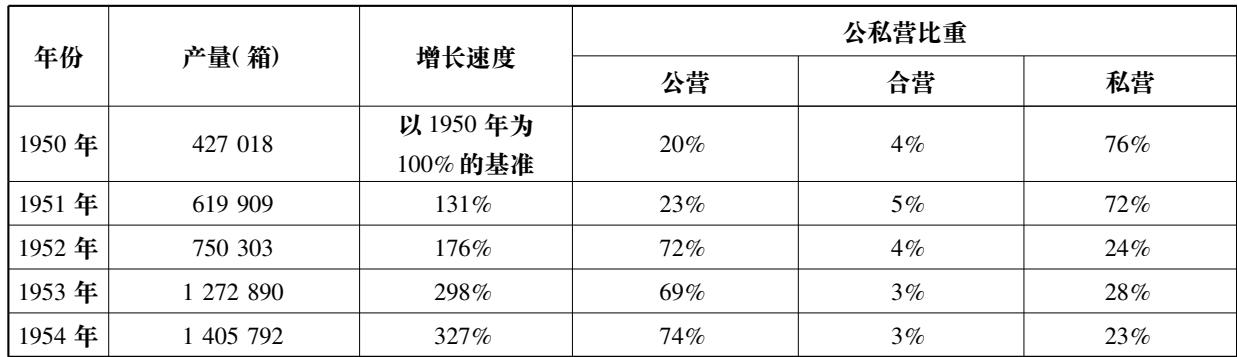
campaign, the total number of employees in Shanghai's cigarette industry did not decrease but increased, even surpassing the 1950 figure to reach 24,793.
After 1953, the supply of raw materials such as tobacco leaves for Shanghai's cigarette factories relied not only on traditional production areas like Shandong, Anhui, and Jiangxi, but also on regions such as Yunnan and Guizhou. In addition to becoming increasingly dependent on raw material supplies from across the country, Shanghai's cigarette "sales market also showed a growing trend of dependence on the national market." Of the cigarettes produced in Shanghai in 1954, only 12% were allocated to the local Shanghai market, with the rest supplied to the national market, making the phenomenon of "local production for nationwide supply and marketing" more pronounced than before. In 1954, the total output of Shanghai's cigarette enterprises reached 1,405,792 cases, an increase of approximately 11% over the historical peak output recorded in 1948.
From the comparison of the above data, one may discern the new regime's true planning for Shanghai's cigarette industry: the criticism of "overproduction" in Shanghai's cigarette industry during the early years of the People's Republic was primarily directed at private cigarette enterprises, providing a basis of legitimacy for subsequent industrial transformation. At the same time, the new regime continued to support the growth of state-owned cigarette enterprises in Shanghai, re-establishing the city as a key production base and sales center for the national cigarette industry. Subsequently, cigarette production across the country began to show a trend of comprehensive recovery and further improvement.
Concluding Remarks
The tobacco monopoly system of the new China originated around the time of the First National Cigarette Industry Conference in 1950. The outcomes of the discussions on relevant topics at the conference had a decisive impact on the new regime's assessment of the state of the cigarette industry in Shanghai and nationwide. It was precisely because the "regional monopoly system" encountered resistance that the decision was made to prioritize the restructuring of the procurement and supply system for production raw materials such as tobacco leaves and cigarette paper. The underlying policy logic was that the state possessed absolute control over these industrial raw materials, using this as an opportunity to gradually launch the transformation and regulation of the entire cigarette industry. The state attached great importance to the cigarette industry, desiring to take full control and grasp of it as soon as possible, yet choosing an extremely cautious approach to drive the transformation. The choice of transformation strategy was based on the new regime's assessment of fiscal security and industrial stability.
The cigarette industry was an extremely important source of fiscal and tax revenue for the new regime. In the past, the cigarette industry had been "a tool of plunder by imperialism and bureaucratic capital," whereas henceforth it should become "an enterprise that accumulates capital and increases income for the people and the motherland, and serves the people."4 Compared with other industries dominated by private commerce and industry, the cigarette industry had a more direct impact on state fiscal and tax revenue and was directly related to the lives of people from all walks of life. Although the government made concessions in certain respects to private cigarette enterprises represented by Shanghai during the conference, the goal of comprehensively controlling the national cigarette industry would not waver as a result. In the process of transforming Shanghai's cigarette industry, precisely because these private enterprises had previously "resisted" in public settings such as the National Cigarette Industry Conference, their space for "economic survival" became even narrower, and their subsequent rate of decline was faster.
Since 1952, the new China had basically completed its actual control over Shanghai's cigarette industry. Under normal circumstances, the central Ministry of Light Industry directly assigned production tasks to state-owned cigarette factories, while the Shanghai Municipal Financial and Economic Committee allocated and controlled the production and sales volumes of private cigarette enterprises. In addition, units such as the Shanghai Municipal Tax Bureau, the Administration of Industry and Commerce, the People's Bank, the Monopoly Company, and the Food Industry Union could also supervise private cigarette enterprises through joint meetings. After 1952, in addition to control over means of production, production scale, and the production and sales sectors, with the intervention of political measures such as "democratic reform" and "dispatching personnel to reside in factories," the actual management rights of Shanghai's major private cigarette enterprises had shifted from the capital owners to the state.
Thereafter, the state's policy toward Shanghai's cigarette industry shifted from the previous restriction of development and even compression of output to renewed increased investment. In other words, its strategy of restricting Shanghai's cigarette industry was primarily directed at private commerce and industry, and it did not overlook the enormous value of the cigarette industry to its fiscal economy. Once private commerce and industry relinquished management rights, Shanghai was re-established as the nation's most important cigarette production base and achieved substantial development. The strategy for its transformation became a successful experience that later guided the promotion of cigarette industry transformation in other regions.
(Responsible Editor: Lin Chaochao)
[1] "Statistical Table on the Number of Employees and Unemployed Workers in Shanghai's Cigarette Industry" (May 31, 1950), "Documents Related to the Shanghai Cigarette Industry Trade Association's Attendance at the National Cigarette Industry Conference," Archive No.: S68—4—73, Shanghai Municipal Archives; "Overview of Shanghai's Cigarette Industry" (1954), Archive No.: B163—2—389—61, Shanghai
Municipal Archives.
[2] "Overview of Shanghai's Cigarette Industry" (1954), Archive No.: B163—2—389—61, Shanghai Municipal Archives.
[3] It is also worth noting that in April 1953, Mao Zedong personally stopped the "mass smoking cessation movement" initiated by the Ministry of Health and the Ministry of Internal Affairs, considering it "work that hindered production." This also offers a glimpse into the highest decision-making level's recognition of the importance of the cigarette industry at the time. See "Telegram of the Central Committee Agreeing to Postpone the Implementation of the Mass Smoking Cessation Movement" (April 2, 1953), Mao Zedong: Mao Zedong's Manuscripts Since the Founding of the Nation, Vol. 4, Central Party Literature Press, 1990 edition, pp. 172–173.
[4] Song Yuhe: "Opening Address at the First National Cigarette Conference," China Tobacco Monthly, Combined Issues 4 and 5, 1950.
Restriction and Development: the Initiation of the PRC's Tobacco Industry Transformation Policy and Its Practice in Shanghai SHA Qing-qing Since modern times,Shanghai has been the most important production and marketing center for cigarette industry in China.Before the liberation of Shanghai,there were 112 tobacco factories in the city.More than half of the country's cigarette production facilities were concentrated in Shanghai,and there were more than 100 thousand tobacco related practitioners.At the beginning of the founding of the PRC,the cigarette industry in Shanghai once fell into depression.Against this background,the first national ciga- rette industry conference was formally held in Beijing in July 1950,and led by the State Food Industry Ministry.The meeting became a landmark event in the policy transformation of the tobacco industry at the beginning of the founding of the Communist Party of China.It also set the tone for the tobacco industry regulation policy in the future.It had planned the development direction of the public,private and foreign tobacco enterprises in the future,which laid down the future for the formation of Shanghai and the forma- tion of the national tobacco monopoly system.