The Partial Mobilization of Holy Relics
“圣遗物”的局部动员
The upper age limit for mobilization in Russia appears to be more lenient than imagined.
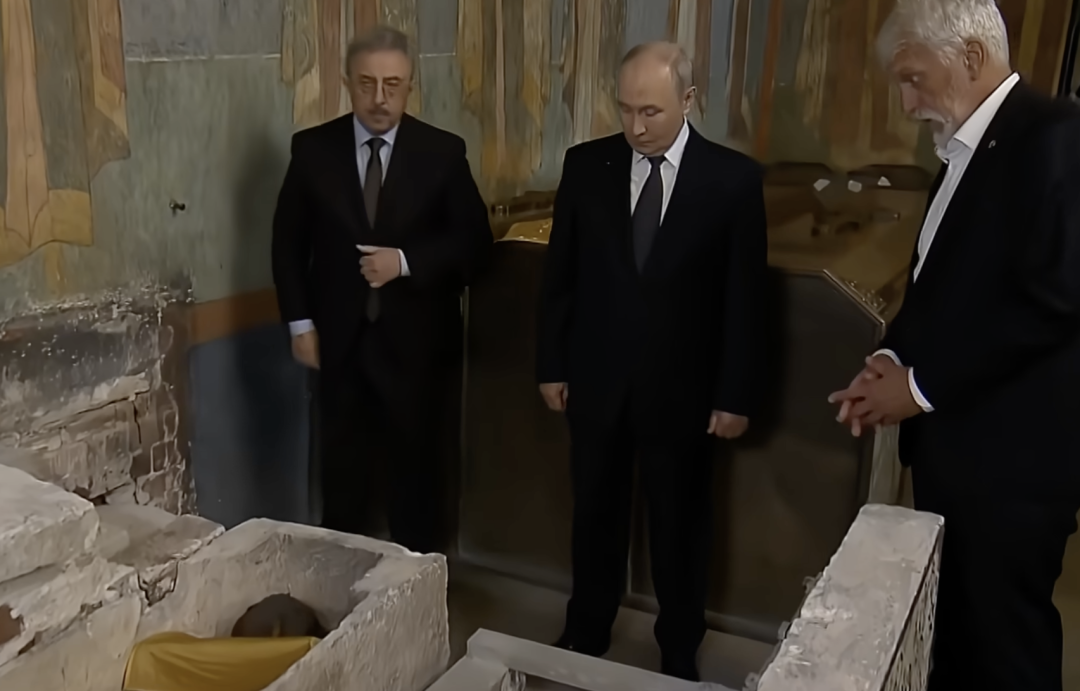
This September, a Grand Prince of Moscow who died in 1389 was once again called upon to support the front lines. Having been dead for over six hundred years, he still could not be exempted from the scope of mobilization.
This Grand Prince’s birth name was Dmitry Ivanovich (1350–1389). He inherited the position of Prince of Moscow in 1359 and later also served as Grand Prince of Vladimir. In 1380, he led his army to defeat the Mongol-Tatar forces at the Battle of Kulikovo, earning the posthumous epithet “Donskoy” (of the Don). However, Moscow did not thereby escape the Golden Horde: in 1382, Tokhtamysh ultimately captured Moscow, forcing it to resume paying tribute. In 1988, he was officially canonized as a saint by the Russian Orthodox Church.
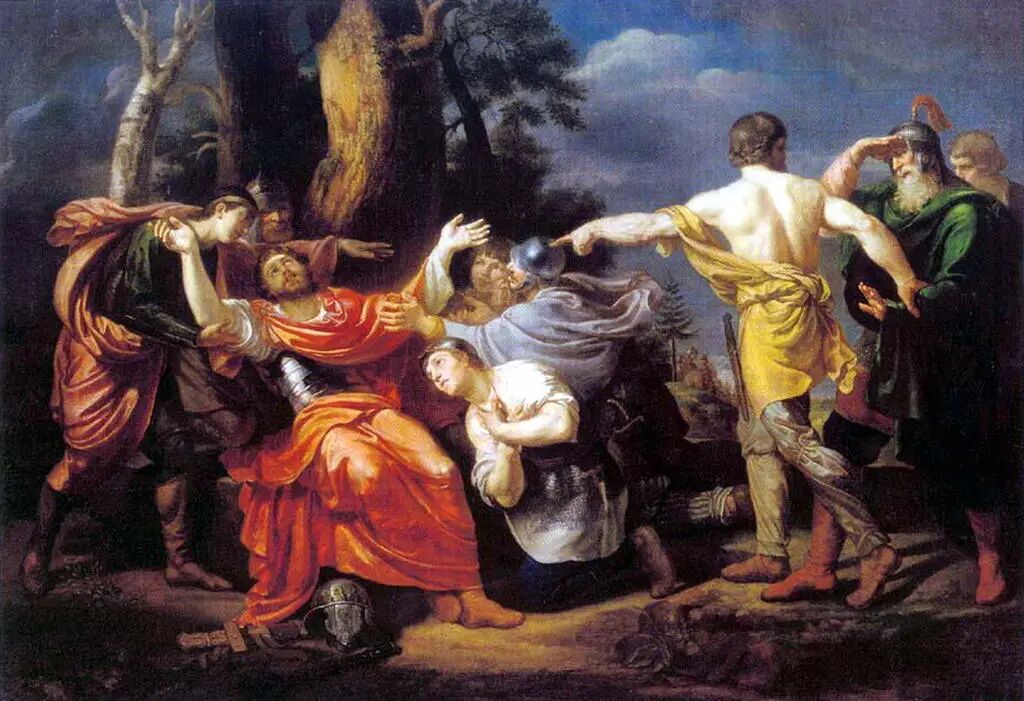
Orest Kiprensky, Donskoy on the Field of Kulikovo, 1805, oil on canvas, held in the Russian State Museum.
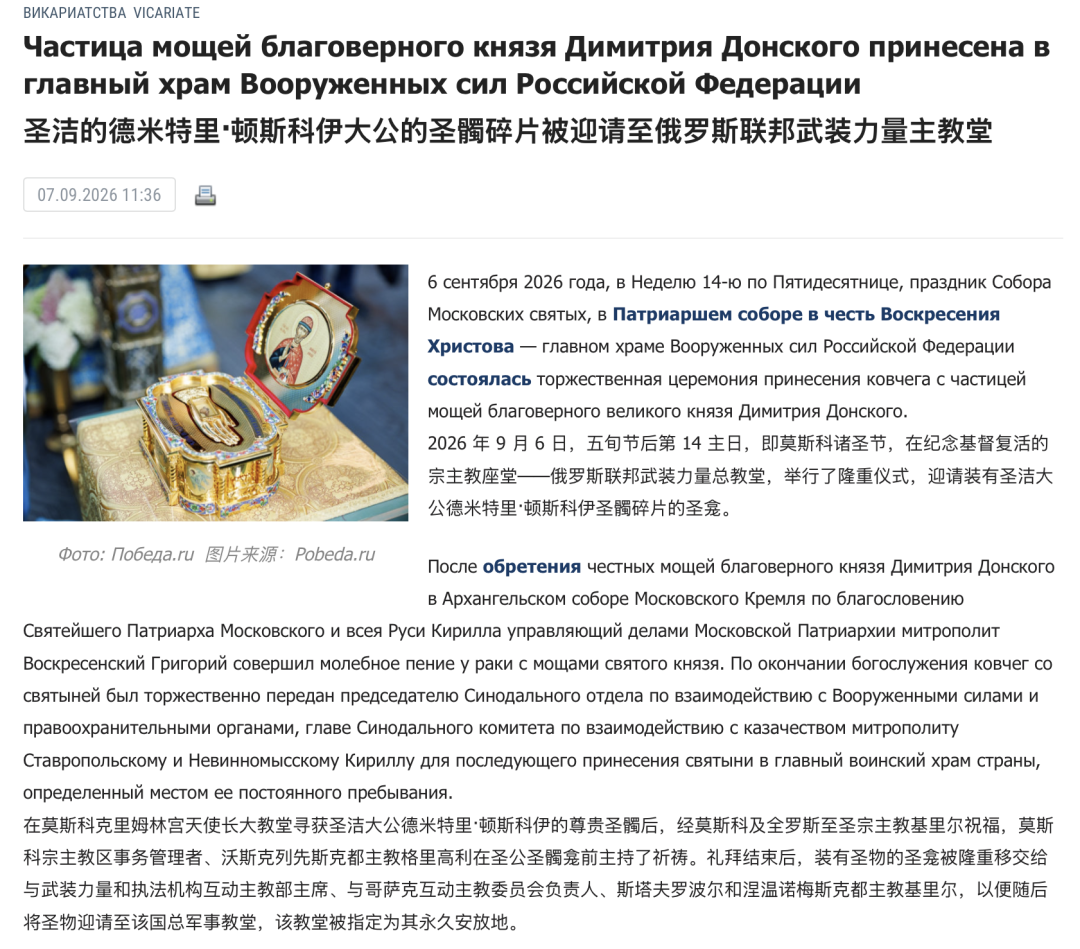
On September 8, the military cooperation department of the Russian Orthodox Church announced that a reliquary containing fragments of Donskoy’s relics, as recognized by the Church, was being transported to the line of combat contact. The Ministry of Defense reported on the same day that the relics had arrived at the Memorial Complex of the Mound of Glory in the Donetsk region, where a prayer service was held.
The Russian Orthodox Church particularly emphasized that what was sent was a small part of the Grand Prince’s right hand—the very hand that had held the sword on the battlefield of Kulikovo in 1380. The military achievements of 1380 have now become important credentials for his “rehiring.” Once wielding a sword to command the army, he is now placed in a reliquary to boost morale; the role has been adjusted, but his “years of service” continue to accumulate. In a report on September 16, a military chaplain stated that Donskoy had worn ordinary armor and stood in the front line to face the enemy, which, in today’s terms, would make him an “assault soldier.”
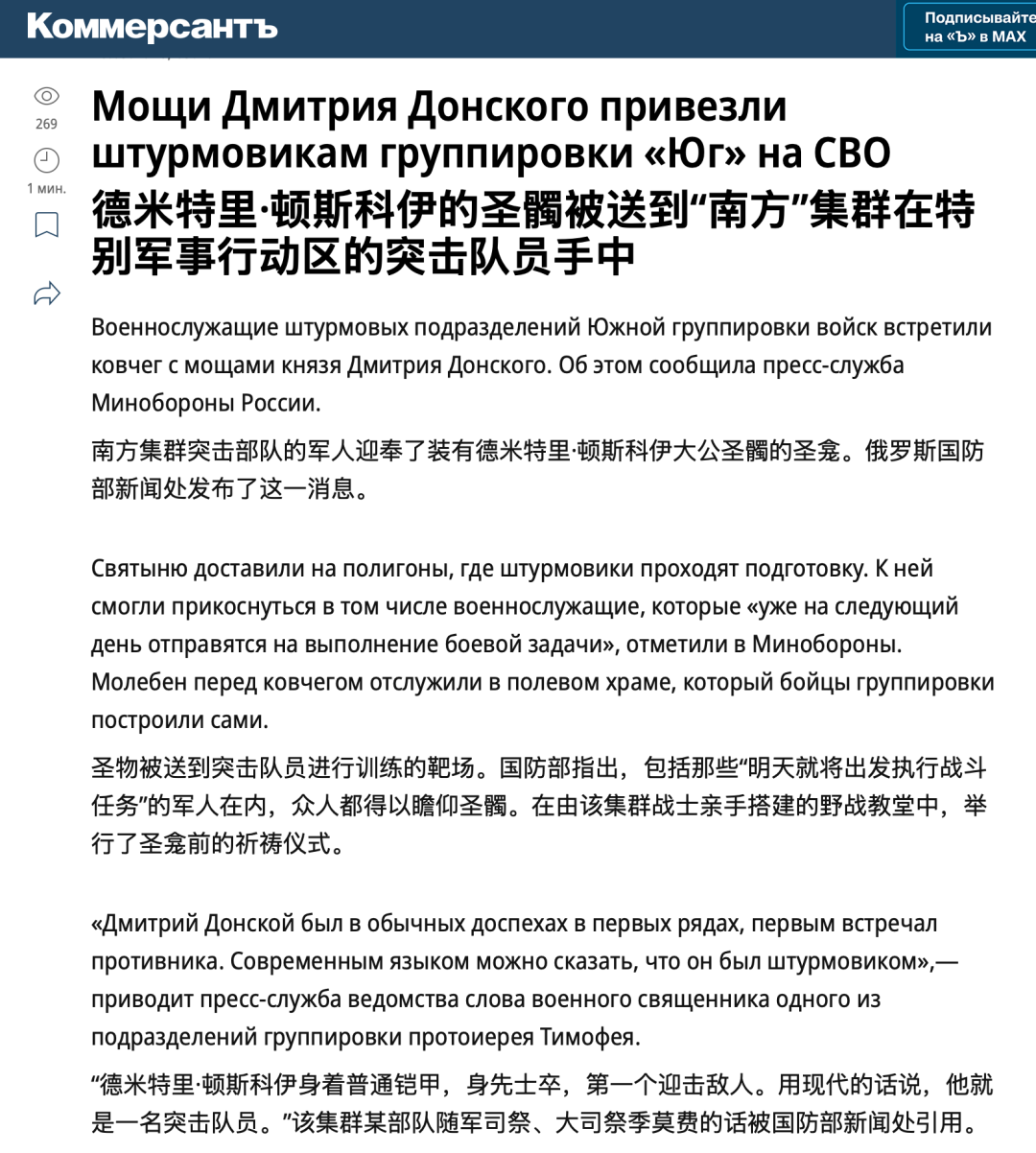
This type of reinforcement via relics has another rather convenient aspect: its effectiveness is difficult to verify. Whether shells have arrived or vehicles can start can always be checked; but how much morale a small piece of “holy relic” has actually increased, or how much it can improve the odds of winning the next battle, seems to lack corresponding performance indicators. A detail in the reports noted that some soldiers who came to venerate the relics were scheduled to carry out combat missions the very next day.
In any case, fortunately, the “ancestor” was not moved in its entirety; only a small part of the right hand was requisitioned. Viewed this way, it does indeed conform to the spirit of “partial mobilization.”