
From Spy Legends to Serious Scholarship
沙青青评《情报战三千年》|从间谍传奇到严肃学问

The Covert Front:
Three Thousand Years of Intelligence
By Christopher Andrew [UK]
Translated by Wu Ping
Democracy and Construction Publishing House
December 2025
904 pages, 168.00 yuan
━━━━
BySha Qingqing
January 17, 1917, Room 40, Admiralty Building, London.
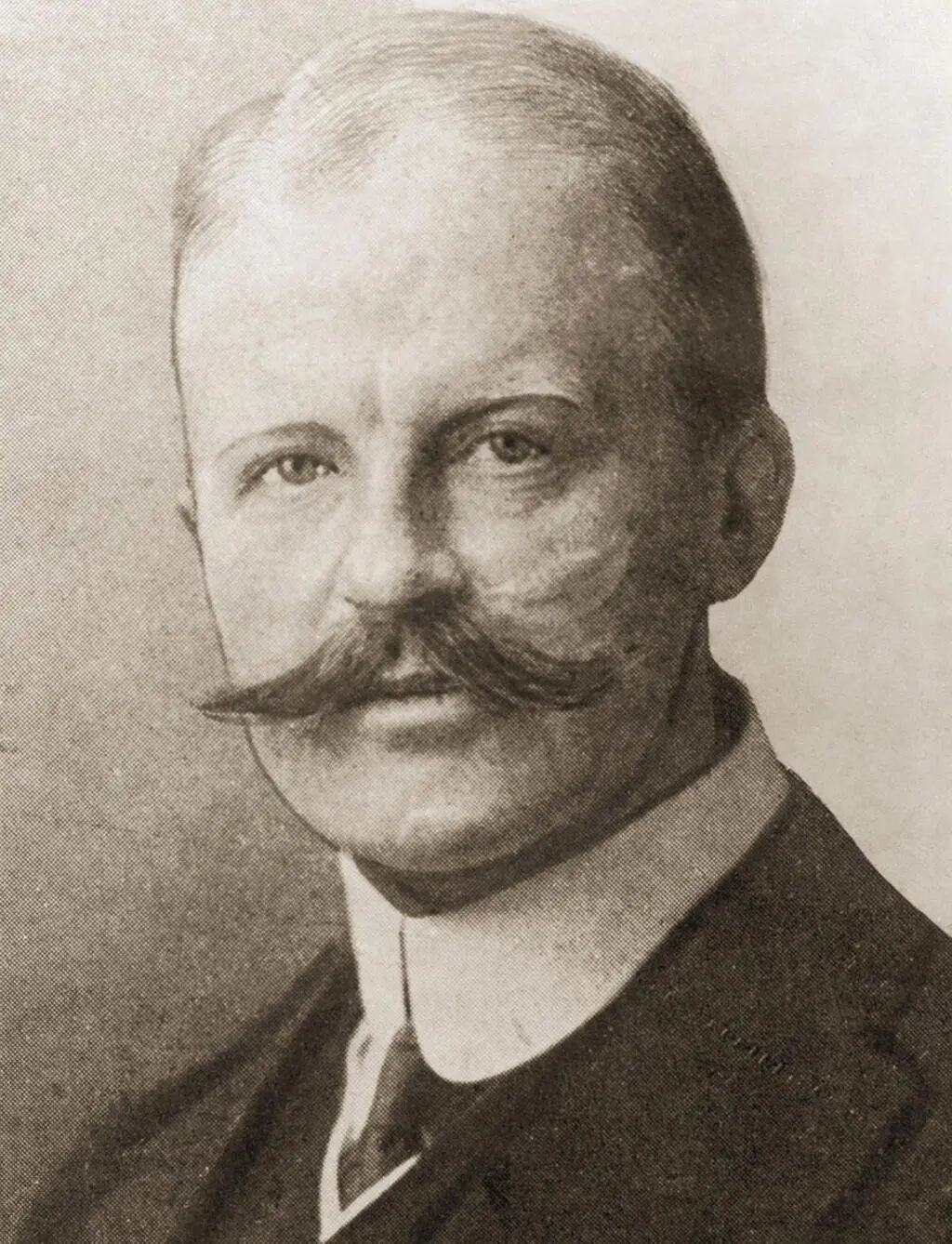
The so-called "Room 40" was the office of the British Naval Intelligence Division. The head of the division, Reginald Hall, received an incomplete secret diplomatic telegram from a listener. The telegram originated from German Foreign Secretary Arthur Zimmermann, was sent to the German Embassy in Washington, and was to be forwarded to the Mexican government. In this secret telegram, Zimmermann, on behalf of Germany, proposed that if the United States entered the war in Europe, the German Empire would form a military alliance with Mexico and support Mexico in reclaiming Texas, Arizona, and New Mexico.
Obviously, this was an important secret telegram capable of changing the international situation at the time. For the British government, decryption was only the first step; the real difficulty lay in how to utilize this crucial intelligence.
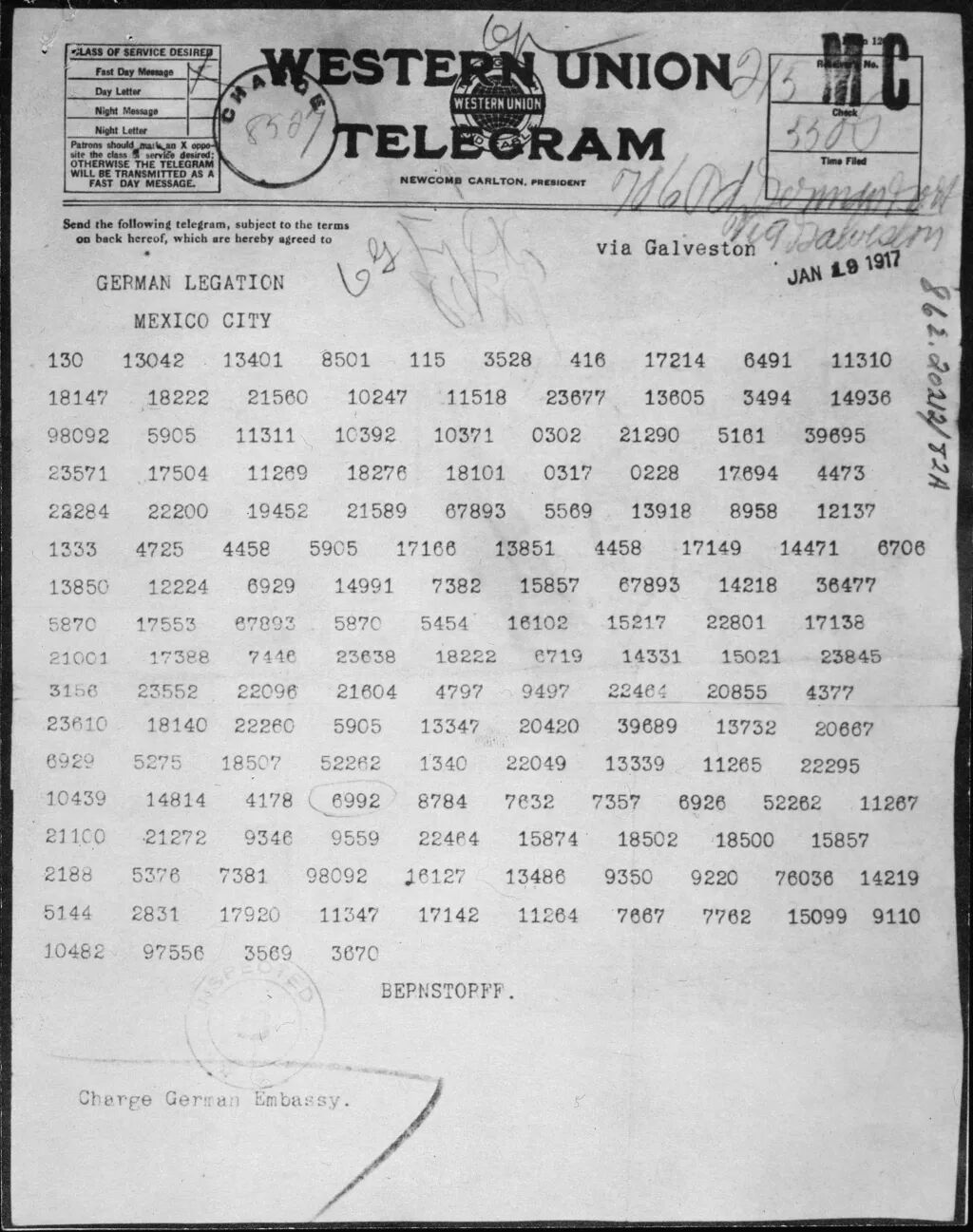
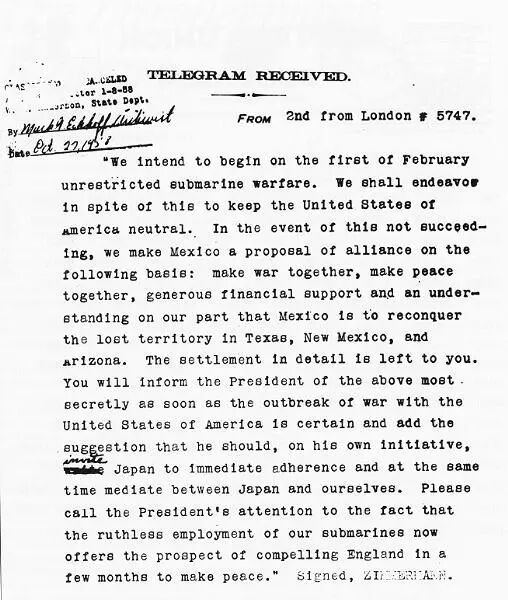
If the decrypted text were handed directly to the Americans, the Germans would know that their diplomatic codes had been broken by the British. The American side might also realize that Britain had not only intercepted German communications but was also monitoring all diplomatic telegrams forwarded through American lines (including those of the Americans themselves). For the British, how to "skillfully" reveal the contents of this telegram to the Americans required a complex cover story. Ultimately, the British Navy, the Foreign Office, and 10 Downing Street devised a cover story: British agents in Mexico City had secretly obtained an encrypted copy of the telegram from the local telegraph office through bribery, and subsequently decrypted it. To make this story more convincing, the British side waited until February 19 to reveal the contents of the telegram to diplomats at the American Embassy in London. Half a month later, the full text of this secret telegram, later known as the "Zimmermann Telegram," had been reprinted by major newspapers across the United States, stirring anti-German sentiment domestically and further pulling the United States toward the final moment of declaring war on Germany.
Afterwards, the "Zimmermann Telegram Incident" was often considered to have had a significant impact on the course of World War I and was regarded as a legend in the history of modern intelligence. For a long time, ordinary people and even researchers of international relations history were unaware that the British government had engaged in the aforementioned complex political calculations regarding how to maximize the utility of the decrypted German diplomatic secret telegram.

In his most important representative work, The Secret World: A History of Intelligence (translated here as The Covert Front: Three Thousand Years of Intelligence), Christopher Andrew, a renowned British historian of intelligence and professor at Cambridge University, referred to such scenarios as "intelligence amnesia." In this monumental general history spanning nine hundred pages, Professor Andrew sought to repeatedly convey the view that the history of intelligence should not be viewed merely as a series of dramatic adventure stories, nor should it be approached with a conspiracy-theory perspective that chases shadows. Instead, it should be treated as a serious specialized history, akin to diplomatic history, military history, and the history of international relations, discussed with a more rigorous attitude to explore the logic of historical evolution behind it. Throughout the book, he organized the vast historical details according to this logic, striving to accurately reconstruct the history of intelligence as embodied by intelligence organizations. Interestingly, Andrew also believed that the serious study of intelligence history he advocated was not only an academic endeavor but also played an extremely important and indispensable role in the self-construction of intelligence organizations, namely, curing "intelligence amnesia."
In Andrew's view, so-called "intelligence amnesia" was a "natural dilemma" faced by almost all intelligence organizations throughout history: although these institutions possessed a large amount of secrets, they often did not understand their own past. This was because these hidden histories were frequently sealed within undeclassified archives, secrecy regulations, and internal procedures, leading to interruptions in the transmission of experience within the intelligence organizations themselves. "Intelligence amnesia" not only caused intelligence organizations to lose an accurate understanding of their own past but also led to larger blind spots in historical writing: narratives of political and international relations history often sought causes only in public documents, military deployments, leaders' statements, and diplomatic conferences, while the historical secrets of the "covert front," which were long invisible and even officially unrecognized, were ignored.
However, Andrew did not mean to say that simply supplementing the "secret materials" from (or about) intelligence organizations would fill the gaps in history. In fact, he reminded readers in the book that so-called "secret materials" did not naturally bring truth; they could also mislead, be over-interpreted, and even be politically exploited. In fact, when these "secret materials" had not yet been archived and were still regarded as "valuable intelligence," they might not have had any significant impact on decision-making.
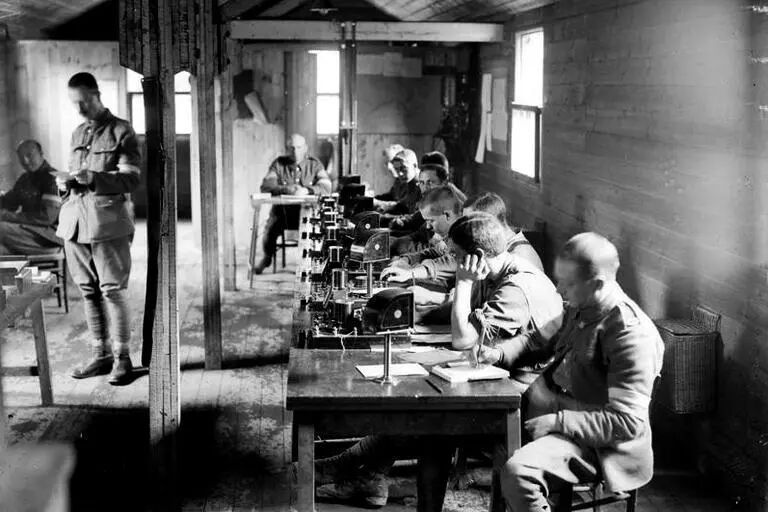
Compared to the secret acts of collecting and acquiring intelligence by every possible means, how intelligence was interpreted, screened, transmitted, and placed on the desks of decision-makers might be more critical. In this lengthy process, even important intelligence that should have had a huge impact on decision-making was often never seriously read, quickly tucked back into folders, and eventually placed in some corner of an archive. Besides being ignored or fragmented into disconnected pieces of information by bureaucratic systems, technological progress did not necessarily mean that intelligence work naturally improved with it. In the author's view, a modern state with code-breaking capabilities, satellite reconnaissance, and massive databases was not necessarily better at discovering internal or external dangers than an early modern state relying on informants, resident diplomats, and manual decryption.
In the author's view, the "Zimmermann Telegram Incident" was not just a victory brought about by British military decryption, but the result of coordinated operations across departments, skillful control of disclosure methods, and the exploitation of American socio-political psychology. Correspondingly, the Japanese surprise attack on Pearl Harbor was not because there was "no warning," but rather the result of factors such as the inability of various US departments to communicate the intelligence they possessed in a timely manner despite the interception of Japanese diplomatic secret telegrams, and the failure to effectively guide the attention of top leaders. As for the "9/11 attacks," it was a tragedy caused by vicious internal competition between the CIA and the FBI, and the waste of relevant intelligence leads. Therefore, how to truly utilize intelligence, realize its value, and coordinate with the political decision-making layer is actually more difficult and more important than uncovering secrets.
Undoubtedly, Andrew hoped to demystify "intelligence history" through this general history. He did not deny the drama of the secret world but was committed to breaking down dramatic elements into materials for serious discussion. He rarely let readers linger in the surprise of "so that's how it was," but quickly pushed the issue to a deeper level: who recorded this event, how were the materials later opened, how did institutions preserve or obscure them, and to what extent could historians trust these materials. In other words, he tamed the so-called "spy stories" with academic language, but this taming did not mean making them uninteresting. On the contrary, often the truly interesting aspects emerged after the "legendary stories" were meticulously deconstructed.
Beyond demystification and deconstruction, Andrew also greatly enjoys making cross-era and cross-cultural comparisons in this work, and writing a general history happens to grant him more space to do so. Within the scope of three thousand years and spanning the globe, he juxtaposes ancient divination, intelligence networks centered on religion, modern signals intelligence, and even contemporary counter-terrorism operations, allowing readers to see how the same type of problem manifests differently under changes in institutions and technology. Another example is that generals in ancient Greece and Rome often wavered between military reconnaissance and divine omens, while Stalin refused to believe that Germany was about to invade before 1941, similarly choosing to turn a blind eye to "bad news" under the influence of "omens" dominated by ideology. Of course, this "turning a blind eye" may stem not only from factors such as religion and ideology, but also from different "views on intelligence."
In fact, even universally recognized statesmen and military leaders may not necessarily be able to fully utilize intelligence. When comparing Napoleon and Wellington, Andrew argues that although Napoleon established a fairly well-developed military intelligence headquarters capable of rapidly collecting battle reports, geographical information, and enemy movements, on the front-line battlefield he still relied more on his own intuition and strategic assumptions, with intelligence serving him more as background information. In contrast, Wellington's command system was more plain and even rudimentary, yet he himself was more willing to adjust his decisions and deployments at any time based on the latest intelligence. The Battle of Waterloo was a manifestation of these two "views on intelligence."
Looking at the book as a whole, Andrew's greatest contribution is undoubtedly organizing the intelligence history of the "secret world" into an analyzable, absorbable, and academic knowledge system. However, while admiring the author's powerful ability to manage sources, one should also realize that "academization" itself is a form of selection and filtering. Although this freed discussions of intelligence history from conspiracy theories and sensationalism, it may also have blurred certain experiences that were not suitable for absorption by institutions.
Furthermore, the main body of the book's discussion is undoubtedly still centered on the West (especially Britain and the United States). However, simply criticizing this work for lacking a global perspective is equally unfair; Andrew indeed placed China, India, and the Islamic world at the early center of intelligence history, and constantly reminded readers that modern intelligence theory should not begin only from Whitehall, Washington, or Bletchley Park. But the problem lies in the fact that this global perspective is actually treated as a kind of "pre-history of intelligence." Once entering the modern era, the focus of the discussion quickly returns to Britain, the United States, and continental Europe.
The reason for this situation is, of course, related to archival materials. Relatively speaking, the openness of archives in Britain, the United States, and continental European countries is high, and British intelligence history research is the author's academic specialty. As for topics such as Russia, the Soviet Union, and the Cold War, there is already a relatively mature research tradition and foundation in the field of intelligence history in the English-speaking world. For Western researchers, the modern and contemporary intelligence histories of China, India, the Ottoman Empire, Latin America, Africa, and Southeast Asia either have archives that are difficult to access or lack sufficient existing research foundations, so they often can only understand them indirectly through materials from Britain and the United States, former colonial governments, or other continental European countries. This is particularly evident in the intelligence experiences of the original colonies. The author can vividly depict British intelligence activities in India, Afghanistan, Iran, the Middle East, and other places, and can also write about how the empire was dragged into strategic dilemmas due to intelligence misjudgments. However, questions such as how colonial societies themselves understood the empire's intelligence work, and how the various forces and ordinary people within them responded and countered, are not given due attention in the book. If a general history aiming for a "global intelligence history" relies on materials from the West for most of its discussions, it indeed easily becomes an echo of the history of intelligence and security from a Western perspective. Non-Western intelligence histories may only gain some outline in Andrew's writing if they have entered Western national archives and historical materials in some way.
This Western-centric mode of discourse has another more subtle manifestation. When assessing the intelligence capabilities of various countries, Andrew often uses institutionalization, archiving, professionalization, and transmissibility as measures. These measures are not wrong, but they themselves come from the historical experience of modern Western bureaucratic states. Consequently, intelligence activities that can leave behind reports, committee records, decrypted texts, and institutional memoirs are more easily written as "mature." Secret practices that rely on oral transmission, family connections, local societies, commercial channels, or anti-colonial underground organizations are more easily regarded as "fragmented," "backward," and "lacking in materials." The issue here is not whether the author deliberately chose to ignore them, but rather that his research and discussion methods are better suited to handling secrets within national archives, rather than secrets outside of archives.
Finally, one point that needs attention is the relationship between the author and the British intelligence services. Labeling Professor Andrew as an "official historian" might be too simplistic and crude, but completely ignoring his official status is equally naive. Readers should recognize that this is a historian who has long been in dialogue with and accepted by the British intelligence community, writing about the secret world. The author has long been the official historian of Britain's MI5 and has also compiled official histories for MI5. In the acknowledgments section of The Secret War: A History of Intelligence, he discussed this identity and expressed pride in it. From a research perspective, this identity indeed brings great convenience: without institutional trust, it would be impossible to access archives that are sealed or repeatedly delayed in declassification, and naturally difficult to understand the details of the internal operations of intelligence institutions. This convenience is naturally not free. MI5 may publicly claim that it does not restrict the author's judgment, and Andrew is indeed not writing a brochure for the institution, even revealing the failures and drawbacks of British intelligence agencies. However, he rarely truly questions the legitimacy of British intelligence agencies as the center of the narrative, instead focusing on criticizing intelligence history writers outside the system, dismissing the works of Peter Wright, Chapman Pincher, and others as "conspiracy theories lacking archival foundations and alarmist," even mocking these people as belonging to the so-called "airport bookstall school."
In fact, due to the special nature of intelligence history itself, in an era when official archives had not yet been declassified and opened, and when some intelligence agencies even refused to acknowledge their own existence (for example, the British government did not acknowledge the existence of MI6 until the 1980s), intelligence history works based on interviews, private documents, leaked materials, cross-referencing, and public records indirectly introduced related topics into public discussion, forcing the release of more materials. The works of the "airport bookstall school" mentioned by Andrew are, of course, of varying quality, sometimes overly speculative, sometimes driven by conspiratorial imagination, but the questions they raised, the methods they explored, and the pressure they exerted on official narratives later became precisely one of the conditions for the development of professional intelligence history.
The aforementioned criticisms do not mean that The Hidden Front: Three Thousand Years of Intelligence Warfare is unimportant. One of the author’s and this general history’s greatest achievements is pulling the history of intelligence from the margins to the center, restoring covert operations from legend to institutional-level study, returning technical victories to their political context for re-evaluation, and organizing a series of seemingly isolated failure cases into historical lessons available for reference and learning. Intelligence, moreover, is by no means merely a footnote to the history of international politics or warfare, but rather a unique way for any nation, past or present, to understand itself and the world.