John le Carré’s Last Mission
新刊 | 沙青青:勒卡雷的最后一次任务
By Sha Qingqing
Originally published in the April 2026 issue of Book Town
On December 12, 2020, David Cornwell, at the advanced age of eighty-nine, passed away at a hospital in Cornwall, England. His pen name—“John le Carré”—was undoubtedly far more widely known than his birth name. While most people might be captivated by adventure legends like James Bond, they may not necessarily view them as references to reality. In contrast, the spy stories written by le Carré have long been regarded as precise recreations of the covert warfare atmosphere of the Cold War era, at least allowing readers to feel the chilling cold seeping out from this ruthless world. It is no exaggeration to say that le Carré’s novels have almost shaped the public’s imagination, perception, and even memory of the history of espionage during the Cold War. For instance, certain “terms” used in his novels were even reverse-imported into intelligence agencies around the world. In the early Cold War, Western intelligence agencies represented by the US Central Intelligence Agency referred to undercover spies hidden within their ranks as “sleepers.” After le Carré’s novels became popular, “mole” replaced “sleeper,” becoming a more popular and common term that appeared in various leaked official reports. Regarding this, le Carré “humbly” stated that he had borrowed the metaphor of the “mole” from the Soviets. Interestingly, the editors of the Oxford English Dictionary could not find any Soviet literature showing that “mole” was used to refer to a “sleeper.”
In 1931, le Carré was born in Poole, Dorset, England. His father was a superb con artist who moved between the worlds of law and crime. Before becoming a professional novelist, le Carré worked successively for MI5 and MI6, and also served as a “diplomat” in Bonn and Hamburg, responsible for gathering intelligence on East Germany. In 1963, Kim Philby, one of the “Cambridge Five” and the most famous “mole” in Britain during the Cold War, defected to the Soviet Union, leading to the exposure of the true identities of numerous British agents, including le Carré, forcing him to withdraw to Britain. A year later, le Carré resigned from MI6 and became a full-time writer. Since modern times, British writers have seemed keen to act as spies; for example, W. Somerset Maugham, Graham Greene, and Frederick Forsyth all fall into this category, but most of them only did so briefly as a side job, viewing such work as a diversion from their writing careers or merely as a way to accumulate material for future writing. However, it is rare to find someone like le Carré who had a long-term, truly professional experience as a spy. In other words, he was a spy in the truest sense. This identity granted him creative material and inspiration that others could not imagine, but it also long shrouded his image in a mist.
In 2016, le Carré published his autobiography The Pigeon Tunnel (The Pigeon Tunnel), seemingly intending to leave an unavoidable footnote to his mysterious and unique life in his later years. In this autobiography, filled with vivid details and literary descriptions, le Carré wrote very frankly: “Spying did not lead me into any secret realm. Evasion and deception were indispensable weapons of my childhood. We were all a certain kind of spy in our youth, but I was already a veteran spy.” This, of course, referred to the inescapable influence of his father from a young age. In interviews, le Carré used a series of precise and ruthless words to describe his father: “an occasional fantasist, a prisoner in and out of jail, an addict of crisis, an addict of performance, a delusional magician capable of destroying many people’s lives.” Growing up in such a family environment, le Carré learned early on “how to lie, how to invent personas.” These skills seemed “natural” to him, so he mastered “the art of deception” from a young age. Working as a spy was merely finding a larger stage for himself to display these talents. Before becoming a professional spy and writer, he was already a skilled “sleeper”—lying low amidst the chaos and lies constructed by his father, working and living in the cracks by reading people and feigning compliance.
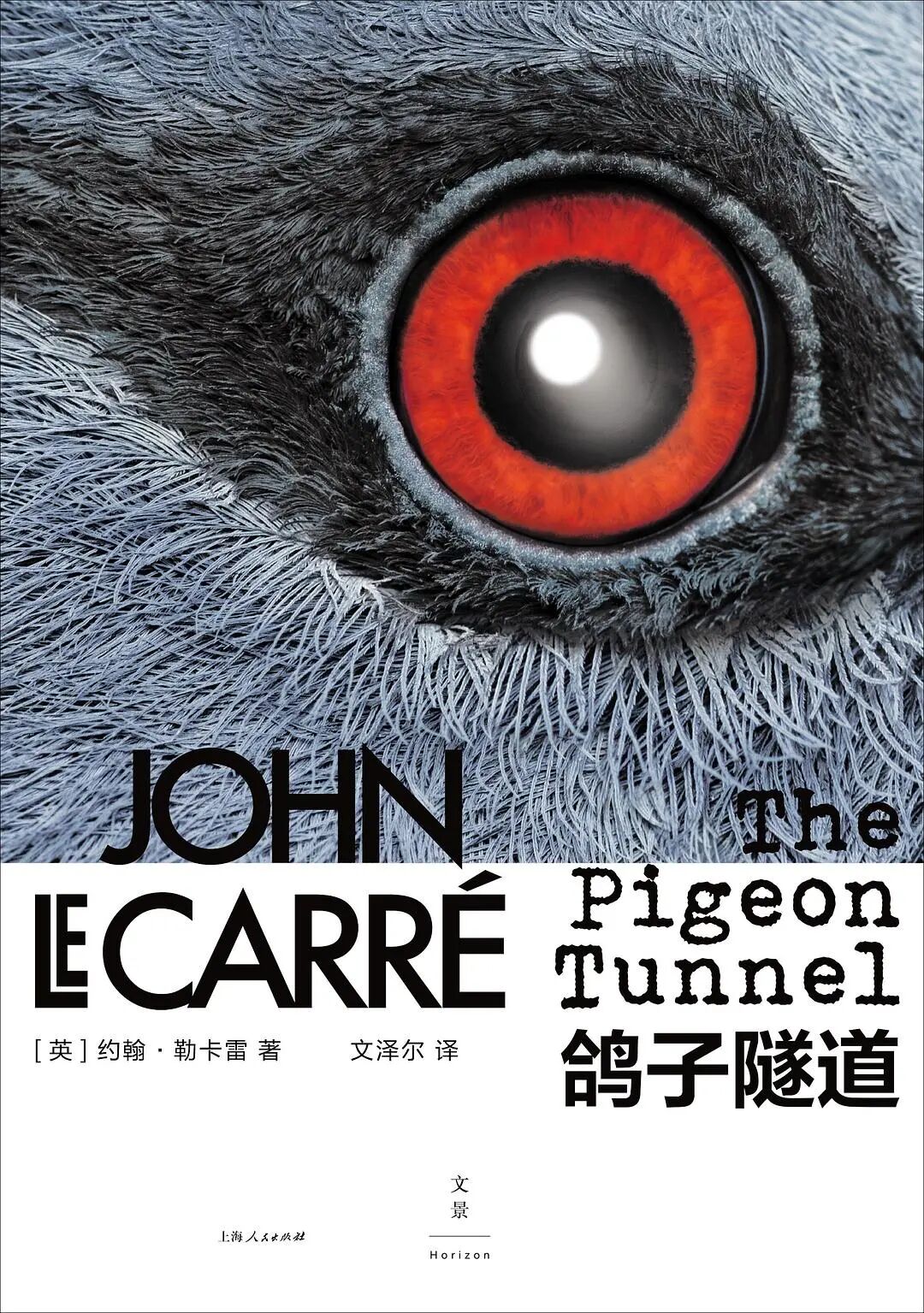
The Pigeon Tunnel
By [UK] John le Carré
Translated by Wen Zeren
Shanghai People's Publishing House, 2019 Edition
Biographer Adam Sisman believes that after becoming famous, le Carré even arranged his affairs as if plotting a novel: parking his car far away, writing letters in code, and passing signals in public. The source of this dramatization of life can perhaps be traced back to the absurd childhood created by that “delusional magician” father. In another representative work, A Perfect Spy, le Carré even used fiction to perform a literary “patricide.” He surpassed his father through writing, yet inherited his father’s ability to “create illusions.”
Furthermore, perhaps precisely because of his consistently strange and unique life experiences, le Carré, after becoming a writer, was always very concerned about how his story would be recorded and disseminated. To this end, as early as the 1990s, he sued a biographer who attempted to expose his private life. Even in 2010, although he agreed to Adam Sisman’s request for interviews and to write his biography, he insisted on retaining final review rights over the biography and went to great lengths to “warn” the author not to touch upon his various romantic affairs over the decades.
It was not until 2023, three years after le Carré’s death, that Sisman published a collection of the content vetoed by le Carré and forbidden from appearing in his biography, revealing the dazzling history of extramarital affairs of this old spy and famous writer. If the 2015 John le Carré: The Biography (John le Carré: The Biography) was the “approved” official version by le Carré, then the 2023 The Secret Life of John le Carré (The Secret Life of John le Carré) published by Sisman is more like a “declassified file,” exposing the parts le Carré deliberately concealed: his chaotic romantic history, his manipulation of others, and the cold side of his personality. Between these two biographies lies The Amateur Spy: The Letters of John le Carré (A Private Spy: The Letters of John le Carré)。
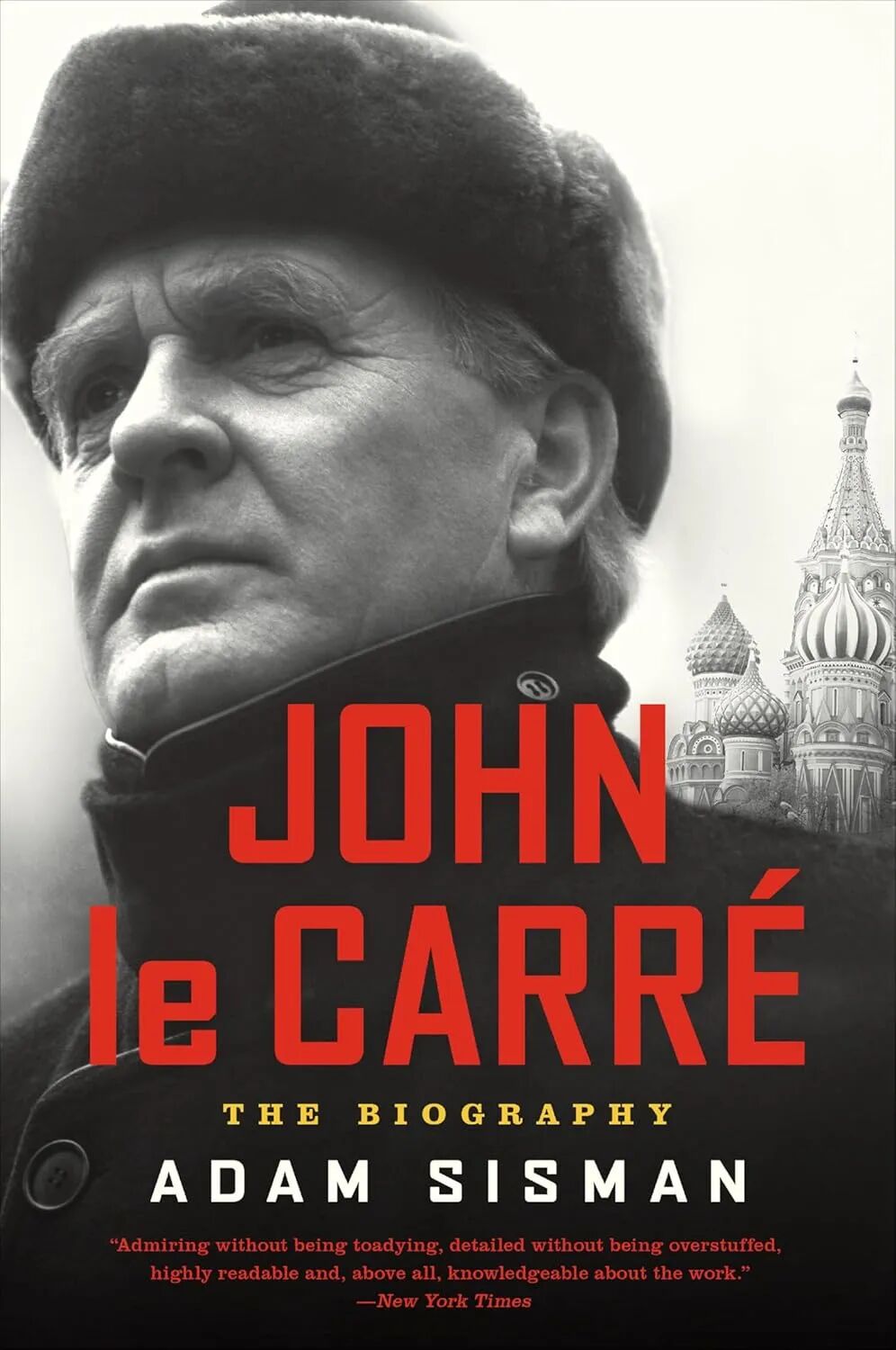
John le Carré: The Biography
2015 English Edition
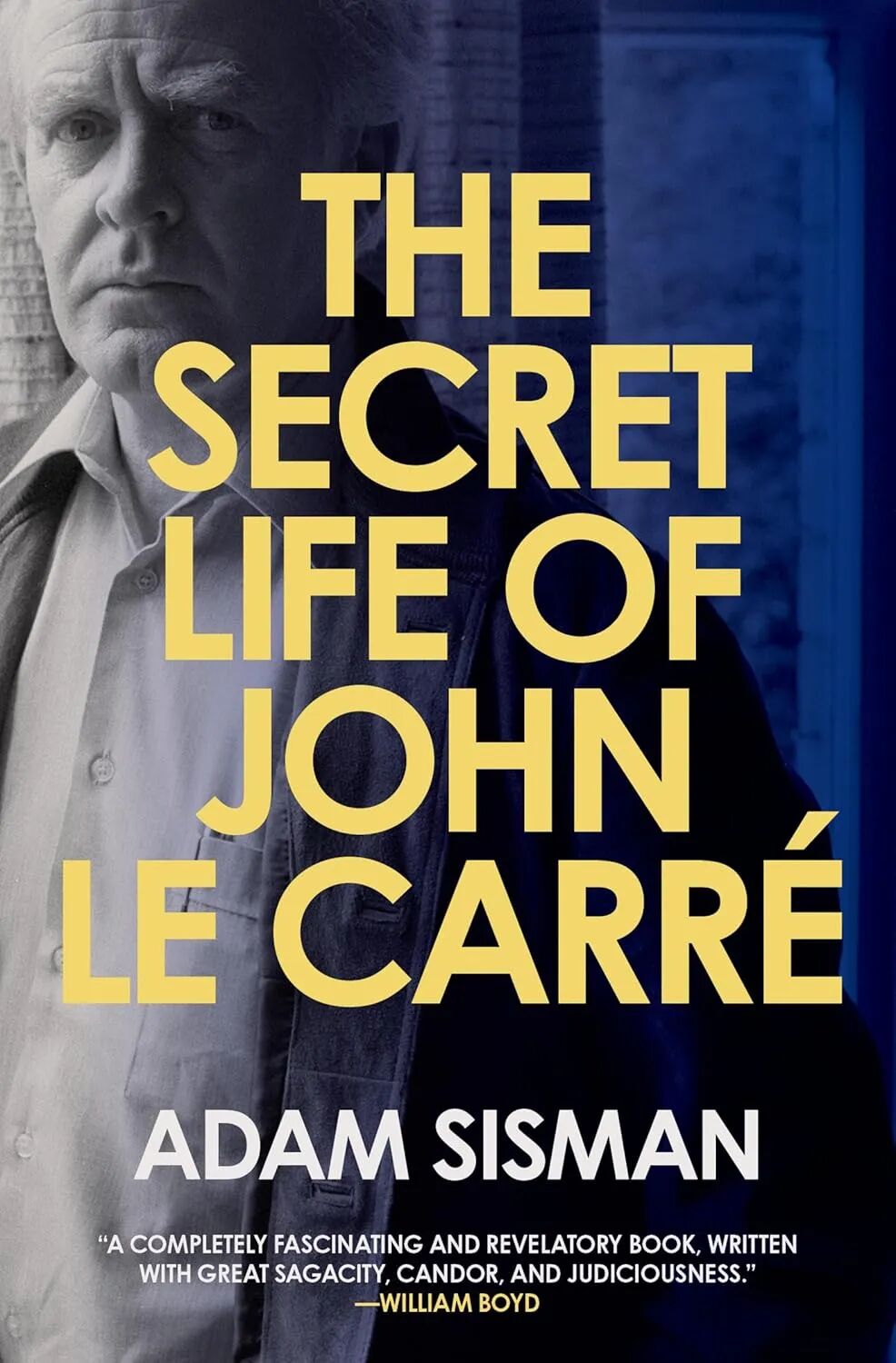
The Secret Life of John le Carré
2023 English Edition
The correspondence in The Amateur Spy: The Letters of John le Carré spans nearly eighty years, from 1945 to 2020—from le Carré’s childhood in wartime Britain to just days before his death. The recipients of these letters include family members, friends, publishers, actors, politicians, and even his former colleagues in the intelligence world and adversaries from the Eastern Bloc. Private letters are often regarded as precious “primary sources.” Compared with official archives and news reports, letters seem to better reveal the private lives, true thoughts, and views that historical figures found inconvenient to express publicly. For this reason, collections of famous people’s letters are often seen as “hidden paths” to understanding them and their times. However, for le Carré, letters may have been a form of creation, much like his novels (and memoirs). He realized early on that letters were never pure monologues or private conversations between two people, but acts of communication with a presumed audience.
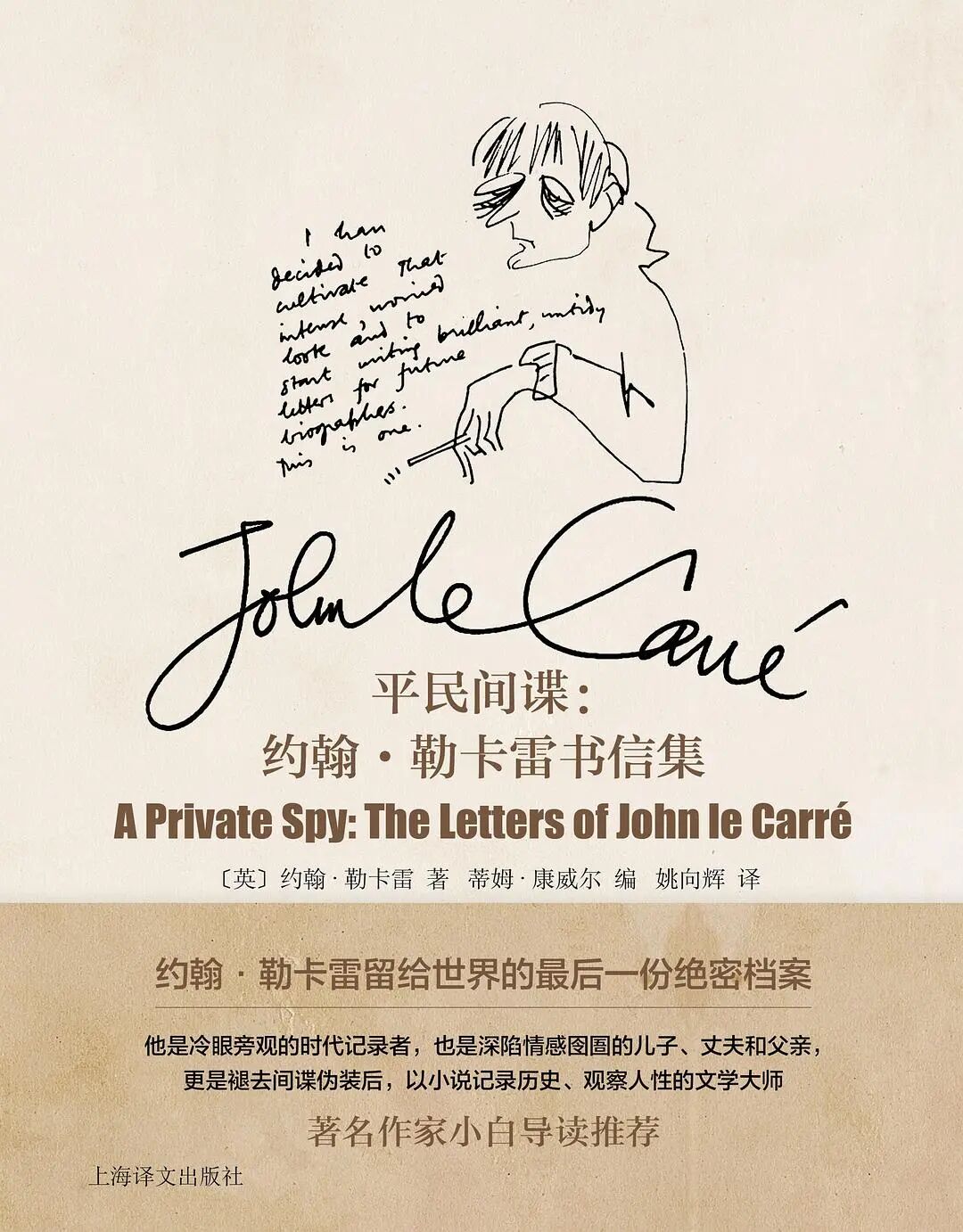
*The Amateur Spy:
The Letters of John le Carré*
By [UK] John le Carré
Edited by Tim Cornwell
Translated by Yao Xianghui
Shanghai Translation Publishing House, 2026 edition
Before becoming a renowned writer, due to the “counter-surveillance awareness” cultivated by his career as a spy, he was well aware early on that his correspondence might be inspected. After leaving the intelligence services, this “counter-surveillance awareness” evolved into another habit of self-protection. When putting pen to paper, he consciously or unconsciously considered who the recipient was, how the letter might be used, and what image he wished to project. The editor of this collection of letters is le Carré’s son, Tim Cornwell, who once assessed his father thus: “He knew early on that his letters would be preserved and archived, and would likely be made public, misused, misquoted, and sold.”
This self-awareness gives these letters a subtle duality: in some letters, David Cornwell still writes intimately and freely, leaving traces of the growth of a spy and a writer between the lines, such as his work at MI5 and MI6, his experiences with wiretapping and interrogation, and the years spent sending intelligence back from Bonn, the “front line of the Cold War.” These details can be corroborated by the numerous letters he sent back from Germany in the collection, outlining the trajectory of a young diplomat (and spy). But in other letters, John le Carré is consciously leaving behind his “legacy” for posterity; he even jokingly wrote to a friend that he was “writing for future biographers.” Therefore, what we read in the letter collection is largely a carefully constructed “le Carré”: a gentleman who cares for friends, loves literature, and remains angry about politics without losing his grace. Furthermore, these letters echo the literary ambitions he revealed in interviews on various occasions. In many letters, we can read of his maneuvering and bargaining with publishers, editors, and critics. Le Carré knew how to manage his reputation and how to use the media to shape and consolidate his status in the literary world as a “serious literary writer” rather than merely a “genre novelist.” Of course, the architect of all this was David Cornwell himself, who even thoughtfully left witty and amusing illustrations on his own letters.
It is worth noting that this duality creates an even more peculiar tension with the sense of nihilism often presented in le Carré’s novels, such as his attitude toward Kim Philby.
Kim Philby, the most famous “mole” among the “Cambridge Five,” was the nightmare and mirror image of le Carré’s life.
In 1989, at the tail end of the Cold War, le Carré, in an interview on a US public broadcasting program, recounted with logical narration and perfect rhetoric the motif repeatedly touched upon in his novels: in the intelligence war of the Cold War, Western and Soviet spies were often the same kind of people—“lonely, disillusioned, driven by budget troubles and bureaucratic power struggles”—ready to be betrayed by colleagues or lovers at any moment, regardless of which side they were on, as in the story of The Spy Who Came in from the Cold.
Two years before this radio interview, le Carré visited Moscow at the invitation of the Soviet Writers’ Union. Philby, who had defected years earlier, sent word through intermediaries that he wished to meet his former colleague who had written Tinker Tailor Soldier Spy, but le Carré flatly refused. The reason he gave in a letter to his family was very “lofty”: “I cannot dine with Her Majesty’s ambassador and dine with the Queen’s traitor.” However, this “righteous” stance was vastly different from the gray atmosphere persistently depicted in his novels. Anyone who has read The Spy Who Came in from the Cold or the series of novels featuring Smiley would find that le Carré never depicted a black-and-white spy story; in his stories, both sides of the Cold War seemed indistinguishable, each being the other’s “abyss.” Many believe that Philby became a double agent and willingly served the Soviet Union undoubtedly because he “went astray” due to the leftist idealism of his youth. Le Carré, however, dismissed such explanations, repeatedly calling Philby “vain and despicable” in various occasions and articles, and scoffing at the romanticized analyses of Philby’s motives for defection. In his view, Philby seemed to be simply a traitor without scruples, a scoundrel.
The reason le Carré consistently disparaged Philby’s character, rather than offering him the empathy he extended to his fictional characters, may stem from two aspects.
The first may originate from the vast difference in their family social classes. Unlike le Carré, who had a father who was a professional con man, Kim Philby came from the genuine British upper class; his father had been a high-ranking colonial official, and Philby himself was groomed from childhood according to the template of imperial elites, from Eton to Cambridge to MI6. In contrast, the young le Carré was always overshadowed by the stigma of being the “son of a con man.” For instance, in a letter written in 1954, he wrote: “Every time I take his (father’s) money, or even eat a meal with him, I tacitly approve of his way of life and lower my own status… No decent person can live with him.” The reason the young le Carré chose to join the intelligence services and become a spy was largely due to a sense of drifting along with the current. His days of infiltrating, surveilling, and even informing on leftist students and faculty both on and off campus did not bring him much sense of achievement. This self-awareness as the “son of a con man” gave him a sense of alienation toward the “system,” simultaneously craving integration and observing it with a cold eye. It is not hard to imagine that when he discovered that a young gentleman from the upper class had abandoned the respectable family he himself had longed for, experiencing the shadow war with a near-playful attitude, and even becoming a double agent, what surged in le Carré’s heart was likely not mutual appreciation, but rather depression and even anger, especially since this gentleman’s professional starting point was far higher than his own, and he was once even considered a candidate for the head of MI6.
On the other hand, le Carré perhaps believed he had seen through Philby’s true nature. In his view, whether it was “communist ideology” or “left-wing ideals,” these were merely excuses Philby used to exonerate himself or mislead others. Philby was equally happy to fuel such interpretations, thereby shaping his image as an idealistic fighter and earning himself a bit more posthumous fame. Deep down, this scion of Cambridge high society craved the thrill of adventure and even enjoyed the pleasure of deceiving others. Le Carré’s perception likely stemmed from the fact that he himself deeply understood this pleasure in “deception.” The only difference was that le Carré chose to release this pleasure through fictional novels, while Philby chose to betray real intelligence and human lives. This psychology of “like repelling like” was fully revealed in le Carré’s own letters. After returning from the Soviet Union in 1987, he wrote in a letter to an acquaintance, with a tone bordering on boastfulness: “My proudest moment was when I had the opportunity to meet Philby, but I refused.”
Compared to his subtle attitude toward Philby, le Carré’s relationship with another literary elder, Graham Greene, was filled with the worldly flavor of literary two-facedness. This collection of letters includes several letters he wrote to Greene, filled with the reverence of a junior for a senior. Le Carré even went to great lengths to clarify that he had absolutely no disrespect toward Greene, and that certain rumors were the result of media taking things out of context. However, in letters to editors and closer friends, le Carré would criticize Greene’s works as “flabby” and “not honest.” In fact, Greene had indeed engaged in a public debate with le Carré over Kim Philby. During World War II, Graham Greene had served as a “part-time spy” for MI6, and his superior at the time was Philby. Even after Philby fled to Moscow, Greene maintained a friendship with him and they occasionally corresponded. Interestingly, Greene was also invited to visit the Soviet Union in 1987. Unlike le Carré, Greene met with Philby, and the two old friends talked through the night in an apartment in Moscow. As for le Carré, when socializing with world-class writers like Graham Greene, he behaved more like an undercover agent on an infiltration mission.
Shortly after his near miss with Philby, the curtain fell on the Cold War. By then already highly accomplished, le Carré fell into a deeper sense of nihilism and anger. In the latter half of this collection of letters, especially in those from the twenty-first century onward, we can see the complaints and criticisms of an angry old man. This anger did not stem merely from aging, but from a profound sense of betrayal. In A Legacy of Spies, published in 2017, le Carré brought back George Smiley, now over a hundred years old. Facing the questioning of a younger generation of agents, Smiley uttered the resounding confession: “I am a European.” This statement is repeatedly corroborated in his letters. In letters to friends, he bluntly criticized Brexit as a betrayal of the “European ideal,” arguing that populism was destroying the civilizational bottom line that he and “Smiley’s generation” had tried to defend. Although the overt and covert struggles of the Cold War era were cruel and morally tainted, at least the actions of both sides were based on some grand ideological belief. However, the Iraq War, the War on Terror, and Brexit made all these sacrifices seem absurd and ridiculous. In the final stage of his life, a disappointed le Carré even renounced his British citizenship and became an Irish citizen. In his own words, this “restored my long friendship with Europe and made me a child of Ireland in my old age.” Undoubtedly, this was also a political statement akin to performance art, and an important part of his life’s performance.
For readers and researchers, the texts le Carré left behind besides his novels—whether memoirs or letters—should not be simply viewed as “factual accounts,” nor should they be simply dismissed as “pure lies.” They are more like layers of carefully applied camouflage. Just like the protagonists in his novels, their lives are pieced together from countless false identities, until the characters themselves can no longer distinguish which is the true self.
For historians or biographers, le Carré is both the best and the worst subject of study. His unique experiences and unprecedented achievements are enough to make his story captivating while also serving as one of the best specimens reflecting the Cold War era. On the other hand, this “old spy” often interspersed half-truths or gave ambiguous answers when recounting his life experiences. Sisman later recalled that interviewing le Carré felt like “a whaler in a small boat being dragged across the sea by a leviathan,” adding: “Le Carré has a perfect technique; you think he is right in front of you, clear as day, but he is actually still hidden from view.” Without sufficient preparation and intellect, interviewers could only let le Carré pour out his interesting stories, polished over decades. The “personal experiences” he spoke of would then, through the hands of third parties, undergo a transformation from “fiction” to “memory.” As for le Carré himself, the reason he hinted at or even admitted in various interviews and writings that he had been “good at lying since childhood” and was skilled at it, can also be understood as a clever strategy to seize narrative power: “If you want to keep a secret a secret, the best way is to turn it into a story.”
In 1978, the BBC adapted and filmed the television series Tinker Tailor Soldier Spy, with the protagonist Smiley played by the famous British actor Alec Guinness. In a letter to Guinness, le Carré described his perception of the character Smiley:
Smiley is like a monastery, built up by different eras, different trends, and even different religions, and the elements that constitute him are not always at peace with each other… He carries so many lives and identities. Like everyone who insists on action, he is a sinner.
This exquisite comment applies equally well (perhaps even more so) to le Carré himself.
When reading le Carré’s collection of letters, one perhaps ought to bring along a “lie detector”—not to expose him, but to appreciate how this master, who evolved “deception” into “art,” completed the last and longest mission of his life between the lines.