
The Wu Shi Case and Chiang Kai-shek’s Political Crisis
“吴石案”与蒋介石的政治危机
Sha Qingqing, “The Wu Shi Case and Chiang Kai-shek’s Political Crisis,” The Paper · History, 12 October 2025.
By Sha Qingqing
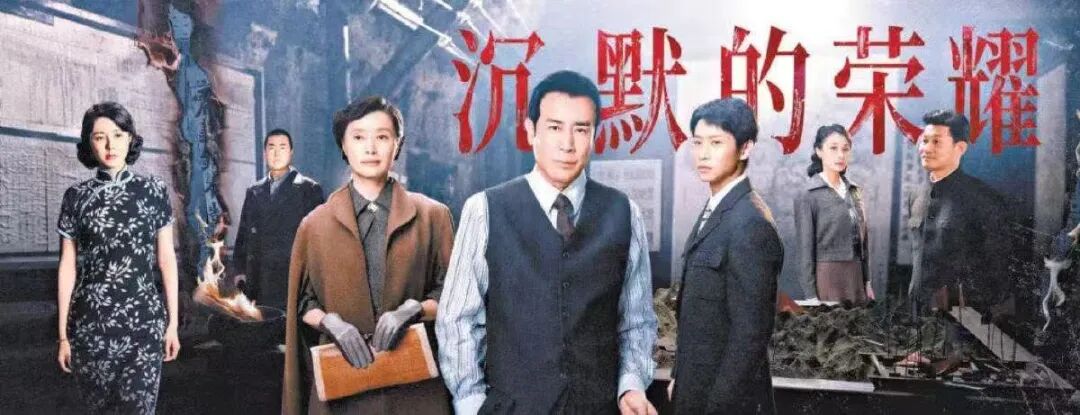
Recently, the television series Silent Glory, starring the revolutionary martyr General Wu Shi, has become a hit, sparking a new wave of attention and discussion regarding his intelligence work and contributions on the covert front. In fact, since 2000, there has been extensive research and commemoration concerning Wu Shi. Mr. Zheng Li authored The Cold Moon is Silent: A Biography of Wu Shi to preserve his legacy, and a statue at the Monument to the Nameless Heroes on the Western Hills of Beijing serves as a memorial. Additionally, Wu Shi is considered one of the prototypes for Yu Zecheng, the male protagonist of another hit television series, Lurk. Years ago, the author published a short piece in The Paper’s Private History sectionarticlespecifically discussing this issue. Today, I wish to discuss the political background and profound impact surrounding the "Wu Shi Case" from the other "dark side" of the story, namely the perspective of Chiang Kai-shek.
First, the reason Chiang Kai-shek suddenly appointed Wu Shi to the prominent position of Deputy Chief of the General Staff of the so-called "Ministry of National Defense" in the summer of 1949 was deeply rooted in the background of factional struggles and power politics within the Kuomintang. Although Chiang, who had officially "stepped down," could still direct major military and political affairs in his capacity as Director-General, he was nonetheless constrained by the Guangxi Clique forces represented by Acting President Li Zongren and Bai Chongxi. In the eyes of many Kuomintang veterans and powerful figures, Chiang also needed to take responsibility for the failure on the mainland, and his "stepping down" or "retirement" was considered a matter of course. Meanwhile, the "CC Clique" led by Chen Guofu and Chen Lifu, the "Political Study Clique" represented by Xiong Shihui and Zhang Qun, and Chen Cheng's "Tumu Clique," although their influence had significantly waned, did not see their factional struggles dissipate with the retreat; rather, these struggles became more acute due to dwindling resources. Furthermore, they were extremely wary, resistant, and even dissatisfied with Chiang's attempts to concentrate power among the "Crown Prince Clique" led by Chiang Ching-kuo. In their view, Taiwan, the last "isolated island," should be a scene of "co-governance" among the various Kuomintang factions, rather than the "family rule" of the Chiang clan alone. This internal power struggle meant that every decision made by Chiang Kai-shek at the time could face internal obstruction and dilution. Therefore, during the retreat to Taiwan, Chiang Kai-shek was constantly reconsidering personnel arrangements, especially in military affairs, hoping to bypass the various factions and start anew.
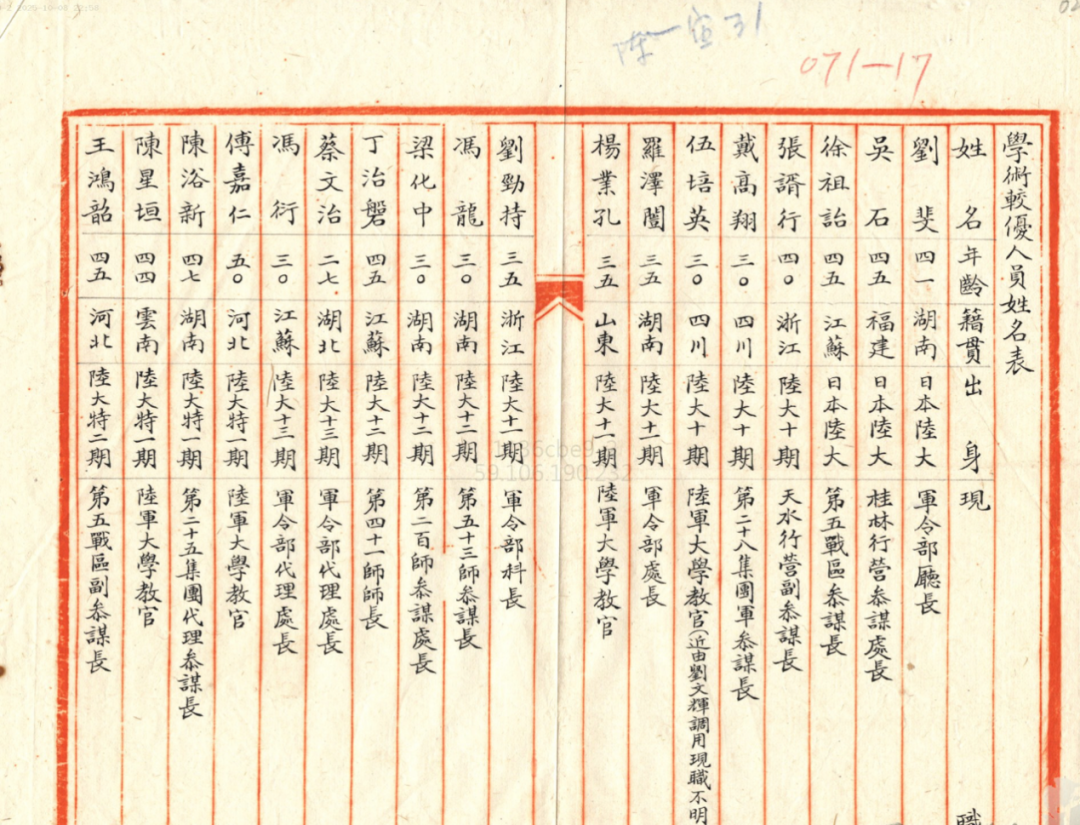
In fact, as early as during the War of Resistance against Japanese Aggression, Chiang Kai-shek had already taken notice of this "Wu Zhuangyuan" (Wu the Top Scholar), who was renowned for his military theory. He had not only listened to Wu's military intelligence reports during the Battle of Wuhan but had also personally arranged for a survey of personnel within the Nationalist army who were "academically superior." Wu Shi ranked second in this survey, and Chiang placed great importance on his graduation from the Japanese Army War College. In the miscellaneous entries of his 1949 diary, Chiang Kai-shek copied a special list covering the army, navy, and air force, consisting mostly of high-ranking officers who were then in their prime and not affiliated with other factions, such as Gui Yongqing (then Commander-in-Chief of the Navy, later serving as the so-called "Chief of the General Staff") and Wang Shuming (then a Major General in the Air Force, who also later served as the so-called "Chief of the General Staff"). Wu Shi was also included in this list, indicating his weight in Chiang's mind at the time.
For Chiang Kai-shek in 1949, the immediate priority was to stabilize the situation, reorganize the repeatedly defeated troops, and construct a defense system capable of effectively resisting the People's Liberation Army's cross-sea operations. On one hand, Wu Shi had extensive experience in military staff work and was thoroughly familiar with the entire range of staff operations, including army organization, training, logistics, and the formulation of operational plans, making him one of the most top-tier military technocrats available to the Kuomintang at the time. On the other hand, the location most likely for the People's Liberation Army to launch a campaign against Taiwan after 1949 was Fujian, which faces Taiwan across the sea. As a native of Fujian, Wu Shi was extremely familiar with the coastal geography and hydrological conditions of Fujian, and he possessed first-hand, up-to-date intelligence on the final military deployments of the Nationalist army in Fujian, their retreat routes, and port facilities that might be utilized by the People's Liberation Army. Therefore, from a purely military professional perspective, appointing him as Deputy Chief of the General Staff was a very reasonable choice.
More importantly, Wu Shi had long been engaged in military theoretical education and staff work, and was rarely involved in the struggles between the core factions within the Kuomintang. Even during the War of Resistance against Japanese Aggression, because he had served in the Guilin Field Headquarters, he was once considered by outsiders to be a member of the so-called "New Guangxi Clique." After being transferred to the position of Chief of Staff of the Fourth War Zone, Zhang Fakui initially guarded against him, suspecting he was a member of the Guangxi Clique, but quickly dispelled this concern upon discovering that Wu Shi did not seem to be a "true Guangxi Clique" member, and subsequently established a good cooperative relationship with him. As for Wu Shi himself, he likely valued his personal friendship with Bai Chongxi more and was unwilling to be simply categorized as a subordinate of any particular faction. Later, during his tenure as Commandant of the Army University and Director of the First Department of the Military Order Department, Wu Shi deliberately maintained his identity as a "technocrat."
Amidst the chaotic personnel situation within the Kuomintang in 1949, Wu Shi was a relatively safe choice for Chiang Kai-shek. Before promoting Wu Shi to the position of Deputy Chief of the General Staff, Chiang personally investigated him. In June 1949, when Chiang inspected Fujian in his capacity as Director-General, he specifically asked Li Yikuang, the commander of the 50th Division, "After Wu Shi was transferred to the Fujian Pacification Headquarters, did he make any war-weary remarks?" Li Yikuang replied that Wu Shi had complained that the longer the war dragged on, "the more it would drag us to defeat." Such grumbling remarks were not uncommon among high-ranking Nationalist generals at the time, and Chiang did not pursue the matter further. In his view, although such "technically talented individuals" might not be absolutely "loyal," they at least lacked ambition and did not form cliques. Moreover, since the Acting Chief of the General Staff, Zhou Zhirou, was a core member of Chen Cheng's "Tumu Clique," finding someone who was practically unaffiliated yet had apparent ties to the Guangxi Clique to serve as Deputy Chief might have been a politically acceptable expedient, and could also serve to balance Chen Cheng's faction.
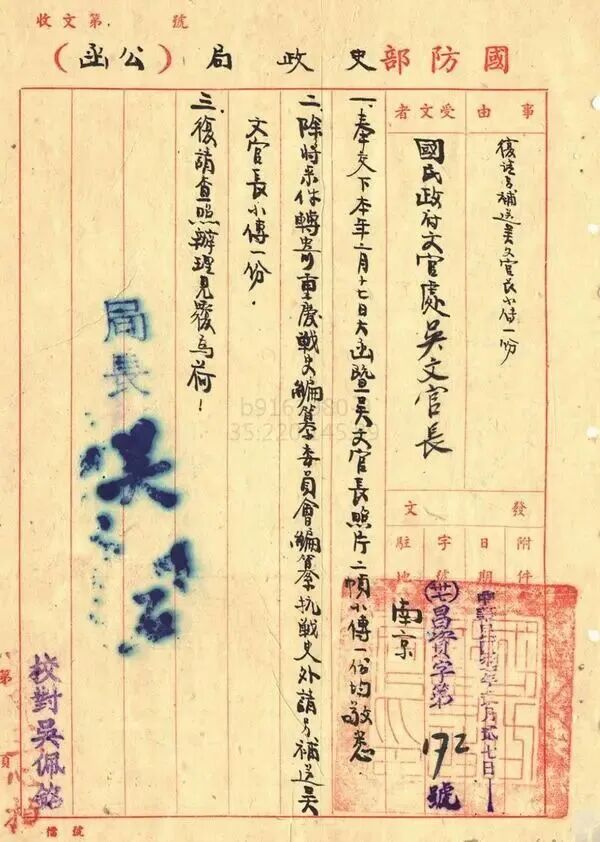
In late January 1950, Cai Xiaoqian, Secretary of the Taiwan Provincial Working Committee of the Communist Party, was arrested by the Bureau of Confidential Investigation and Defection, which directly led to the exposure and arrest of Wu Shi's liaison, Zhu Chenzhi, and subsequently the complete exposure of Wu Shi's identity. According to Chiang Kai-shek's diary, Mao Renfeng reported the situation of the "Wu Shi Case" to him in person on February 27. Prior to this, there must have been written or telephone requests for instructions, as Chiang had already mentioned the Wu Shi Case in his "Planned Work Items for This Week." After listening to Mao Renfeng's report and confirming that the evidence was conclusive, Chiang wrote the following in his diary on the 27th:
It is truly chilling; order his immediate arrest.
On February 28, the Bureau of Confidential Investigation began peripheral actions against Wu Shi, first summoning his wife for questioning. On the evening of March 1, the Bureau of Confidential Investigation formally arrested Wu Shi. Also arrested with him were his adjutant, Nie Xi, and Chen Baocang, a Lieutenant General of the Nationalist Joint Logistics Headquarters who was also engaged in underground work in Taiwan.
It is worth noting that on the very same day Wu Shi was arrested, Chiang Kai-shek announced in Taipei that he was "resuming his duties," restoring his so-called "Presidential" office. This also constituted another important political backdrop to Chiang Kai-shek's handling of the "Wu Shi Case." From late 1949 to early 1950, Li Zongren, the so-called "Acting President" residing in the United States, had become the primary legal obstacle to Chiang Kai-shek's return to power. Li Zongren refused to come to Taiwan and repeatedly emphasized through telegrams and statements that he was the "legitimate head of state," accusing Chiang of "illegally assuming office" in Taiwan. On the other hand, the Truman administration in the United States had grown weary of Chiang Kai-shek. Although, given the international environment of the East-West Cold War, the US side did not want the island of Taiwan to fall into the hands of the People's Liberation Army, they harbored deep distrust towards the corrupt and incompetent Chiang Kai-shek. Consequently, they had once considered supporting figures such as Sun Liren or Wu Guozhen to replace Chiang. In November 1949, Oscar Badger, the Commander of the US Pacific Fleet, revealed to Zheng Jiemin, a former Vice Chief of the General Staff and veteran of the Juntong (Military Statistics Bureau), and Dong Xianguang, Chiang's personal envoy, the conditions for a new round of US military aid: "Chiang Kai-shek agrees to hand over military and political power to Sun Liren and Wu Guozhen and guarantees not to interfere with their authority." Chiang Kai-shek naturally dismissed these conditions with disdain, whereas Chen Cheng and "Foreign Minister" Wang Shijie were both inclined to accept them, believing that securing US aid to address the immediate crisis was the top priority.
At the same time, from 1949 to early 1950, the US State Department and the newly established Central Intelligence Agency (CIA) jointly plotted a so-called "anti-Chiang coup," even sending representatives to contact Sun Liren on multiple occasions, but all attempts were rejected. However, Chiang Kai-shek still sensed the danger through various channels and took preventive measures, even instructing Chiang Ching-kuo to "strengthen security arrangements to prevent a recurrence of the Xi'an Incident." In a letter to Soong Mei-ling, Chiang Ching-kuo once stated: "Disaffected elements within the party wish to launch an anti-father movement by exploiting the US-China Relations White Paper." Shortly thereafter, Soong Mei-ling also learned through her connections in the United States that some within the US side advocated supporting Sun Liren in opposing Chiang, and that there might be underground Communist Party members among his associates, and she relayed this information to Chiang Kai-shek himself. In his diary entry on October 5, 1949, Chiang Kai-shek wrote: "Received a secret letter from my wife reporting on Sun Liren's affairs; he is entirely being exploited by Communist spies without realizing it. Had it not been for my clear insight, a major disaster would have ensued." Subsequently, the Confidential Bureau and other secret service agencies began to closely monitor Sun Liren and suspected that relatives of his subordinates might be guilty of "colluding with the Communists." On January 3, 1950, Sun Liren revealed to a US official that Chiang Kai-shek had actually confronted him face-to-face, asking whether he was preparing to launch a coup. In response, Sun Liren could only insist that this was a rumor spread by the Communists. Later, when the "Wu Shi Case" broke out, Chiang Kai-shek "hung" Sun Liren in the nominal position of Commander-in-Chief of the Army, effectively stripping him of his military command. By the time of the so-called "Sun Liren Mutiny Case" in 1955, it was merely a matter of time and came as no surprise.
It is evident that the period surrounding the "Wu Shi Case" was precisely when Chiang Kai-shek was at his most politically sensitive and faced the greatest pressure. Besides confronting the disastrous defeat of "losing the mainland," he also had to face the potential threat of a combination of internal power factions and external great powers. For Chiang Kai-shek personally, this threat was potentially even more fatal than the overwhelming offensive of the People's Liberation Army on the battlefield. It was precisely under this extreme pressure that Chiang Kai-shek displayed his ruthless political tactics, transforming the internal crisis of the Kuomintang exposed by the "Wu Shi Case" into a political movement to strengthen his personal dictatorship.
Throughout the entire trial process of this case, Chiang Kai-shek constantly gave instructions and strictly ordered severe handling. For instance, his diary entry on March 27, 1950, records: "After morning assembly, I met with Mao Renfeng to hear his opinions on the Wu Shi Case." In early June, before the formal verdict, Chiang Kai-shek also personally inquired about the matter.
The outbreak of the "Wu Shi Case" happened to confirm Chiang's own assertion that "ideological confusion and organizational laxity within the party had led to enemy infiltration." Seizing this opportunity, he could legitimately purge those old forces who did not obey him and consolidate power within his trusted inner circle. During this period, under the pretext of investigating "internal enemies," he "legitimately" initiated the secret service rule and political purges he had long anticipated, clearing away all political obstacles in one stroke. To coordinate with this, Chiang Ching-kuo used the opportunity to further integrate, control, and reorganize the various secret service and intelligence agencies that had retreated to the island.
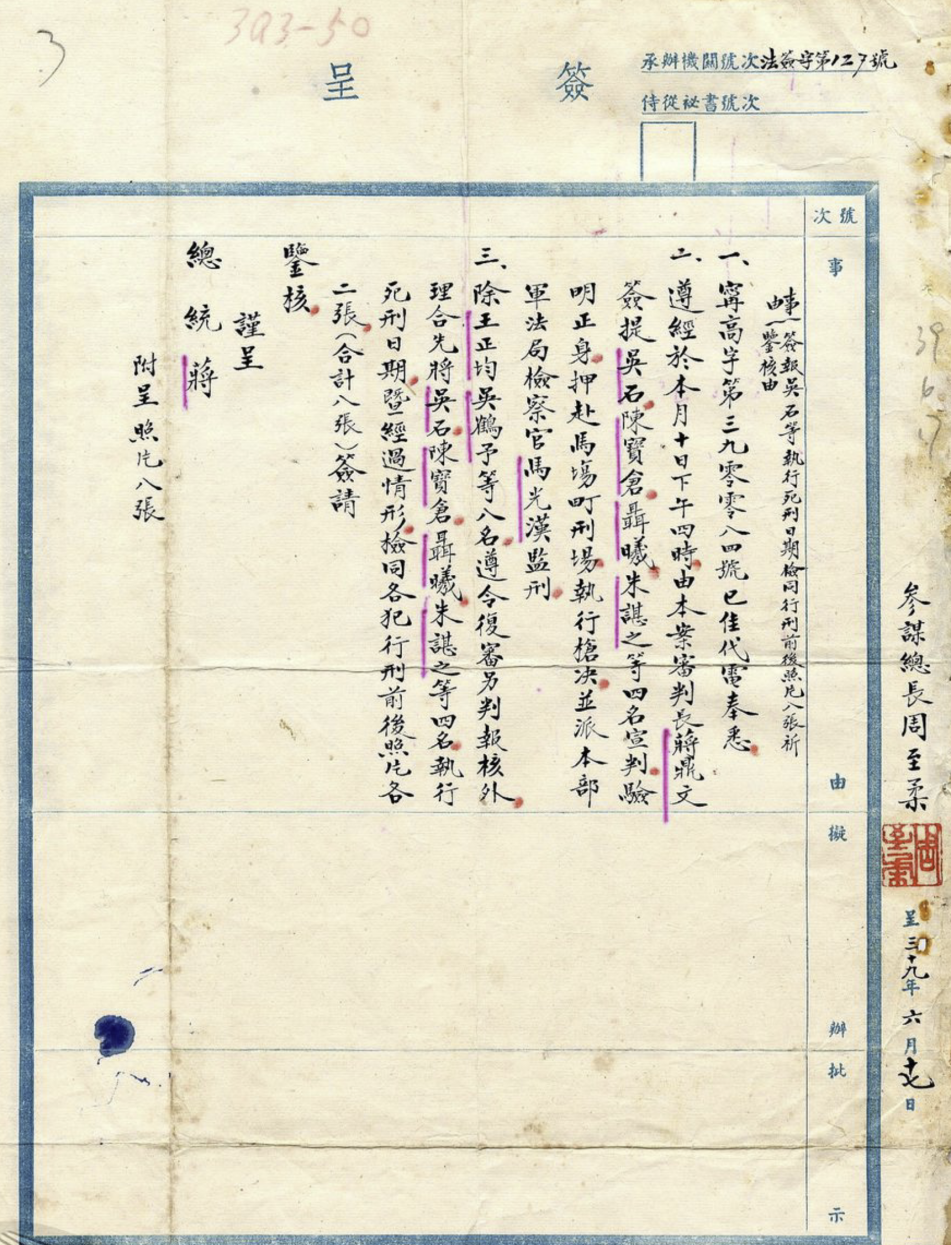
On June 10, 1950, Wu Shi, Chen Baocang, Nie Xi, and Zhu Feng were executed by capital punishment at Machangding in Taipei, sacrificing their lives heroically. This scene was widely disseminated through newspapers and newsreels on the island. The purpose was not only to punish the so-called "traitors" but also to create a bone-chilling "chilling effect." The case implicated a vast number of people, affecting hundreds. This undoubtedly sent a clear signal to the island and the Kuomintang hierarchy: under the supreme principle of "anti-communism," any "disloyalty" to Chiang Kai-shek personally could be regarded as "colluding with the enemy." Even high-ranking positions such as "Vice Chief of the General Staff of the Ministry of National Defense" would not spare one from merciless execution once labeled with the so-called tag of "colluding with the enemy."
Afterwards, Chiang Kai-shek even took the opportunity to admonish and punish Bai Chongxi, who had already retired from public life, on the grounds that he had strongly recommended Wu Shi. Under the atmosphere of the "White Terror" at the time, any private contact with Bai Chongxi could be interpreted by the secret service system led by Chiang Ching-kuo as "conspiring in secret" or "harboring illicit intentions." This caused his former subordinates to live in constant fear, actively keeping their distance from him.
With the outbreak of the War to Resist US Aggression and Aid Korea, the US attitude and policy towards Chiang Kai-shek gradually changed. After gaining a moment of respite, Chiang further used this case to accelerate the consolidation of the intelligence and secret service systems, previously controlled by factions such as the "CC Clique" and the "Old Juntong," into the hands of Chiang Ching-kuo. In April 1950, Chiang Ching-kuo assumed the position of Secretary of the "Political Action Committee" (using the "Confidential Office Data Group" as a cover), thereby integrating agencies such as the Confidential Bureau and the Security Command. He established a vast secret service and intelligence network directly answering to the Chiang father and son, which was later referred to as the "Underground Little Court." This secret service network subsequently became the most important tool for implementing "White Terror" rule on the island, monitoring officials, and suppressing dissent. Furthermore, through the "Wu Shi Case" and a series of subsequent political purges, Chiang Kai-shek sent a very strong signal to the United States: the situation on the island is entirely under my control; any attempt to bypass Chiang himself and support other proxies is a pipe dream; the Americans must either support Chiang or lose Taiwan as a pawn.
Submission email: pp_sijialishi@163.com