
Elizabeth I’s Spymaster
沙青青评《都铎谍影》|暗中守护女王伊丽莎白一世的“间谍头子”
Sha Qingqing, “Elizabeth I’s Spymaster,” The Paper · Shanghai Review of Books, 19 August 2025.
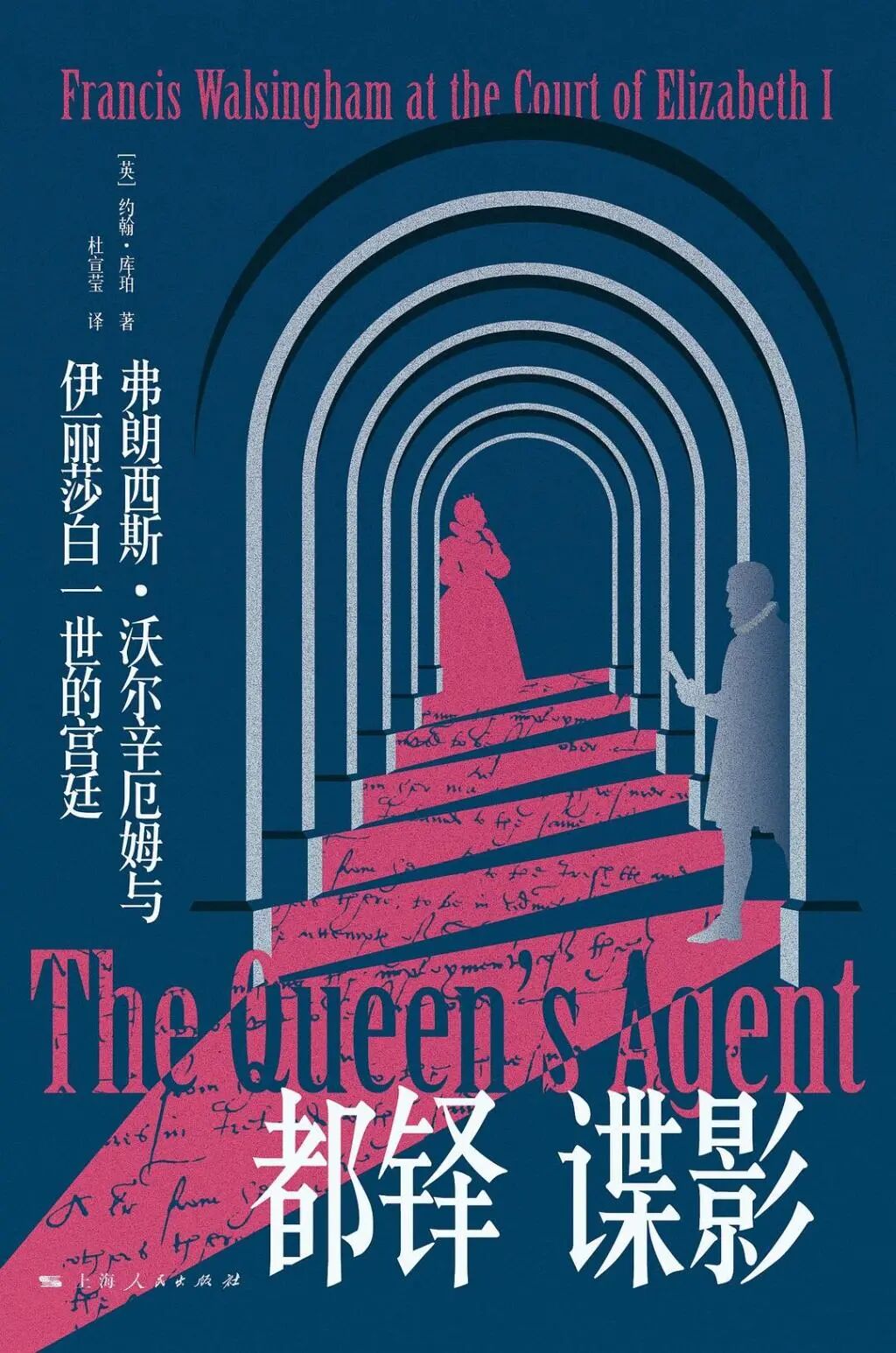
The Queen’s Agent:
Francis Walsingham and the Court of Elizabeth I
By [British author] John Cooper
Translated by Du Xuanying
Shanghai People's Publishing House
Published in July 2025
416 pages, 98.00 yuan
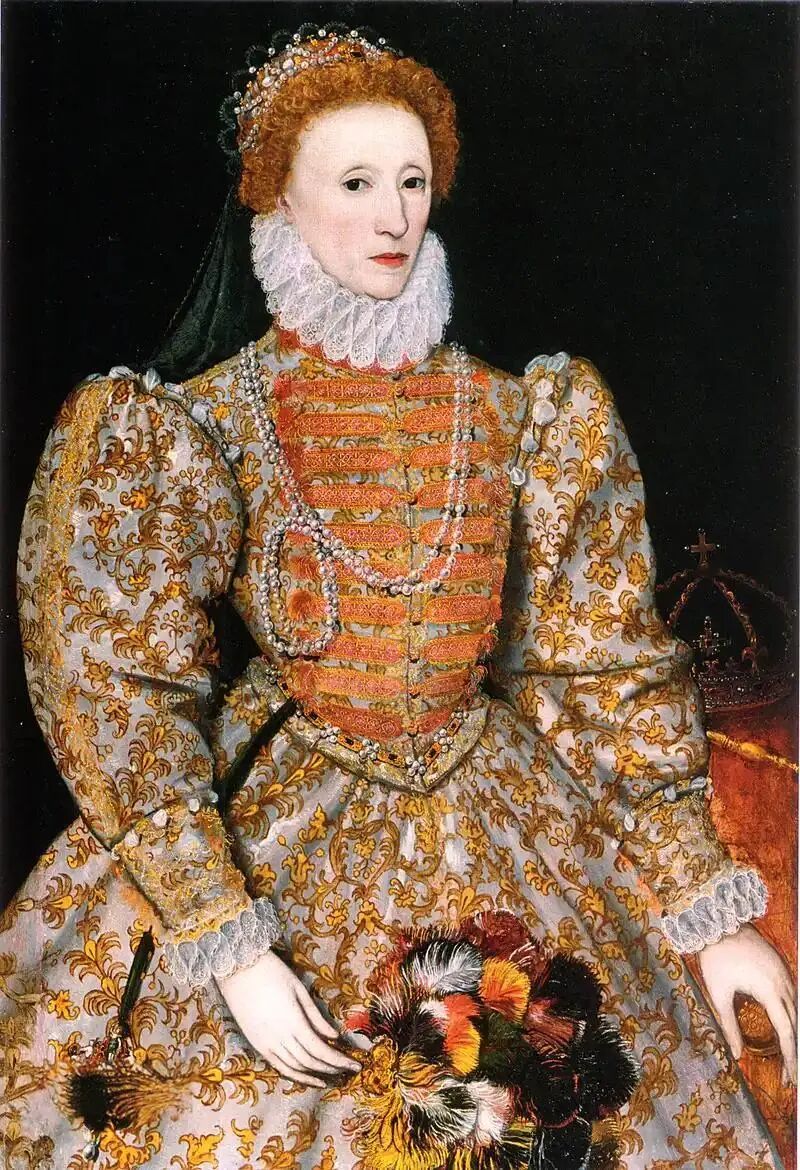
Elizabeth I
BySha Qingqing
Elizabeth I (1533–1603) is perhaps the most popular monarch in British history, without exception. In various public polls such as "Greatest Britons" and "Most Popular Britons," Elizabeth I has almost always ranked near the top, significantly ahead of other monarchs in British history. Her reign (1558–1603) is also regarded as Britain's "first golden age" of the modern era. Domestically, she maintained political unity and stability, using various sophisticated political means to ease conflicts between Catholics and Protestants, and striving to promote the development of industry, commerce, and foreign trade—during this period, a large number of outstanding figures of the British Renaissance, such as Shakespeare and Bacon, emerged. Externally, unlike her father Henry VIII, who was prone to grandiose ambitions, she skillfully maneuvered between France and Spain for a long time, avoiding easy entanglement in wars, while simultaneously supporting exploration and colonization of the so-called "New World." Since the modern era, the starting point of Britain's rise is often traced back to Elizabeth I, the last monarch of the Tudor dynasty. The image of her most familiar to contemporary audiences largely comes from the film Elizabeth (1998) and its sequel Elizabeth: The Golden Age (2007), both starring the renowned British actress Cate Blanchett, as well as the television series Elizabeth I (2005) starring Helen Mirren. In fact, Elizabeth I has been the British monarch depicted most frequently in various artistic works since the seventeenth century (again, without exception), with her image permeating everything from early paintings, novels, and plays to contemporary film and television. Undoubtedly, this queen of the golden age, sometimes dressed in splendid robes and sometimes clad in golden armor, has always shone with dazzling brilliance in history. The reason for this cannot be separated from the important and crucial role played by those operating in the shadows behind the scenes. Among her many senior ministers, there were figures like William Cecil, who represented the queen in issuing orders from the front stage as Lord Treasurer, as well as Francis Walsingham, who hid in the corners of the court yet could influence the queen and even the entire European situation at any moment as Secretary of State.
Compared to the queen or other powerful elites of the same era, Walsingham's historical image seems considerably more blurred. In the few existing portraits, he is invariably depicted wearing Puritan-style black outer garments, with a solemn and gloomy expression, his eyes revealing a sharp insight into everything and an inescapable melancholy. This may be related to the nature of his work at the time—as the Queen's Principal Secretary, in addition to handling the court affairs that the position entailed, he also served as the queen's "spymaster" and "head of security." He wove a vast "intelligence network" covering both inside and outside England and spanning the entire European continent for Elizabeth I through various means, enabling the queen to successfully maintain her rule for nearly half a century amidst sieges by various hostile forces and endless internal and external conspiracies. Furthermore, Walsingham was willing to perform various "dirty jobs" for the queen, known for his decisive and ruthless actions. It is no exaggeration to say that without Walsingham himself and his "intelligence network," the situation within England at the time would have been a hundred times more chaotic, and the so-called "golden age" would have been even less conceivable. For this reason, Elizabeth I placed extreme trust in this "spymaster" whose complexion and skin tone were equally dark, even affectionately referring to him in a joking manner as "my Moor."
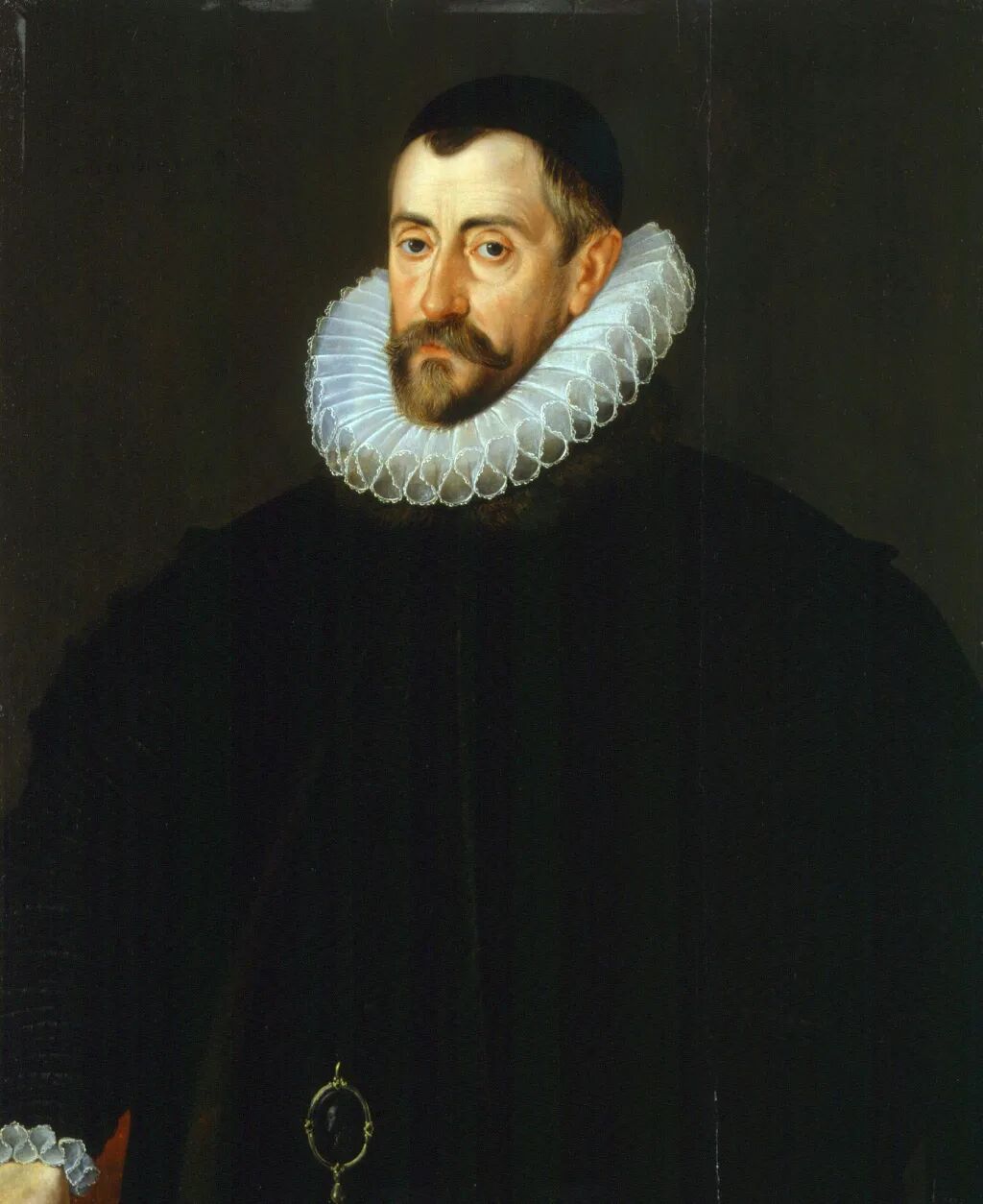
Francis Walsingham
Whether for England or the entire European continent, one of the most important themes of the sixteenth century was naturally the political disputes centered around religion. Walsingham's obsession with building an "intelligence network" also had deep roots in religious conflict. Walsingham came from a Protestant family. During the reign of the Catholic Mary I (Elizabeth I's half-sister), he went into exile on the European continent to uphold his Protestant faith. This experience greatly improved his language skills and allowed him to accumulate extensive connections in various places, all of which became the foundation for his later creation of the "intelligence network." After Elizabeth I ascended the throne, Walsingham returned to England and began to frequent the court, initially serving as an assistant to William Cecil. In 1570, he was appointed Ambassador to France. During his time in France, he personally witnessed the "St. Bartholomew's Day Massacre" of 1572, which further deepened his hostility toward the entire Catholic world and made him deeply aware of the need to take all necessary measures to prevent such events from recurring in England. After returning home in 1573 to take up the position of Principal Secretary, Walsingham immediately began constructing his "intelligence network" and viewed Catholicism as a fundamental threat to the state.
The spies and informants Walsingham recruited for this "intelligence network" ranged from high-ranking officials and nobles to peddlers and commoners, encompassing almost everyone from nobles, diplomats, merchants, and bankers to scholars, writers, poets, and even cooks and servants. To infiltrate the enemy's inner circle, Walsingham did not hesitate to use the various pieces of leverage he possessed to coerce Catholics into acting as "double agents," lurking in the Papal Curia or seminaries to serve him. Additionally, he hired a group of professionals proficient in ciphers and seals to provide him with "technical support." Throughout the sixteenth century, Walsingham's "intelligence network" was possibly the most efficient information transmission network in all of Europe. Besides France, Spain, the Low Countries, the German regions, and the Italian Peninsula, his intelligence reach extended as far as Constantinople in the Ottoman Empire and Tripoli in North Africa.
To understand Walsingham and his all-encompassing "intelligence network," one must first understand what kind of country England actually was at the time.
In fact, England under Elizabeth I was neither a "modern state" with a mature bureaucratic system nor a "traditional empire" with centralized power. It was more like a "hybrid" that combined various flaws, with state power highly concentrated in the hands of the monarch alone, yet its executive capacity surprisingly weak. It had no standing army, no national police force, and local governance relied heavily on the unpaid gentry class. Against this backdrop, so-called "national security" exhibited a highly "personalized" characteristic. This power did not flow through institutionalized channels but was transmitted through intricate networks of private relationships.
For Europe in the sixteenth and seventeenth centuries, the concept of national security in the modern sense had not yet emerged. The concept of the "modern state," represented by the "nation-state," was still in its embryonic stage. In an era when royal power fluctuated and the prototypes of nation-states were just beginning to appear, information or intelligence itself was a form of immense power. Monarchs and powerful ministers across European countries were all attempting to establish forces for intelligence gathering and covert operations that transcended traditional feudal obligations, in order to consolidate their rule and eliminate internal and external threats. Walsingham made his entrance precisely at the most critical juncture of this historical process.
In his representative work The Queen’s Agent, John Cooper, a senior expert deeply engaged in the study of Tudor dynasty history and a professor of history at the University of York, recounts how Walsingham exerted his unique influence at this historical juncture. However, unlike previous historical narratives involving Walsingham, Professor Cooper is not content merely to tell the legendary story of Walsingham as the “spymaster.” Instead, he places Walsingham’s career within the interplay of power structures, court politics, and religious thought during the era of Elizabeth I for a more in-depth examination. With a unique perspective, Professor Cooper profoundly reveals Walsingham’s basic vision and methods for constructing a “security machine” for early modern England, and how this construction was closely intertwined with the shaping of national identity, religious conflict, and monarchical authority.
During his nearly twenty years as Principal Secretary, although Walsingham enjoyed the full trust of Elizabeth I, he was not merely obedient to orders; the two frequently clashed and even came into conflict in public. The most typical examples are the “Babington Plot” and the “Death of Mary, Queen of Scots.” The so-called “Babington Plot” refers to an attempted assassination of Elizabeth I in 1586. Participants in this “plot” included Spain, France, and domestic Catholic forces in England. Their common goal was to assassinate Elizabeth I and then install her cousin, the former Queen of Scots and Catholic convert Mary, on the English throne. The plot is named after Anthony Babington, an English Catholic who was the mastermind and executor of the plan. Walsingham’s “intelligence network” detected this bold assassination plan almost immediately and successfully deciphered the coded correspondence between Babington and Mary. Subsequently, Mary was sentenced to death for being involved in this “plot” and for “agreeing” to Babington’s assassination plan in her letters.
After the verdict was announced, Elizabeth I delayed signing the execution warrant for a long time, finally signing it reluctantly only under the collective request of the Privy Council, and later hinted that she did not actually want to execute her cousin. Walsingham, however, carried out the execution without hesitation. Afterwards, Elizabeth I even publicly flew into a rage, venting her anger on “her Moor.” It is evident that this was actually a “political double act” between monarch and minister. It was precisely due to Walsingham’s existence that Elizabeth I was able to isolate herself from those dirty, bloody, yet indispensable national security affairs. Walsingham could handle all the “dirty work” she was unwilling to touch with her own hands, shield her from countless overt and covert arrows aimed at the crown, maintain the Queen’s public image of benevolence and justice, and simultaneously execute “necessary evils” without hesitation.
In Cooper’s view, the true target of the “Babington Plot” may have been Mary, and the executor was Walsingham and, behind him, Elizabeth I herself. With a complete grasp of the situation, Walsingham waited for the plot to mature so that he could round up all participants in one sweep, using this as an opportunity to further suppress Catholic forces politically. In fact, Walsingham had long known the whereabouts of Babington and his accomplices but delayed taking action, instead “allowing” them to communicate with Mary, thereby obtaining “correspondence evidence” that could put them to death. As described in The Queen’s Agent: “Under Francis Walsingham’s entrapment, the boasting and endless dreams among a group of friends materialized into conspiratorial actions against the Protestant state... and the sensational stories of treason and conspiracy served the interests of royal propaganda.”
After cracking the “Babington Plot” and executing Mary, Walsingham’s “intelligence network” also early on ascertained the Spanish Armada’s invasion plans for England. His spies continuously sent back various intelligence reports regarding the Armada’s number of ships, artillery specifications, material reserves, and even sailor morale. These fragmented pieces of information were personally pieced together and analyzed by him in London, gradually outlining the massive contours of the Armada and creating a crucial window for England to prepare for war. Furthermore, Walsingham used his “intelligence network” to spread rumors among Italian and French banking circles that the Spanish government’s finances were on the verge of collapse (which, indeed, had collapsed many times before and after), causing unexpected trouble for King Philip II of Spain and seriously disrupting the logistical preparations for the Armada. In other words, long before the Armada set sail, Walsingham had already shaken the foundations of Spain’s potential victory.
Despite having rendered countless services, Walsingham’s “intelligence network” resembled more of a wildly growing “private company” than a state institution. In fact, Walsingham invested a large amount of personal wealth into it, to the extent that he died with substantial debts, even apologizing for his wife’s “straitened circumstances.” After Walsingham’s death, this “intelligence network” was not inherited; this vast network, supported by his personal will and financial resources, rapidly disintegrated and dissipated upon losing its core.
It is evident that the greatest obstacle to intelligence history research stems from the fragmentation and scarcity of sources. Unlike archives that naturally form and accumulate through routine bureaucratic procedures in other government institutions, materials involving covert activities do not lie neatly categorized in filing cabinets. In the Elizabethan era focused on by Cooper, modern state archival systems were still in their infancy. Traces of Walsingham’s “intelligence network” were scattered like dust among diplomats’ and spies’ private letters, merchants’ logbooks, court interrogation records, and even the confessions of exiles. Historians like John Cooper must act like detectives, uncovering fragmentary clues between the lines of old papers, making the arduousness of their research work imaginable. And The Queen’s Agent is undoubtedly successful. In the book, Walsingham is no longer a flattened symbol of a “spymaster,” but a complex individual filled with internal contradictions, shaped jointly by faith, responsibility, and the torrent of the times.