
Silverview: A Spy Novelist’s Final Work
沙青青评《银景》︱“老间谍”的遗作
Sha Qingqing, “Silverview: A Spy Novelist’s Final Work,” The Paper · Shanghai Review of Books, 10 October 2025.
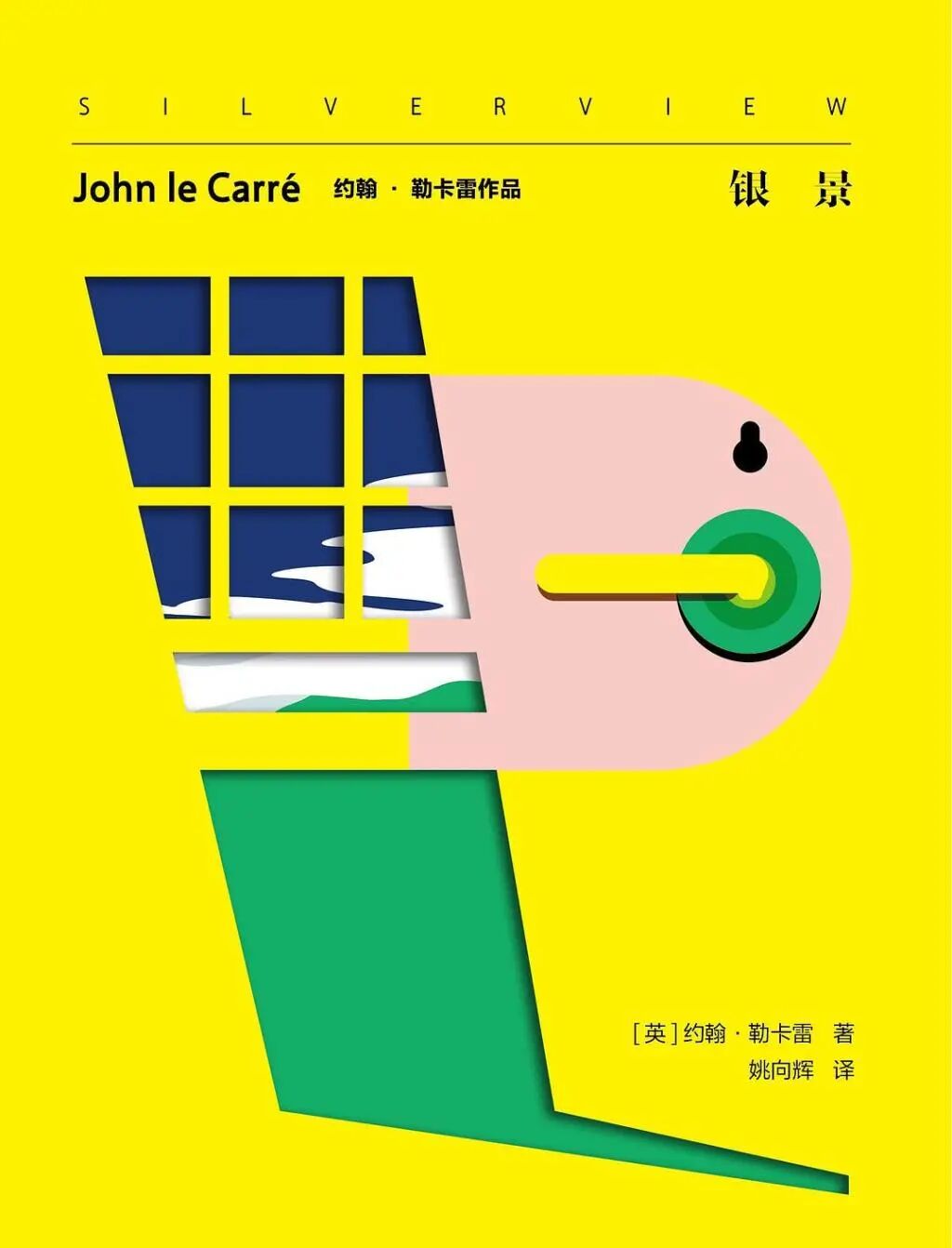
Silverview
By John le Carré [UK]
Translated by Yao Xianghui
Shanghai Translation Publishing House
Published in July 2025
264 pages, 68.00 yuan
━━━━
BySha Qingqing
On December 12, 2020, eighty-nine-year-old David Cornwell passed away. Like many elderly people, an unexpected fall led to his death. Compared to the unfamiliar name "David Cornwell," the old man's other name, "John le Carré," was far more well-known to the world. Nearly a year after his death, his posthumous work Silverview (Silverview) was officially published, becoming the final work of this most renowned spy novelist of the Cold War era.
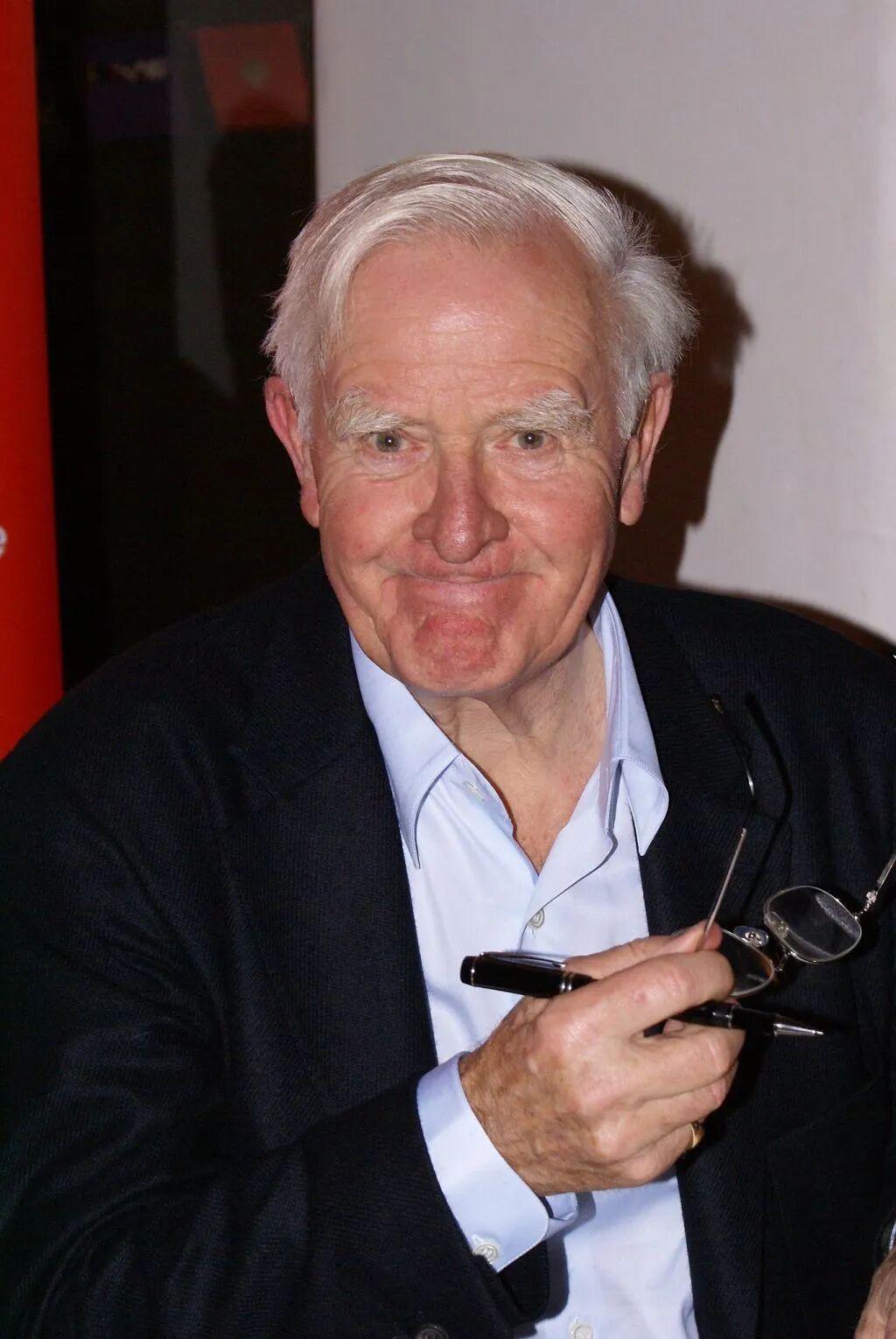
John le Carré
The story of Silverview unfolds through a dual narrative structure. On one side is the protagonist Julian Lawnsley, a young man who fled London to open a bookstore in a remote seaside town, where he encounters an eccentric old man named Edward Avon. This old man claims to be an old acquaintance of Julian's father and expresses a willingness to offer advice on running the bookstore. Thus, the interactions between the old man and the young man surrounding the bookstore unravel a decades-long tale of espionage. The other main character, Postlethwaite Proctor, is an intelligence official of the new era, attempting to find loopholes within the organization. A series of clues leads him to the town where "Silverview" is located.
In this novel, which is not particularly long at just over two hundred pages, readers can still encounter the enduring themes and endless sense of nihilism characteristic of le Carré's works. The former concerns loyalty and betrayal during the Cold War era, while the latter represents the collision between ideals and reality. "Silverview" derives its name from a villa near the seaside town in the novel, a detail that inevitably evokes le Carré's own living conditions in his later years. After the 1980s, he moved from London to St Buryan in Cornwall, in the southwest corner of England. Le Carré's villa was located at Land's End, a remote corner surrounded on three sides by the Atlantic Ocean and the English Channel, considered the westernmost point of the island of England. It is said that le Carré's villa was situated right next to a mile-long cliff, with sea waves and strong winds becoming the most frequent scenery of his later years. In Silverview, the retired old spy Edward Avon, who has been retired for many years and appears to be living in seclusion in the seaside estate "Silverview Manor," naturally leads readers to think of le Carré himself, who also hid away in a villa by the cliff.
Placing Silverview within le Carré's extensive body of work reveals how it continues the motifs the author has long focused on, as well as what makes it unique. First, the stage of the story is very small, essentially revolving around "Silverview Manor" and the town where it is located; London or other settings exist merely as backgrounds for the story. However, the historical background touched upon in Silverview is extremely broad, extending from Eastern Europe during the peak of the Cold War to the Balkans after the end of the Cold War. In fact, Silverview seems to be a "summary" of the typical characters in le Carré's works: Julian, an ordinary person drawn into the world of espionage; Edward Avon, an old spy with a mysterious, cunning, and changeable history; and Postlethwaite Proctor, who resembles a "low-spec version of Smiley for the twenty-first century," attempting to uncover the "mole" or "traitor" within the organization. However, unlike the perspective of Tinker Tailor Soldier Spy, Silverview does not intend to tell a story of how the "Smileys" find the "mole," but rather wishes to tell, from the other end, the story of why certain people choose to become "moles." Perhaps for this reason, le Carré did not provide a clear ending in Silverview, such as the one found in Tinker Tailor Soldier Spy.
Of course, this may also be due to creative reasons.
According to le Carré's son, Nick Cornwell, in the afterword: Silverview was written around 2012, but his father deliberately shelved the manuscript during his lifetime, leaving it to lie quietly in his desk drawer for nearly a decade. Le Carré seemed to harbor persistent doubts about this novel, revising it multiple times yet remaining unsatisfied. This is perhaps another major reason why Silverview is relatively short in length and has a very ambiguous ending. Comparing it with another representative late work, A Legacy of Spies, published by le Carré in 2017, may help us understand le Carré's creative psychology in his later years and why he "harbored doubts."
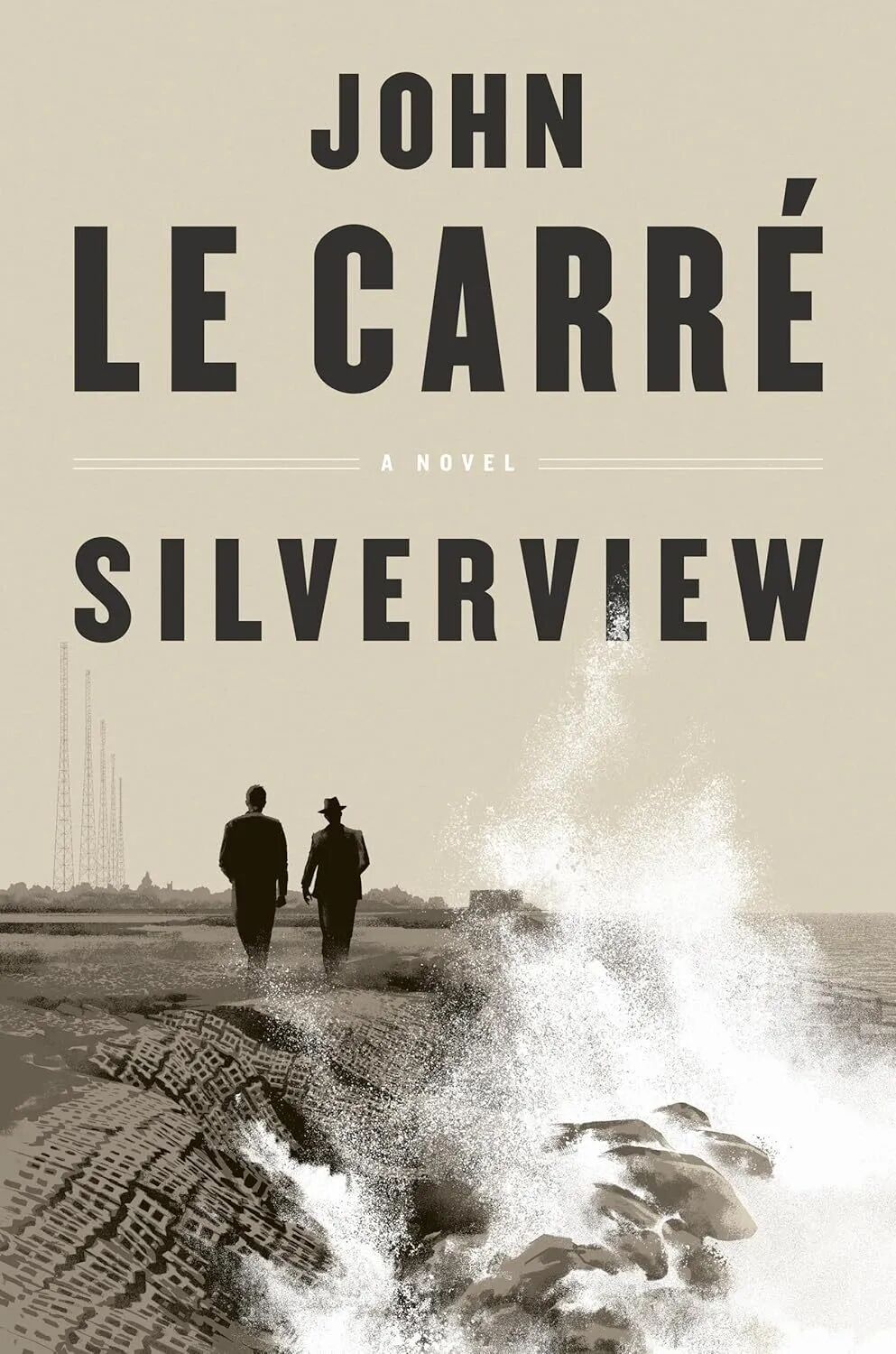
English edition of Silverview
In terms of theme alone, these two novels seem to form a kind of dialogue: both A Legacy of Spies and Silverview are reckonings with the past, only from different angles.
It is worth noting that both novels depict the incompatibility between the new era and the Cold War years, where the "spies" of the new era are completely unable to empathize with their predecessors. In the stories le Carré wrote during the Cold War, regardless of which camp one was in, whether choosing loyalty or betrayal, it seemed to be based on some moral value. This moral value could stem from political ideologies of the left or right, from private emotions (such as love), or from purely humanitarian sentiments. However, by the twenty-first century, the contemporary "spies" or "bureaucrats" of the intelligence agencies in le Carré's works can no longer understand what their predecessors and their opponents were fighting for. To them, intelligence work is merely a job that requires timely delivery, rather than a great cause worth defending with one's life.
The idealism of the Cold War era has long since vanished into smoke.
As is well known, the work of a spy is "deception": fake identities, fake relationships, fake loyalties. They betray those who trust them, while simultaneously being constantly at risk of being betrayed by their own organizations. The ambiguous gray areas and the endless cycles of betrayal constitute the lifestyle of this group. But behind the settings of these spy stories, what le Carré always hoped to discuss was: moral choices in extreme environments. As he himself said: "I am not writing about spies, I am writing about people. It just happens that these people are spies." The overt and covert struggles of the Cold War era added natural dramatic tension to these moral choices. But regardless, when depicting this "tension," le Carré was more willing to paint it with the colors of "idealism."
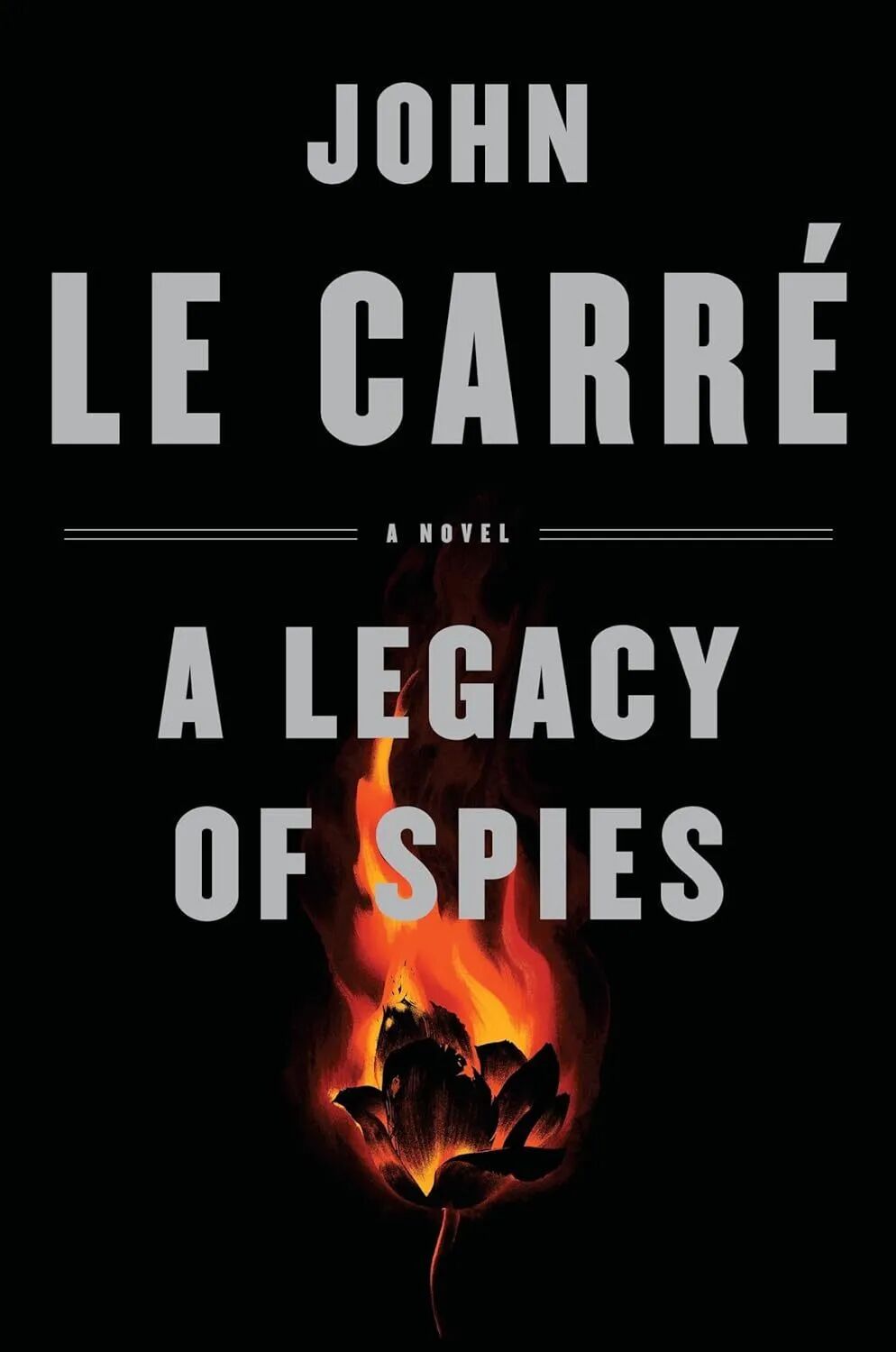
A Legacy of Spies
In 2017, after publishing A Legacy of Spies, le Carré, then eighty-six years old, frankly expressed his concerns about the current era. He believed that Brexit was a betrayal of the European ideal, and the rise of populism signaled a greater crisis. In his view, the "European spirit"—rationality, tolerance, humanitarianism—defended by Smiley's generation was being replaced by narrow nationalism and populism. This sense of disappointment and the nihilism following the shattering of ideals also appear between the lines of Silverview.
When the Iron Curtain fell, the old spies found themselves rendered useless. Once divided between the Eastern and Western camps, they had each fought for certain beliefs, only to discover that those beliefs were now ignored, cast into the dustbin of history. In Silverview, le Carré condenses this sense of disillusionment and nihilism into the small bookstore run by the protagonist, Julian Lawndsley. Edward Evan’s suggestion that Julian establish a “Republic of Letters” in the bookstore is clearly a lament for and nostalgia toward the idealism of a bygone era, even though this idealistic project was doomed to fail from the outset. As for Proctor’s work of catching “moles,” it was hardly successful either, but this is not why I call him a “low-spec Smiley”; rather, it is because he lacks Smiley’s moral sense and idealistic convictions. In the novel, Proctor is undoubtedly the embodiment of the “shattered intelligence service.” In the words of Nick Cornwell, “it can no longer determine its own legitimacy,” and “has also lost its sense of what the nation represents, our certainty about who we are.”
Closing Silverview, one recalls a line spoken by the reappearing, over-one-hundred-year-old Smiley in A Legacy of Spies: “I am a European.” Undoubtedly, this line was spoken by le Carré himself through Smiley’s mouth. In his later years, what le Carré wished to leave behind for the world was not only gripping spy stories, but also his witness, reflection, and remembrance of an era. In today’s increasingly complex and ever more extreme world, overly simple answers are often the most dangerous. The value of literature lies precisely in its ability to present this complexity, allowing us to seek the possibility of practicing our respective moral values in the grey areas, rather than being swept up by some form of extreme thinking.