
Why Grew Described Japan’s Course as National Suicide
美国驻日大使格鲁,为什么会说日本选择了一条“民族切腹”之路?
Sha Qingqing, “Why Grew Described Japan’s Course as National Suicide,” Guancha, 2 September 2025.
By Sha Qingqing, columnist for Guancha.cn
Historian and columnist
Eighty years ago, on August 15, Japan formally announced its unconditional surrender, marking the end of World War II. However, the process of this announcement was neither smooth nor orderly—just the day before, a turmoil had been brewing within Japan.
On August 14, 1945, an attempted coup took place at the political center outside the Imperial Palace in Tokyo, Japan. A group of radical Japanese military officers, upon learning that the Emperor and the Japanese government had decided to accept the Potsdam Declaration and announce unconditional surrender, could not accept this reality.
They wanted to continue the war. Although Japan had been devastated by American bombing, reduced to ruins, the US forces had not yet invaded the Japanese home islands, so they believed a "decisive battle on the home front" was still possible. Thus, late on the night of the 14th, this group of radical junior officers attempted to seize key military and political figures, command the Imperial Guard Division, and overturn the government's decision to surrender unconditionally.
Of course, the coup failed. On the morning of August 15, Emperor Hirohito only learned of the previous night's disturbance after waking up.
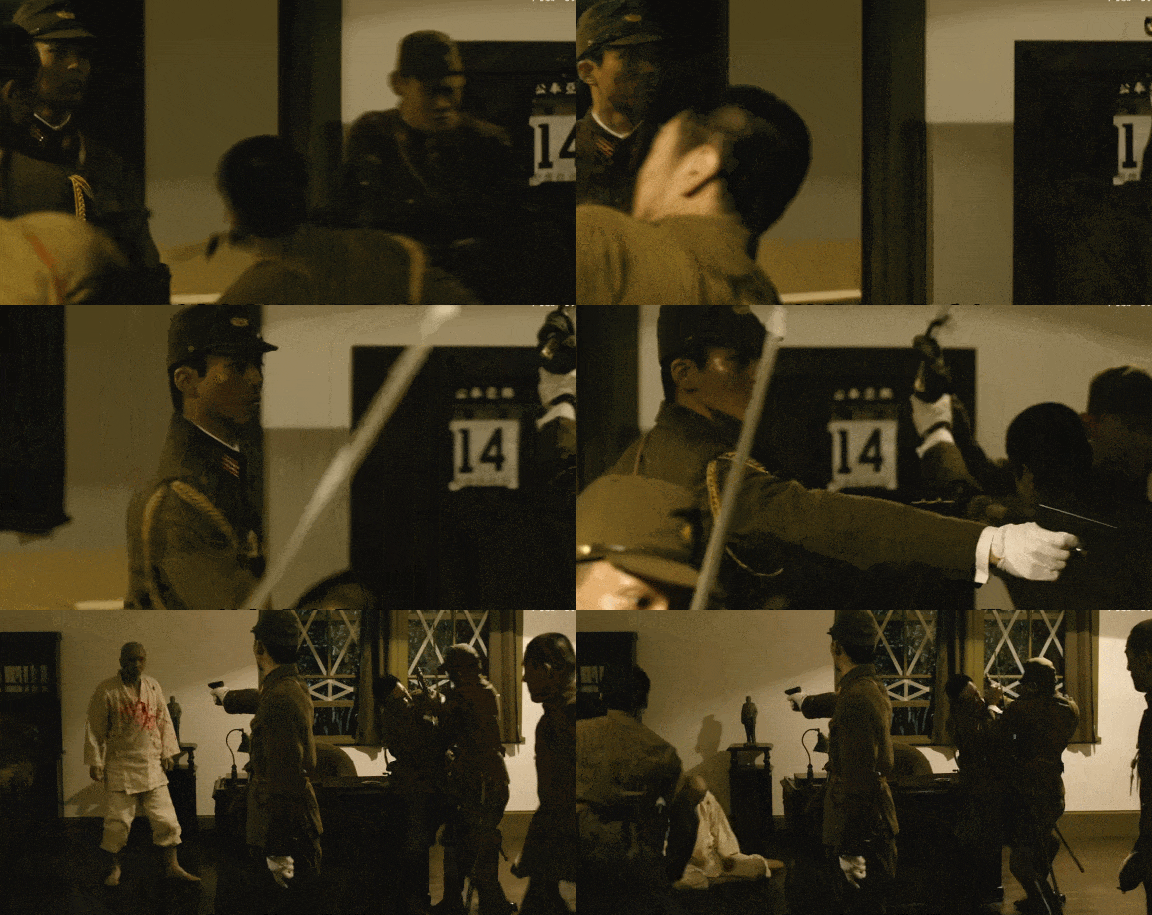
The "Palace Incident" depicted in the 2015 film Japan's Longest Day
This incident is known as the "Palace Incident." In the 1960s, the renowned Japanese writer and historian Hando Kazutoshi wrote a famous book titled Japan's Longest Day, depicting the frenzied atmosphere of Japanese society at the end of the war. The book was quickly adapted into a film, starring the famous actor Toshiro Mifune. In 2015, the 70th anniversary of Japan's defeat, a new version was remade, starring Koji Yakusho. This book and the two films provide later generations with a perspective for observing Japan at the end of the war.
Toshiro Mifune and Koji Yakusho played the role of Anami Korechika, Japan's last Minister of War, in the films. Anami Korechika had participated in the War of Resistance against Japanese Aggression, fighting in the Second and Third Battles of Changsha. Since Japan accepted political reforms after its defeat and was no longer allowed to maintain a military, only the Self-Defense Forces, the position of Minister of War ceased to exist, making Anami Korechika the last person to hold the title.
Anami Korechika was one of the few high-ranking army officers who committed suicide immediately after Japan announced its surrender. Tojo Hideki had attempted to shoot himself but failed; Anami Korechika committed seppuku, refusing assistance from his subordinates for the kaishakunin (the person who beheads the suicide victim to end their suffering), and used a short blade to slash his own carotid artery, a process that was extremely bloody, as depicted in both films. Incidentally, Anami Korechika's sixth son, Anami Shigeshige, served as Japan's Ambassador to China from 2001 to 2006.
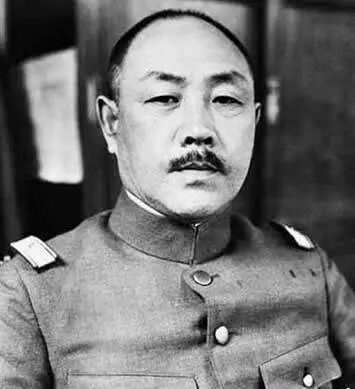
Archival photo: Anami Korechika
Reviewing this historical episode serves as a reminder that even as the war of aggression entered its surrender phase, Japan was still experiencing such intense internal turmoil. This frenzy and ignorance before defeat precisely illustrate how this nation and people had step by step embarked on the militarist path of external aggression and expansion.
The other side of the coin is this: unlike Germany and Italy, why does it seem that no single entity in Japan took overall responsibility for this war of aggression? Why, eighty years after the war, has East Asian society still been unable to reconcile with history, and why do the people who suffered under Japanese colonial oppression still seek a solemn apology?
The "Conditions" Behind Unconditional Surrender
In 1945, when Japan was negotiating whether to accept the Potsdam Declaration, it proposed an additional condition: the status of the Emperor would remain unchanged, meaning the preservation of the so-called "kokutai" (national polity). In its response to Japan's demands, the Allied Forces used a rather ambiguous phrase—"subject to"—meaning that while the Emperor's status would not change, his power would be subject to the Supreme Commander for the Allied Powers. Afterwards, internal controversy arose in Japan over how to translate and interpret the phrase "subject to."
The trigger for the "Palace Incident" was largely due to this reason. The young officers believed that if the Emperor's power were subject to the Supreme Commander for the Allied Powers, it meant Japan's national polity had changed, and the nation no longer had a reason to exist; therefore, they had to make a final struggle. They even briefly considered storming the Imperial Palace to "seize the Jewel"—a term with significant historical connotations. During the Meiji Restoration, the most important thing was controlling the twelve-year-old Emperor Meiji; whichever faction controlled the Emperor gained absolute political advantage and moral legitimacy.
By this time, Japan had already been hit by two atomic bombs, and the Soviet Union had declared war on Japan. Despite having no chance of victory, these young officers struggled in their dying moments. Their ranks were not high, mostly lieutenants and second lieutenants, yet they could threaten the central government's decision-making; even after surrender had been decided, they could still launch a coup. Similar incidents were not rare in modern Japanese history, with the "February 26 Incident" being the most familiar to the public.
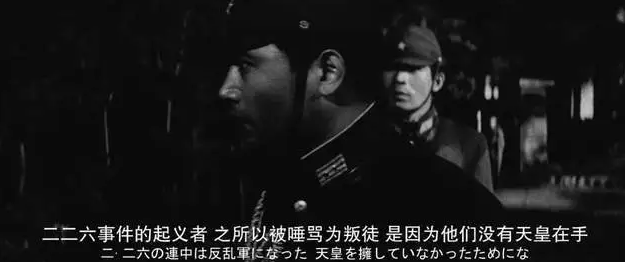
The 1967 version of Japan's Longest Day
Why were these individuals able to generate such immense energy? This must be understood in the context of Japan's modern political system, the status of the Emperor, and the pre-war ideology of "kokutai" (national polity).
Although the Japanese Emperor is now a symbolic "figurehead" who does not participate in political activities, throughout Japanese history, whenever a coup was attempted, it always appealed to the Emperor, seeking his support or control over him. The "kokutai" theory that these Japanese militarist officers insisted on preserving at the last moment before surrender was the legitimacy of the imperial state.
This also echoes a current question: To what extent should the Japanese Emperor be held responsible for the war? Should the Emperor be held accountable, and why was he not?
Looking back at the history of World War II, Japan's path to external aggression and expansion differed significantly from the fascist paths of Germany and Italy. In both Nazi Germany and Italy, one could identify the so-called "chief culprits"—Hitler and Mussolini. But in Japan, the same question becomes ambiguous: Who is the war criminal of the same magnitude as Hitler or Mussolini? Emperor Showa? Tojo Hideki?
Tojo Hideki served as Prime Minister from 1941 until he was overthrown in July 1944. Before him, Konoe Fumimaro served as Prime Minister, during whose tenure the War of Resistance against Japanese Aggression expanded step by step. Should he bear the primary responsibility? At the time of defeat in 1945, the then-Prime Minister Suzuki Kantaro pushed for Japan's "unconditional surrender," but he was certainly not the primary holder of power discourse in Japan at that time.
In fact, during World War II, other countries, including the United States, faced a dilemma when dealing with Japan: Who was the primary holder of power discourse in Japan, and who was my negotiating counterpart?
In the process of Japan moving toward war, it seemed that many hands were on the steering wheel: there was the civilian government, the Prime Minister, the Minister of War, the Minister of the Navy, the Minister of Foreign Affairs, the Minister of Home Affairs... there was also the parliament, the House of Peers, the House of Representatives, the Privy Council, and the actual heads of the Army and Navy, and so on. There were many hands on the steering wheel, but it was often unclear who was truly in control, ultimately leading the vehicle to "run amok."
From 1943 to 1944, the situation for the Japanese army in the Pacific and Chinese theaters of war deteriorated increasingly. Everyone knew the war could not be sustained, but no one knew where the brakes were or who the driver was. It was different from Germany and Italy: when Hitler committed suicide, the entire Nazi system collapsed; when Mussolini was executed, Fascist Italy fell. But when Tojo Hideki stepped down, the war continued.
Thus, a bizarre situation emerged in Japan: it seemed impossible to find a core principal culprit, yet everyone was an accomplice. Borrowing the words of Japanese scholar Maruyama Masao, this was a "system of irresponsibility," a system manifested in every aspect, from grand policy decisions to daily operations.
So, was there truly no primary person responsible for the war, or were they hiding in the background? Theoretically, according to the Meiji Constitution, the Emperor was the holder of state power and the commander-in-chief of the Army and Navy, so the Emperor should have been the primary person responsible.
But as Japan moved from the end of the Tokugawa shogunate to the Meiji Restoration, the Emperor was pushed to the core of Japanese unification. At the same time, to shape his absolute authority and prevent him from making mistakes, he was "carefully packaged"—using the shell of a constitutional monarch to house the core of an absolute monarch. The Emperor possessed all power but did not actively exercise it, instead delegating execution to senior officials below him. If things went well, it was credited to the Emperor; if they failed, those subordinates became the scapegoats.
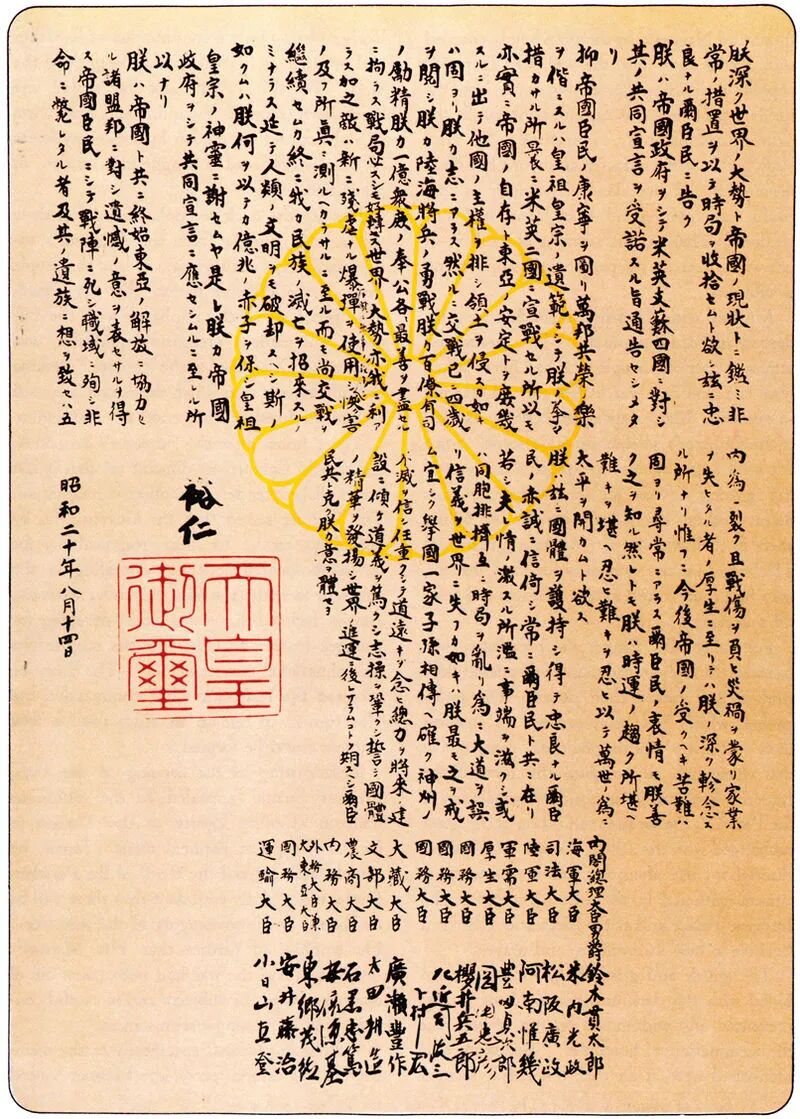
Instrument of Surrender, Wikipedia
"System of Irresponsibility"
We can understand Japan's war of aggression on two simple levels. The first is the macro level: since the First Sino-Japanese War, Japan's basic national policy toward China and the Korean Peninsula was expansion, which was the overarching trend. The second is the micro level: regarding what specific strategies to adopt and how to fight the war, Japan did not have a clear operational plan internally, often seeming to take things one step at a time.
After the Marco Polo Bridge Incident broke out in 1937, there were two opinions within the Japanese military. One side advocated seizing the opportunity to expand the invasion of China by deploying more troops, while the other believed that Japan should hold onto Northeast China, namely the puppet state of Manchukuo, and should not expand the war into China proper.
One representative figure who opposed expanding the war at the time was Ishiwara Kanji. He was one of the masterminds behind the Mukden Incident and single-handedly planned the birth of Manchukuo. By 1937, although he held a high position in the Japanese General Staff, he advocated holding onto Northeast China and not further expanding the war against China.
At this point, an ironic scene unfolded. Mutō Akira, Ishiwara's subordinate, rebutted him: Why do you oppose our expansion of the war? What is the difference between what we are doing now and what you did in 1931? Why could you do it in 1931, but we cannot do it now?
One month later, during the Battle of Shanghai (1937), the Japanese Imperial General Headquarters summoned Matsui Iwane to go to Shanghai to fight. Before departing, Prime Minister Konoe Fumimaro asked him how far he intended to advance. Matsui Iwane's answer was vague; he said that if necessary, he would advance to Nanjing. In other words, these frontline operational plans had not been discussed by the Japanese Cabinet.
It is evident that there was an extreme disconnect between the military and the government, and they did not hold each other responsible. Worse still, infighting occurred within the military and between departments for their own interests and to compete for resources. This distorted relationship not only appeared at the top levels but also permeated the middle and lower levels.
After the Meiji Restoration, Japan learned from Western legal and political systems and established a modern bureaucratic system. Gradually, the phenomenon of "section chiefs governing the country" emerged. Some individuals had limited formal authority but controlled key positions in crucial departments, becoming the de facto managers of the state.
For example, the Operations Section of the Operations Department in the Ministry of the Army was a small section with immense influence, because specific operational plans were primarily drafted by these middle-level leaders. Figures like Mutō Akira and Ishiwara Kanji rose from these grassroots departments, with a very clear path of promotion. The long-standing samurai tradition deeply influenced Japanese society, where real power outweighed nominal status.
Furthermore, a key aspect of the institutional reforms of the Meiji Restoration was that the Japanese Prime Minister had no jurisdiction over the military. For over seven hundred years in Japanese history, the Emperor did not hold power, while the military did. To prevent a recurrence of this situation, Itō Hirobumi and others proposed during the drafting of the Meiji Constitution that all military forces should not obey the civilian government but should report directly to the Emperor, who was the supreme commander of the Japanese Army and Navy.
As a result, the civilian government and the Army and Navy became parallel institutions, but the hidden dangers were thereby planted.
For instance, when Tōjō Hideki served as Prime Minister, he concurrently held the rank of active-duty Army General, but he could not attend Imperial General Headquarters meetings because, as a civilian, the Prime Minister was not qualified to attend them. If he wanted to attend, he had to concurrently serve as Minister of War, but the Minister of War could attend without voting rights. If he wanted voting rights, he had to additionally serve as Chief of the Army General Staff.
Another example is Konoe Fumimaro. During his first term as Prime Minister, the Japanese war of aggression against China became total, yet he simultaneously extended an olive branch to the Chiang Kai-shek government to induce surrender. He also hoped to mediate the Sino-Japanese war through Nazi Germany's Toddman mediation. He even took some actions more radical than those of the military in an attempt to end the war.
A typical event was that after 1938, Konoe Fumimaro issued a statement declaring that the Imperial Japanese Government would no longer regard the Chiang Kai-shek regime as a subject for negotiation. In other words, it no longer recognized the legitimacy of the Chiang Kai-shek regime and instead supported the puppet Wang Jingwei regime. This was later considered a failed strategy, because it made the possibility of resolving the war even slimmer. However, Konoe Fumimaro's self-defense was that he hoped to seize the initiative of the war from the military.
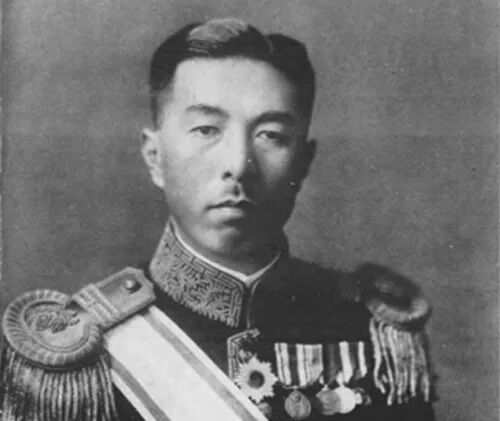
Archival photo: Konoe Fumimaro
This "involution" was not only reflected between the military and the government, but also within the military itself and between the different branches.
Before Japan's surprise attack on Pearl Harbor in 1941, there was significant conflict between the Army and the Navy over whether to go to war with the United States. If the Army were to launch operations against the US, it had to rely on the Navy as the main force, requiring the Navy to attack Pearl Harbor while simultaneously deploying the Army to various locations in Southeast Asia. At the time, the thinking of Army high command, including Tōjō Hideki, was that Japan had no confidence in fighting the US. As long as the Navy indicated it did not have sufficient strength to fight this war, the war would not start. But the Navy's thinking was: We are competing with the Army for resources; how can we show weakness? So they certainly would not explicitly say that this war could not be fought; they could only say that if you Army want to fight, we Navy will accompany you to the end.
The Army and Navy both wanted to shift blame, hoping the other side would bear the political responsibility for starting the war, yet neither wanted to retreat or show weakness, thereby losing their political capital at home. And within these specific words and actions was shrouded a layer of ambiguity and contortion unique to Japanese culture, ultimately leading to "runaway militarism".
All of the above may seem absurd and ridiculous, but under that distorted military-political system, it seemed to have a certain rationality. The institutional design of pre-war Japan essentially caused division at the top levels and separation between the military and the government, while internally there were numerous factions fighting each other. Various parties began competing over who was more active and who was more crazy in their struggle for war and political initiative. The entire country became increasingly out of control, heading toward a path of no return, yet no one took overall responsibility for it.
"National Seppuku"
Joseph Grew, who served as the US Ambassador to Japan from 1932 to 1942, personally witnessed and experienced Japan's step-by-step progression from the war against China in the early 1930s to the Pacific War. After the outbreak of the Pearl Harbor Incident in 1941, he was detained by the Japanese side and did not return to the United States until 1942.
In his diary, Ten Years in Japan, Grew referred to this system in Japan as "national seppuku." He believed the war would inevitably reach this point because they were unwilling to face the various mistakes they had previously made.
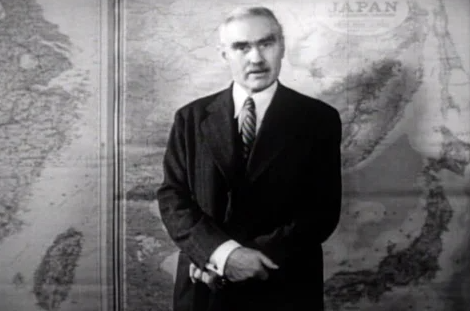
Archival photo: Joseph Grew
Before the surprise attack on Pearl Harbor in 1941, Konoe Fumimaro conveyed a message to Roosevelt through Grew, expressing his desire to meet with him and personally conduct final peace negotiations. But in fact, this was merely Konoe Fumimaro's wishful thinking and did not represent the position of the Japanese government.
Moreover, given Konoe Fumimaro's political position at the time, he was unable to make corresponding commitments. While Roosevelt, as President of the United States, could make the final decision on war or peace, Konoe Fumimaro lacked the authority and capability to make such decisions. Even after the Marco Polo Bridge Incident, Konoe Fumimaro sent an intermediary, Miyazaki Ryusuke (son of Miyazaki Toten), to Nanjing to negotiate with Chiang Kai-shek. However, Miyazaki Ryusuke was arrested by Army military police and brought back just as he was boarding a ship in Kobe, because the Army was unwilling to negotiate for peace.
After Konoe Fumimaro stepped down, Tojo Hideki succeeded him as Prime Minister. When the Showa Emperor was later asked, "Why did you choose an Army general to serve as Prime Minister? Doesn't this encourage the radical actions of the military?", his defense was that only a military man could control the military. By choosing Tojo Hideki as Prime Minister, he could use Tojo's prestige within the military to suppress opposition from the armed forces.
At the last moment before the surprise attack on Pearl Harbor, Roosevelt sent a telegram to the Japanese government. Foreign Minister Matsuoka Yosuke took the telegram to Tojo Hideki and asked him whether he wanted to respond. At that time, Yamamoto Isoroku's mobile force was already stationed off Hawaii, about to launch its attack. Tojo Hideki used an extremely irresponsible excuse, essentially saying that since the planes were about to take off anyway, he couldn't control the situation; and that as Foreign Minister, Matsuoka had a duty to go directly to the Imperial Palace to have an audience with the Emperor.
This kind of indecisive and ambiguous state also appeared before Japan's surrender in 1945. After the issuance of the Potsdam Proclamation, the United States explicitly told Japan that if they did not surrender, large-scale new weapons would be deployed. Prime Minister Suzuki Kantaro, who hoped to push the Japanese government toward surrender, used a Japanese word, written in kanji as "mokasatsu" (默杀), which in Japanese can be understood as ignoring or disregarding, when announcing the policy externally.
When this word was translated into English, the American side asked a question: was it "reject" or "ignore"? Oppose or ignore? The Americans later interpreted it as "reject," and the atomic bomb was dropped. It can be said that ambiguous phrasing directly led to disastrous political consequences.
Pre-modern society: Discomfort after the whirlwind
The victory in the First Sino-Japanese War of 1895, in a certain sense, validated the success of the Meiji Restoration for Japan. However, if the Meiji Restoration is measured against a longer historical coordinate, it reveals itself as a rushed transformation. The elder statesmen of the Meiji Restoration era may have received Yangmingist Confucian education in their childhood, but around the age of thirty, they faced the cultural shock of the Western powers brought by the "Arrival of the Black Ships." By their prime, Japan was loudly proclaiming "Leaving Asia, Joining Europe," and society underwent earth-shattering changes within almost a single generation. In just thirty to forty years, Japan leaped from a pre-modern island nation on the periphery of the Far East to a modern state that considered itself qualified to join the game of imperialism.
The impact brought about by this switch was exceptionally violent. When they charged into the imperialist era of the late nineteenth century like calves, carrying deeply ingrained traditions and habits, it is undeniable that the accompanying side effects would also be very intense.
In the small-group culture of Japanese society, a person must affiliate with a community to survive in society. Once detached from a group, one is like duckweed, losing the foundation for settling down and pursuing one's livelihood. Whether politicians or ordinary citizens, everyone seems to be pulled by certain forces, losing independent personality. They place personal value in a greater value, and this greatest value is the so-called "kokutai" (national polity). Once the kokutai is gone, the nation and people of Japan are equivalent to extinction. Therefore, before the surrender, young officers were willing to fight to the death for it. This thing, which seems absurd and abstract to outsiders, secretly breeds in every corner of Japanese society like a religion.
As a late-developing country, Japan has a strong social conservatism and needs to borrow from tradition to maintain political unity. The enormous tension generated in the process is released externally, such as through foreign wars, thereby promoting the country's modernization. This disharmony between spiritual civilization and material civilization led to the nation's "runaway" and the failure of its modernization.
Reflecting on the war
This system and mindset have influenced Japan to this day. The current Japanese perception of that history is also very chaotic. It can roughly be divided into several categories.
The war memory of the vast majority of Japanese people is vague. They say that war is very tragic, so they want peace and not war, but they do not distinguish between right and wrong in the war, nor do they clearly identify the perpetrators and the victims. They say that the Japanese suffered, but they do not consider that the invaded peoples suffered even greater hardships.
There are also those with a left-leaning historical view. Especially in the 1960s and 1970s after the war, left-wing thought flourished in Japanese society. They held a more reflective attitude towards the war; some also called for apologies and emphasized reconciliation. A group of left-wing literary and artistic workers emerged at that time. The famous director Yamamoto Satsuo made the trilogy "War and Human Beings," which presents a left-leaning perspective.
Then there is the right-wing historical view, which we now vigorously criticize and expose, which beautifies and glorifies the war. If one carefully analyzes the right-wing historical view, many paradoxes can be found. For example, they believe that Japan's post-war economic prosperity and social stability ultimately stem from the defeat; if the fascist militarist system had continued, there would be no present-day Japan. It was precisely because the defeat was welcomed in 1945 that the entire social system underwent certain reforms, creating the peaceful Japan of today.
When looking back at history, this right-wing historical view skips over, beautifies, or even denies the facts of the wars of external aggression, granting legitimacy to the entire process of Japan's modernization since the Meiji era. But as mentioned earlier, it was precisely the huge defects in the modernization of the Meiji Restoration that led Japan onto the path of militarism and fascism, ultimately accepting defeat in 1945.
Another type of right-wing historical view holds that the so-called "Greater East Asia War" was about liberating Asia from the hands of Western white colonizers, breaking the Western-centric world order, and a war for the independence and freedom of the yellow race. However, it ignores the fact that it was using the same methods as Western imperialism to oppress the Asian people.
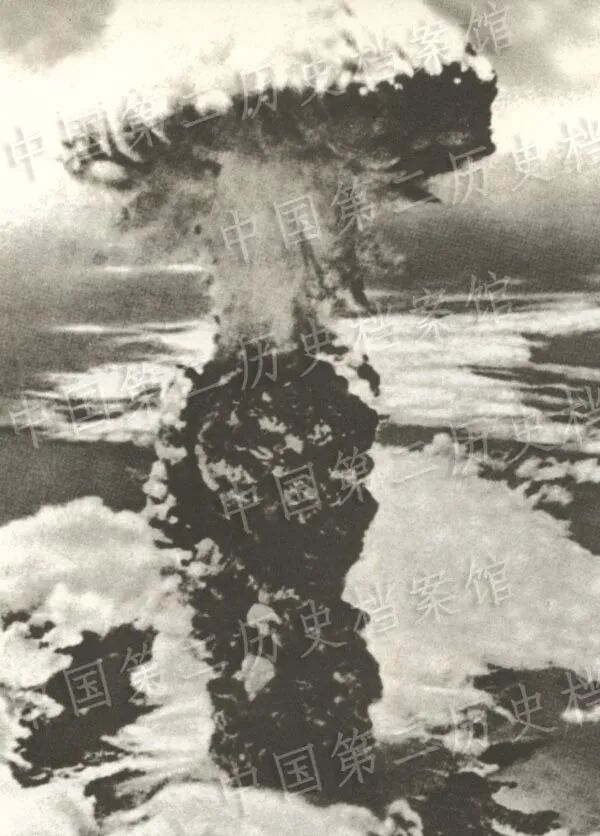
Photo of the scene of the atomic bombing of Hiroshima on August 6, 1945. Second Historical Archives of China
Regarding war memory, as more materials are disclosed and refined, a more authentic and rich history is gradually pieced together, but it is also swept up in the real world and utilized by current politics.
Taking the atomic bombings as an example, the war memory in Japanese society has long been dominated by the memory of the atomic bombs, highlighting the narrative tone of themselves as victims. In recent years, influenced by progressive thought, a group of people worldwide has also reflected on the United States dropping atomic bombs on Japan. Indeed, Japan is the only place in the world today to have suffered two atomic bombings, but placed in the context of the war, and standing from the perspective of the invaded and the Allied combatants, were these two atomic bombs unjustly received? No, they were not unjust.
Moreover, the United States can also defend itself, stating that the US side had issued advance warnings, but the Japanese side rejected them. The US also had some considerations when choosing the atomic bomb drop sites. First, it was preferably an important Japanese military-industrial base. Hiroshima was then known as the "Military Capital" and was also a key shipping hub.
In 1894, Japan launched the Jiawu War against the Qing Dynasty. Emperor Meiji relocated the Imperial General Headquarters from Tokyo to Hiroshima to serve as the frontline command center; the troops that attacked Lüshun and Weihai were assembled and dispatched from Hiroshima. From 1895 onward, Hiroshima became a key military stronghold for Japan. By the end of the war, major cities such as Tokyo, Osaka, and Nagoya had already suffered large-scale bombing by the US military, but Hiroshima had not yet been bombed. Therefore, the United States chose this location to drop the atomic bomb. From the perspectives of military value and testing the atomic bomb's destructive power, this was a suitable site.
Recently, on the occasion of the 80th anniversary of Japan's surrender, the Kyodo News published an interview. After reading it, I felt some emotion and wish to share it here as the conclusion of this article, and as an annotation to why we should commemorate this war.
The subject of the interview is a 95-year-old Japanese woman named Reiko Okada. When the war broke out, she was a middle school student.
She recalled that there were many small islands near Hiroshima, where the Japanese military produced chemical weapons. During the war, she was conscripted as a student and sent to these islands to produce chemical weapons. The military required strict secrecy; everything seen and done on the islands could not be told to anyone, including one's own family.
Many of the chemical weapon shells produced by these military factories were used on the Chinese battlefield, while others were attached to high-altitude balloons and released to drift toward the United States. At the time, several thousand high-altitude balloons were released—although the military results were limited, they still caused some impact.
It was only after the fact that this elderly woman learned that the chemical weapons she had personally manufactured had been used in China and dropped on the United States, causing casualties among local civilians.
After the atomic bombing of Hiroshima, Reiko Okada was sent to the urban area to perform rescue work without any protection. She was later recognized by the Japanese government as an atomic bomb victim. Regarding this, she stated: Although I am one of the atomic bomb victims, I am very clear about the harm I inflicted on other countries during this period—by participating in the manufacture of chemical weapons. Finally, she said: We should recognize our own responsibility for the harm caused by the war, face this reflection directly, and only through apology and compensation can friendship and peace be promoted.
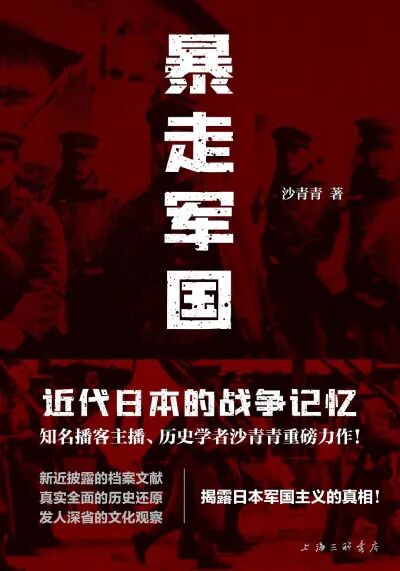
Sha Qingqing, Japan’s March to Militarism, Shanghai Sanlian Bookstore, 2024 edition.