My New Book: Jiawu, a War in the Balance
我的新书《甲午:摇摆的战争》
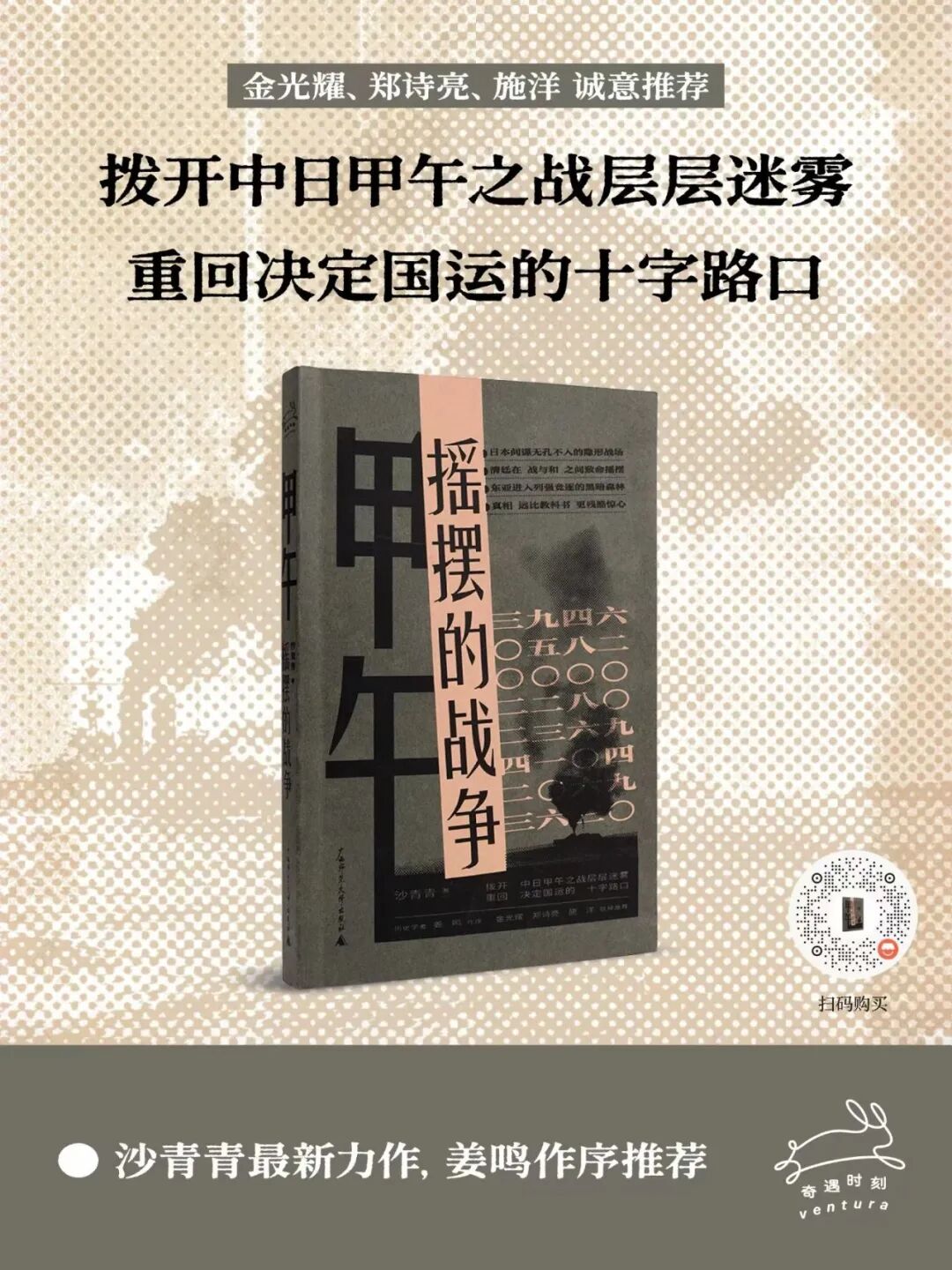
By Sha Qingqing: Jiawu: A War in the Balance, Qiyu Shike / Guangxi Normal University Press, March 2026.
Over the past two or three years, I seem to have maintained a pace of publishing at least one new book each year.
This year’s first new book centers on the "Jiawu War." It attempts to re-examine this war from 130 years ago within the context of great power rivalries at the end of the 19th century, while the undercurrents of domestic politics in both China and Japan and the covert struggles in the realm of intelligence serve as another crucial thread connecting the entire work.
The following text is excerpted from the afterword of Jiawu: A War in the Balance, and may be seen as a reflection of my state of mind while writing this small book:
When mentioning the many relics of the Jiawu War, apart from places such as Weihaiwei and Lüshun, the most famous site in Japan is undoubtedly the Shunpanrō in Shimonoseki. However, the first place that comes to my mind is Nagasaki.
I have been to Nagasaki multiple times over the years, and I love gazing at the city’s night view from Mount Inasa or taking a boat to wander through the harbor. Each time I catch a glimpse, whether intentionally or unintentionally, of the Nagasaki Shipyard within Nagasaki Port, a peculiar feeling arises deep within my heart, and my thoughts are pulled back to more than a century ago.
This is perhaps a unique "montage" moment exclusive to historical researchers and enthusiasts.
The Nagasaki Shipyard is one of the oldest factories in Japan and an important piece of modern industrial heritage. Its predecessor was the Nagasaki Iron Works, established in 1861. In 1884, it was transferred to the Mitsubishi zaibatsu and renamed the "Nagasaki Shipyard," becoming at the time the most advanced shipyard in the entire Far East, possessing large docks capable of building and repairing large vessels. In August 1886, because China lacked usable docks and shipyards, the Beiyang Fleet’s Dingyuan, Zhenyuan, Jiyuan, and Weiyuan had to visit Nagasaki to undergo inspection and maintenance at the Nagasaki Shipyard. During this period, the famous "Nagasaki Incident" also occurred.
After the Jiawu War, the Nagasaki Shipyard remained a "key military-industrial site" for the Japanese Navy. Numerous destroyers, cruisers, battleships, and aircraft carriers were laid down and launched there, until it was struck by the atomic bomb dropped by the US military on August 9, 1945. Viewed from this perspective, although Nagasaki was one of the starting points of Japan’s path to modernization, it later became another endpoint of this distorted path, and also a microcosm of the rise and fall of Japanese modern militarism.
Looking back at the Jiawu War, this conflict not only tore away the last fig leaf of the Qing Dynasty but also led Japan onto the misguided path of expansion and aggression. From any perspective, this was a war that determined the national fortunes of both China and Japan, as well as the fate of the entire East Asia.
"There is nothing new under the sun."
At this very moment in the 2020s of the 21st century, the entire East Asia and the world seem to be facing a new round of upheaval. Revisiting the Jiawu War of more than a century ago, we may better perceive how the "historical inertia" of this war truly influenced the subsequent 20th century and the present day.......
Currently, it should be available for purchase on all major platforms. Your support and patronage are welcome, and I look forward to your reviews, reflections, and constructive criticism.
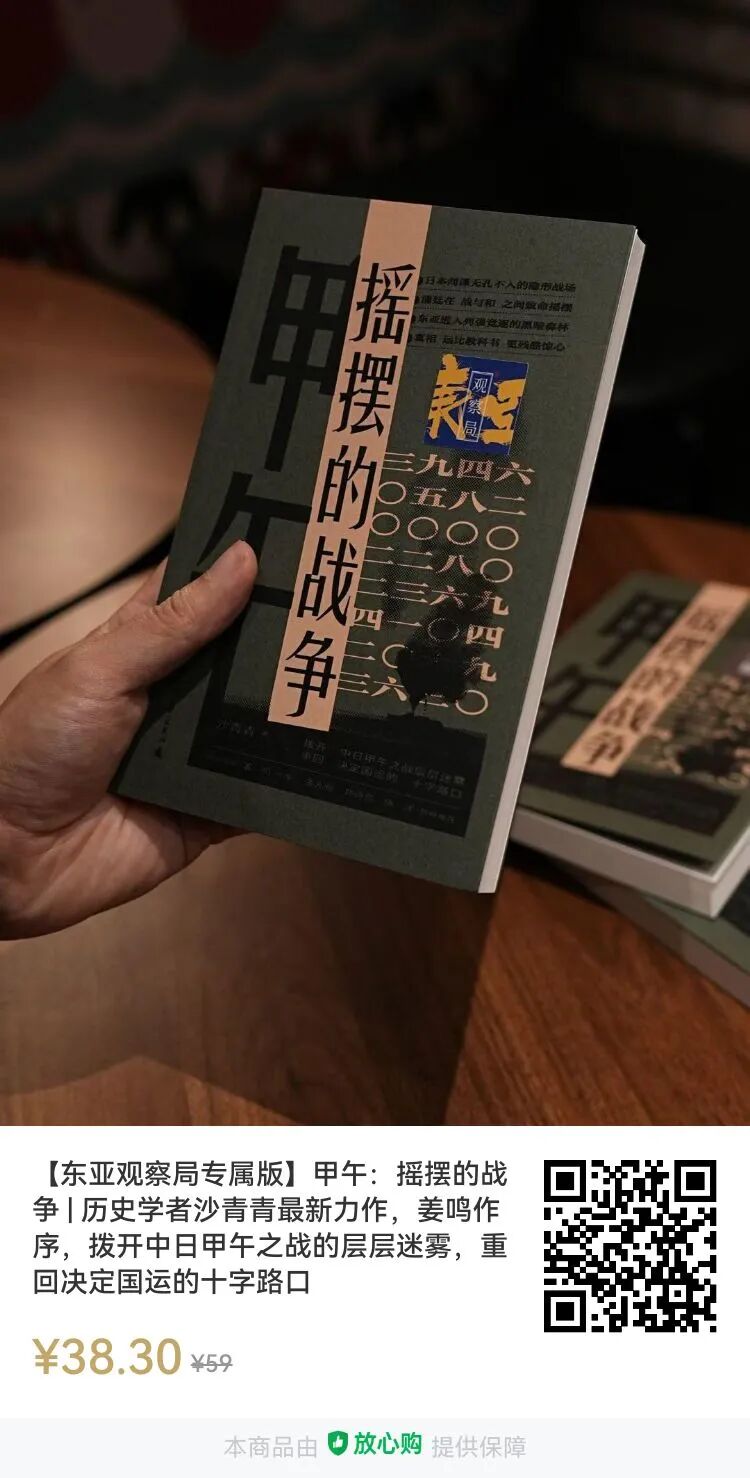
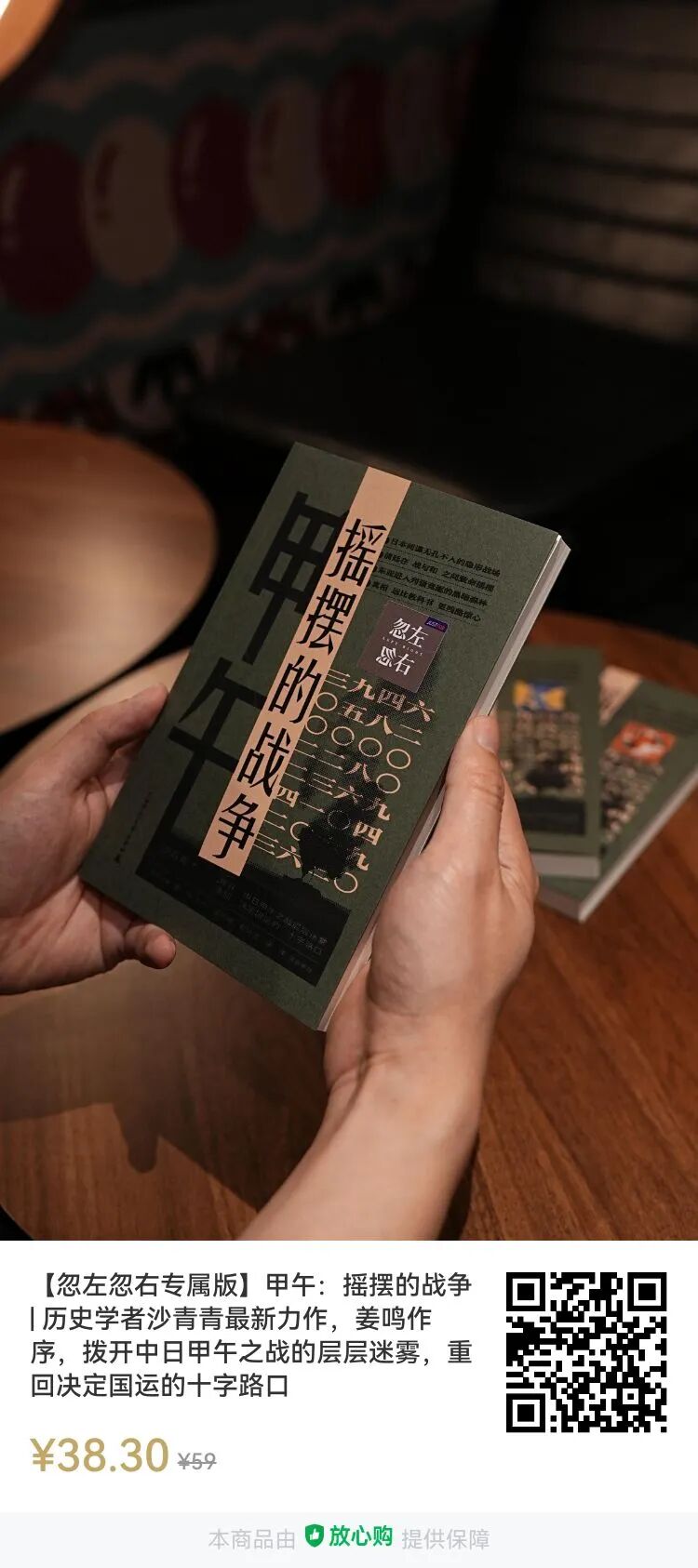
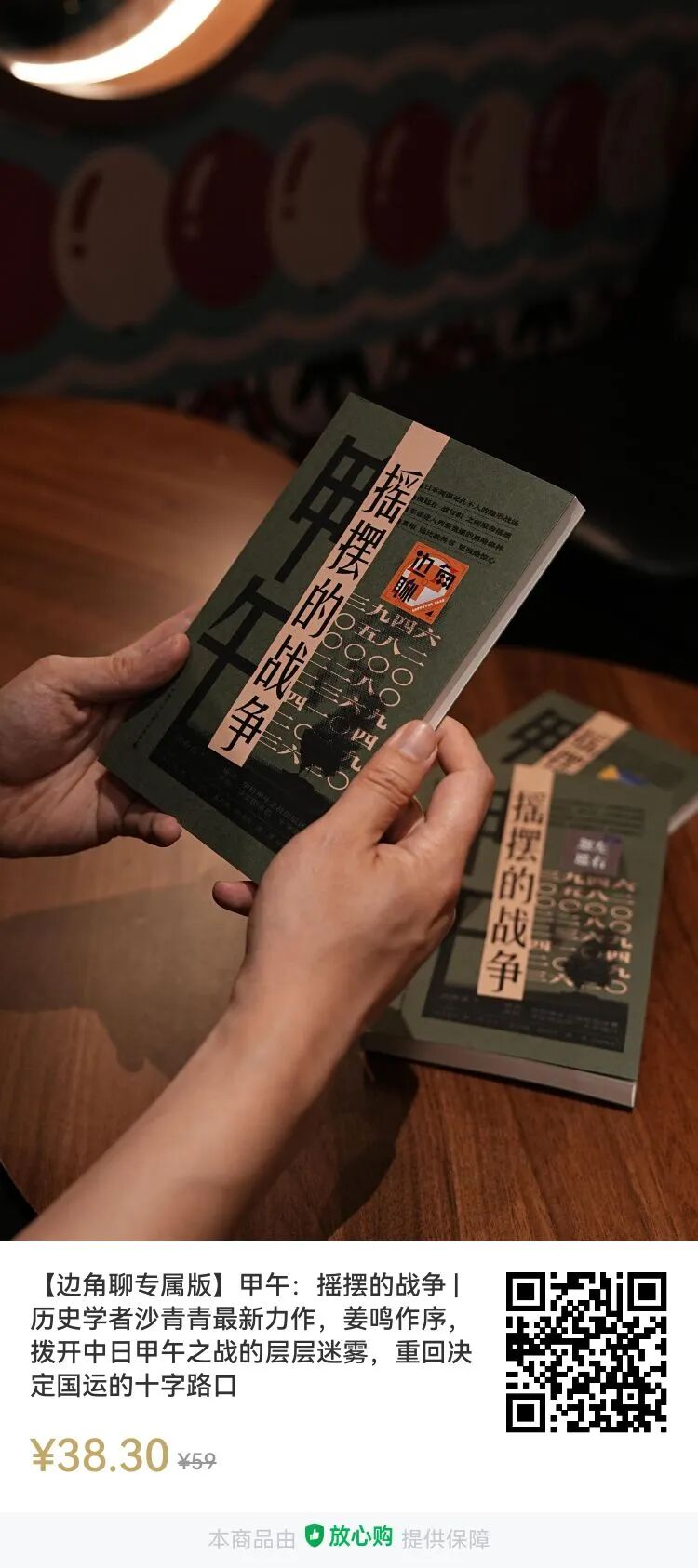
Additionally, if you are a podcast enthusiast, please keep an eye out for the "special editions" of Eye on East Asia, Left and Right, and Leftover Talk, which have been meticulously prepared by the publisher for this release.